Sukta 41
Rishi: Ṛgvedic provenance (Dadhīci/Indra cycle); specific seer per anukramaṇī not provided here.
Devata: Indra
Chandas: Likely Anuṣṭubh (requires verification).
Mantras
Mantra 1
इन्द्रो दधीचो अस्थभिर्वृत्राण्यप्रतिष्कुतः । जघान नवतीर्नव
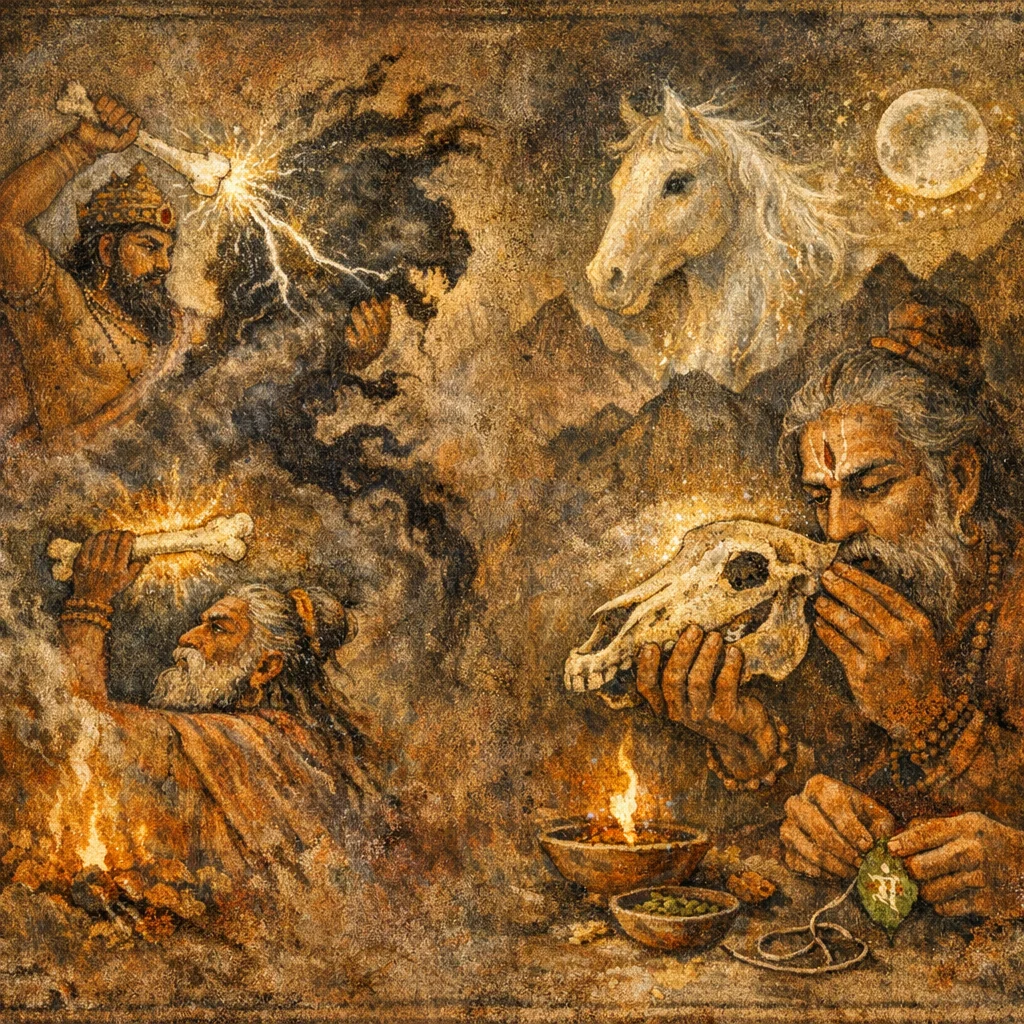
Indra, with Dadhīci’s bones, unresisted, smote the Vṛtras—ninety and nine.
Mantra 2
इच्छनश्वस्य यच्छिरः पर्वतेष्वपश्रितम्। तद् विदच्छर्यणावति
Seeking the Horse’s head that lay hidden away among the mountains, he found it at Śaryaṇāvatī.
Mantra 3
अत्राह गोरमन्वत नाम त्वष्टुरपीच्यम्। इत्था चन्द्रमसो गृहे
Here, indeed, they tracked the Cow’s name—Tvaṣṭṛ’s hidden secret—thus, within the Moon’s house.
Frequently Asked Questions
It is used to become ‘unopposed’ in difficult situations—crushing obstructive forces (rivals, hostile powers, ritual impediments) and restoring what is hidden or withheld (luck, goods, vitality).
In the myth, Indra uses Dadhīci’s bones as a weapon to defeat many Vṛtras; ritually, this turns sacred substance into a symbol of irresistible force that the practitioner seeks to inherit through recitation.
They function as ‘successful recovery’ exempla: the mantra models finding what is concealed and unlocking a hidden secret of nourishment and fertility, supporting rites for retrieval, restoration, and household increase.