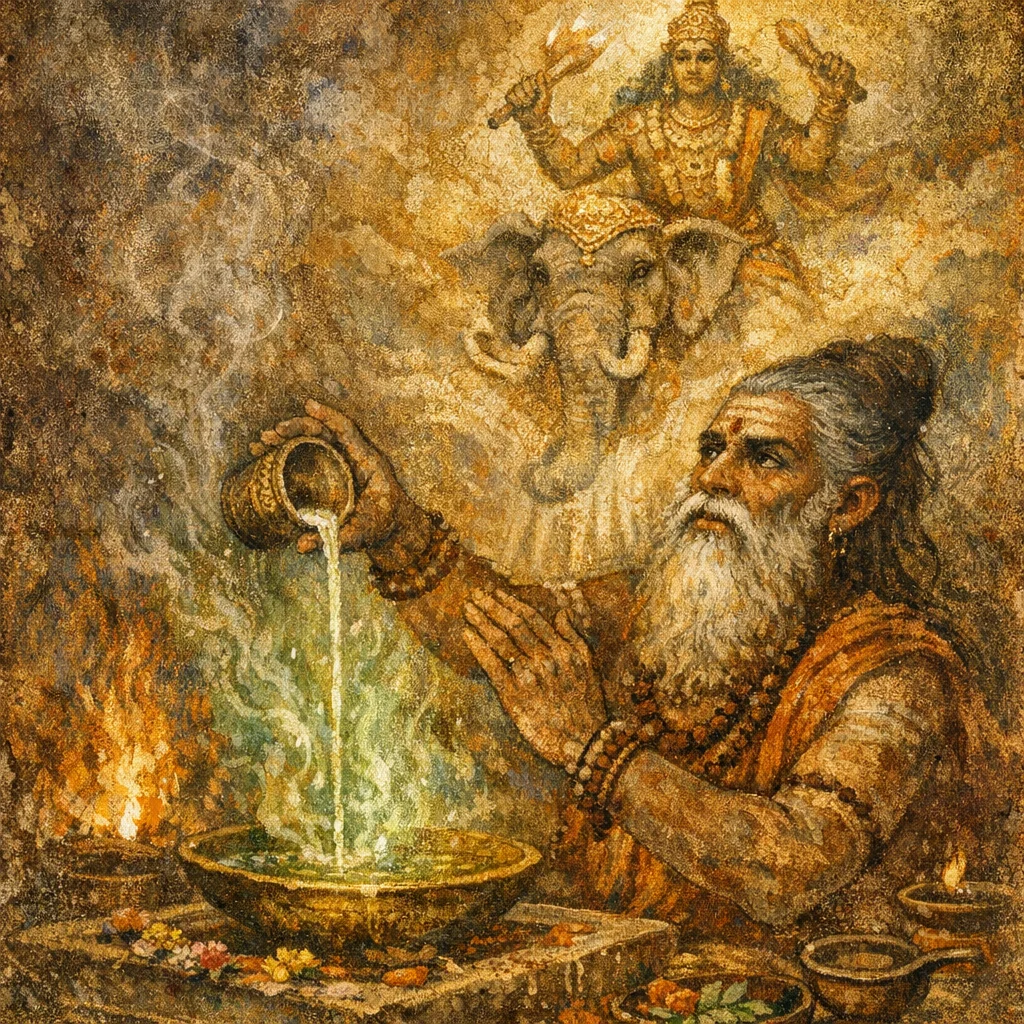
Sukta 23
Rishi: Rigvedic provenance (Indra-soma liturgical tradition); in AV 20 typically attributed to the RV seers of the source hymn (needs padapāṭha-anukramaṇī confirmation).
Devata: Indra (contextual), with Soma-pressing apparatus as ritual agents
Chandas: Triṣṭubh/Jagati-type RV liturgical cadence (exact meter requires syllable count by pada; AV 20 often preserves RV meters)
Mantras
Mantra 1
आ तू न इन्द्र मद्र्यऽग्घुवानः सोमपीतये । हरिभ्यां याह्यद्रिवः
Come then to us, O Indra, gladdening, being invoked for soma-drinking; with thy two tawny steeds drive hither, O stone-wielder.
Mantra 2
सत्तो होता न ऋत्वियस्तिस्तिरे बर्हिरानुषक्। अयुज्रन् प्रातरद्रयः
Seated, the Hotar, like the duly-seasoned priests, have in ordered course strewn the Barhis; and in the morning the pressing-stones have been yoked to their work.
Mantra 3
इमा ब्रह्म ब्रह्मवाहः क्रियन्त आ बर्हिः सीद । वीहि शूर पुरोलाशम्
These sacred strains, O bearer of the holy word, are being wrought: sit down upon the Barhis; come, O Hero, to the Puroḷāśa cake.
Mantra 4
रारन्धि सवनेषु ण एषु स्तोमेषु वृत्रहन्। उक्थेष्विन्द्र गिर्वणः
Bestow on us, in these pressings, in these praises, O Vṛtra-slayer—yea, in the ukthas, O Indra, thou lover of song.
Mantra 5
मतयः सोमपामुरुं रिहन्ति शवसस्पतिम्। इन्द्रं वत्सं न मातरः
The inspired thoughts, the Soma-drinkers, caress the wide, the Lord of might—Indra—as mothers lick their calf.
Mantra 6
स मन्दस्वा ह्यन्धसो राधसे तन्वा महे। न स्तोतारं निदे करः
Do thou rejoice, forsooth, in the Soma-draught, for bounty, in thine own person, for our great good; make not the praiser a mark for reproach.
Mantra 7
वयमिन्द्र त्वायवो हविष्मन्तो जरामहे । उत त्वमस्मयुर्वसो
We, Indra, thine own, furnished with oblation, do magnify and invoke thee; and do thou also, O bounteous one, be kindly-minded toward us.
Mantra 8
मारे अस्मद् वि मुमुचो हरिप्रियार्वाङ् याहि । इन्द्र स्वधावो मत्स्वेह
O slayer, from us do thou wholly loose (the harm); O lover of the tawny steeds, come hitherward. Indra, lord of native might, amid the Soma-exhilarations drink thou here.
Mantra 9
अर्वाञ्चं त्वा सुखे रथे वहतामिन्द्र केशिना । घृतस्नू बर्हिरासदे
Hitherward let the long-maned (steeds) bear thee, Indra, in thy easy chariot, to sit upon the sacred grass, dripping with ghee.
Frequently Asked Questions
It is used in a Śrauta Soma context to invite Indra to the morning pressing, align the rite’s actions (barhis spread, stones set to work), and secure success and bounty.
Because the hymn is tied to the actual mechanics of Soma worship: barhis is the divine seat/ritual ground-cover, and adri are the stones that press Soma—signs that the rite is correctly underway.
It asks that the ritualist not be blamed or shamed if something goes wrong; in liturgical terms it seeks faultlessness, public acceptance of the rite, and protection of the priest’s standing.