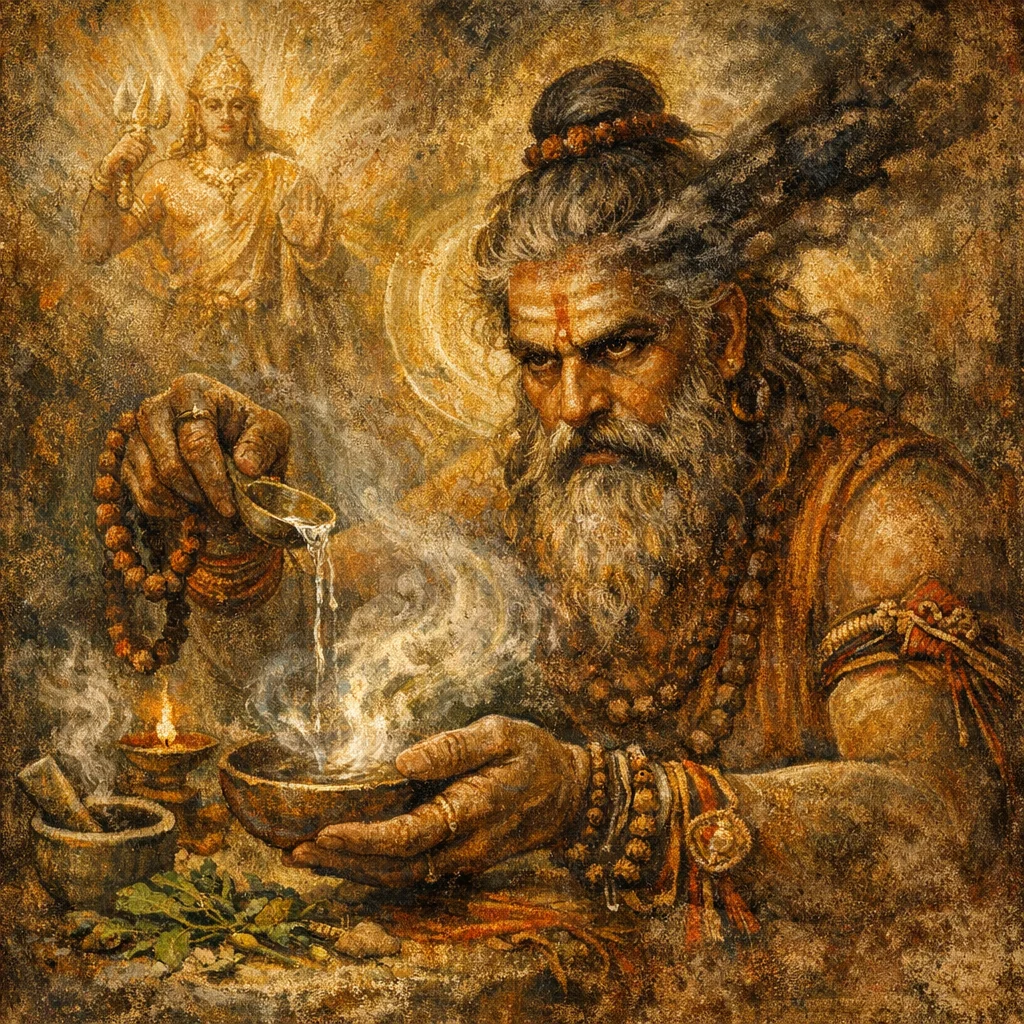
Sukta 115
Rishi: Rigvedic self-laudatory/ṛṣi-voice tradition (borrowed into AV 20); specific r̥ṣi depends on RV source.
Devata: Medhā / Ṛta / Sūrya (concept-deity complex; primary tone is self-empowerment under ṛta)
Chandas: Anuṣṭubh-like brevity with RV stylistics (exact scan depends on RV original).
Mantras
Mantra 1
अहमिद्धि पितुष्परि मेधामृतस्य जग्रभ । अहं सूर्य इवाजनि
I verily, even from the Father, have taken to me the wisdom of Order; I, like the Sun, have been brought to birth.
Mantra 2
अहं प्रत्नेन मन्मना गिरः शुम्भामि कण्ववत्। येनेन्द्रः शुष्ममिद् दधे
With ancient thought I deck and hallow sacred songs, as did the Kanvas—by which Indra hath assumed his very might.
Mantra 3
ये त्वामिन्द्र न तुष्टुवुर्ऋषयो ये च तुष्टुवुः । ममेद् वर्धस्व सुष्टुतः
Whether seers have praised thee not, O Indra, or whether they have praised thee—do thou, when well lauded, increase for me alone.
Frequently Asked Questions
For gaining medhā (clear ritual intelligence) and brahmavarcasa (radiant authority), and for drawing Indra’s strengthening power toward one’s own work and status.
It is a claim of visible legitimacy and tejas: the speaker frames their competence and authority as naturally manifest, grounded in ṛta (right order) like the Sun’s inevitable rising.
Not explicitly. Its ‘substance’ is disciplined, well-formed praise (giras) aligned with ṛta; practitioners may support it by reciting at sunrise or before a lamp, but the text itself is speech-centered.