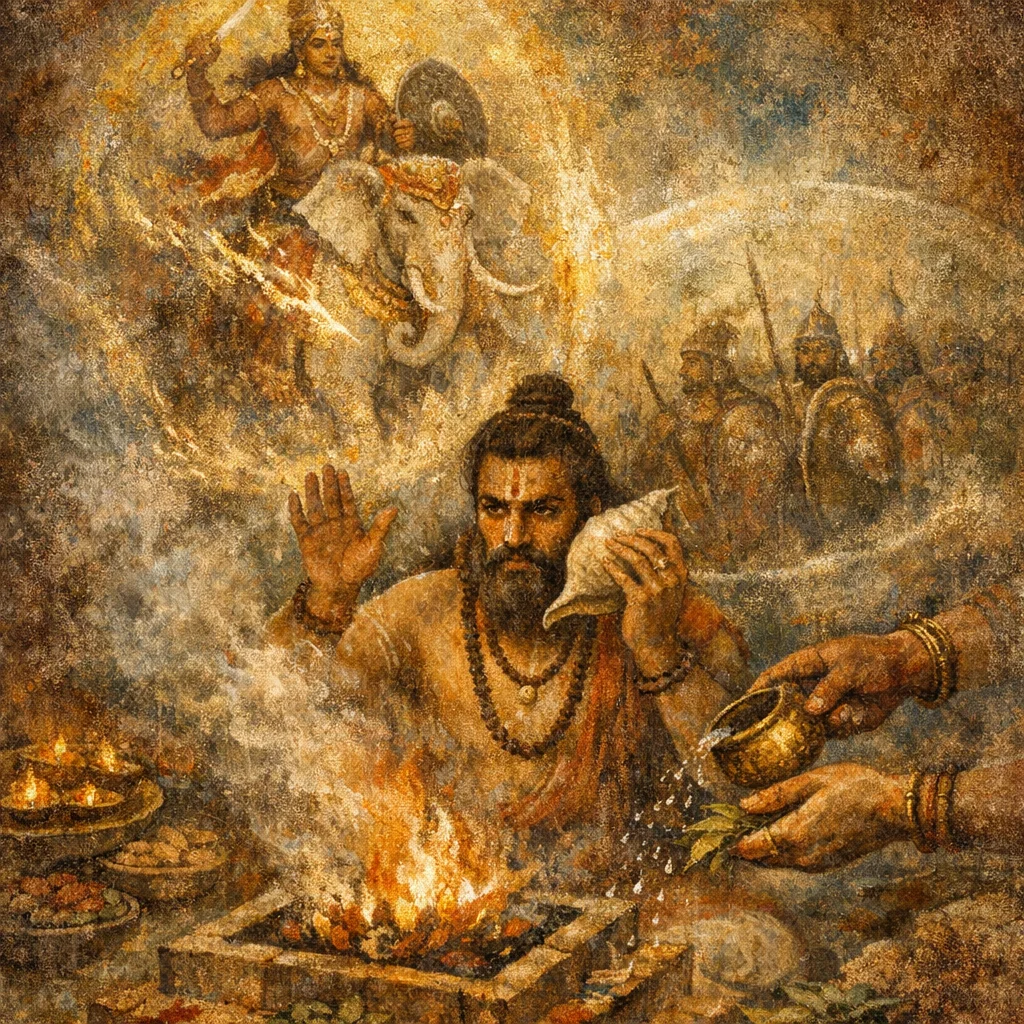
Sukta 104
Rishi: RV tradition: attributed within Indra-stotra cycles (AV 20 is largely Rigvedic reprise; specific r̥ṣi varies by RV source).
Devata: Indra
Chandas: Triṣṭubh/Jagatī-type RV meter (as transmitted in AV 20; exact metrical classification depends on RV source-verse).
Mantras
Mantra 1
इमा उ त्वा पुरूवसो गिरो वर्धन्तु या मम । पावकवर्णाः शुचयो विपश्चितोऽभि स्तोमैरनूषत
These, verily, O Much-wealthy, my songs shall strengthen thee;—pure, of cleansing lustre, wise and stainless,—they have with praises sung unto thee.
Mantra 2
अयं सहस्रमृषिभिः सहस्कृतः समुद्र इव पप्रथे । सत्यः सो अस्य महिमा गृणे शवो यज्ञेषु विप्रराज्ये
This, thousandfold, by seers made mighty, hath spread abroad like ocean’s flood: true is his grandeur; I proclaim his force in sacrifices, in the sovereign realm of inspired priests.
Mantra 3
आ नो विश्वासु हव्य इन्द्रः समत्सु भूषतु । उप ब्रह्माणि सवनानि वृत्रहा परमज्या ऋचीषमः
Hither to us, in every offering, in all encounters, let Indra show him gracious:—near to our prayers, our pressings,—Vṛtra-slayer, best-armed, most rich in sacred verses.
Mantra 4
त्वं दाता प्रथमो राधसामस्यसि सत्य ईशानकृत्। तुविद्युम्नस्य युज्या वृणीमहे पुत्रस्य शवसो महः
Thou art the giver, foremost of all bounties; true, the maker of dominion: we choose for yoking the fellowship of abundant glory,—the great might of the son of strength.
Frequently Asked Questions
It is used to draw Indra near through praise so he grants success in encounters (battle/competition) and increases prosperity and authority for the patron.
No. It functions primarily through stotra (praise) and intention; soma-pressings and oblations are only implied when the hymn is placed in a śrauta-style offering context.
The hymn treats well-formed, purified speech as power: the songs ‘strengthen’ Indra, and a strengthened, pleased Indra brings victory, gifts, and dominion.