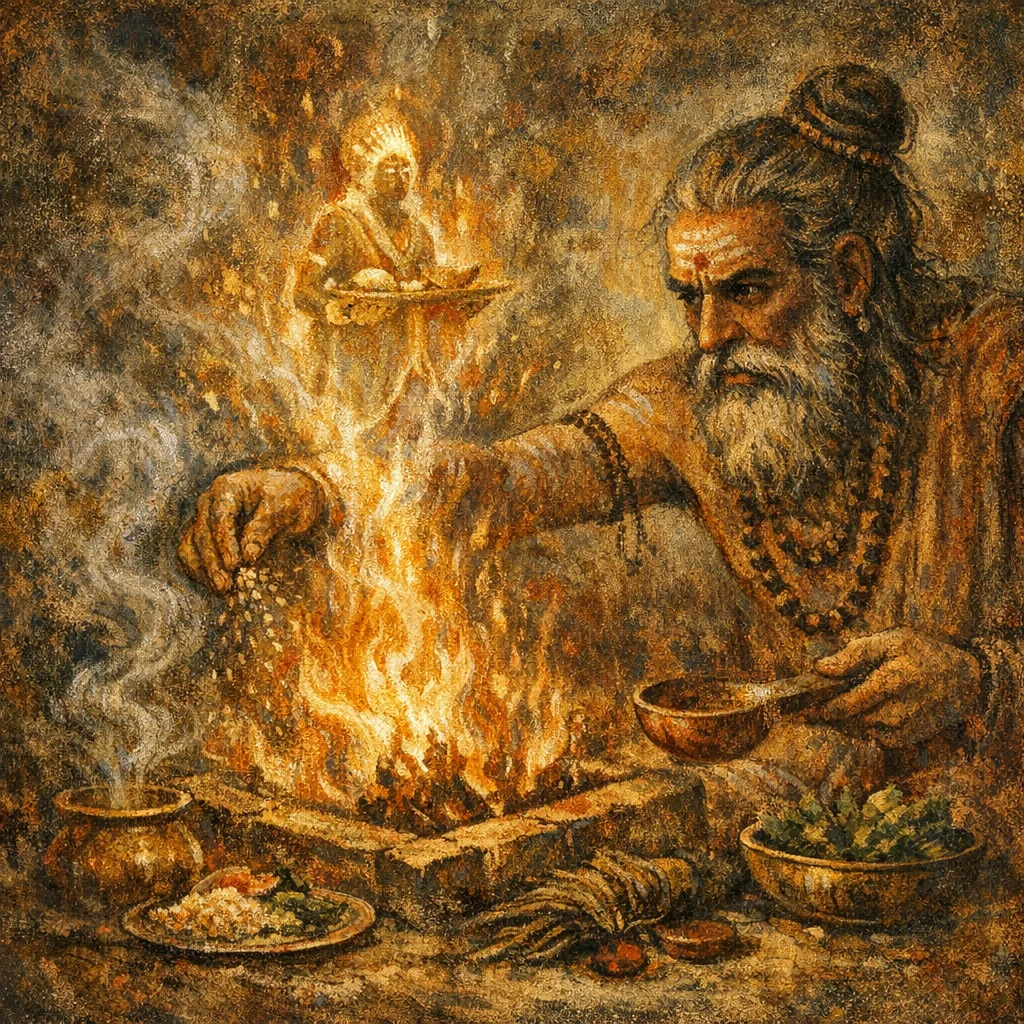
Sukta 101
Rishi: R̥gvedic provenance (Agni hymn; exact r̥ṣi per RV identification).
Devata: Agni.
Chandas: Gāyatrī (commonly for this well-known RV opening; confirm by syllable count in full RV form).
Mantras
Mantra 1
अग्निं दूतं वृणीमहे होतारं विश्ववेदसम्। अस्य यज्ञस्य सुक्रतुम्
Agni, the messenger, we choose—him the Hotar, the all-knowing—of this our sacrifice, the of-good-counsel, the of-good-rite.
Mantra 2
अग्निमग्निं हवीमभिः सदा हवन्त विश्पतिम्। हव्यवाहं पुरुप्रियम्
Agni—Agni—men ever invoke with oblations, the lord of the folk, the oblation-bearer, the many-beloved.
Mantra 3
अग्ने देवां इहा वह जज्ञानो वृक्तबर्हिषे । असि होता न ईड्यः
O Agni, bring the Gods hither—new-born—unto the rite with strewn sacred grass; thou art our Hotar, worthy to be praised.
Frequently Asked Questions
It is used to establish and praise Agni at the start of ritual action—appointing him as the messenger and Hotar who carries offerings and brings the Gods to the sacrifice.
‘Dūta’ highlights Agni as the link between humans and Devas, while ‘Hotar’ marks his priestly role: he makes the invocations effective and the offerings properly conveyed.
No. The hymn is primarily liturgical: it centers on the kindled fire, oblations (often ghee), and barhis (sacred grass) as the ritual supports.