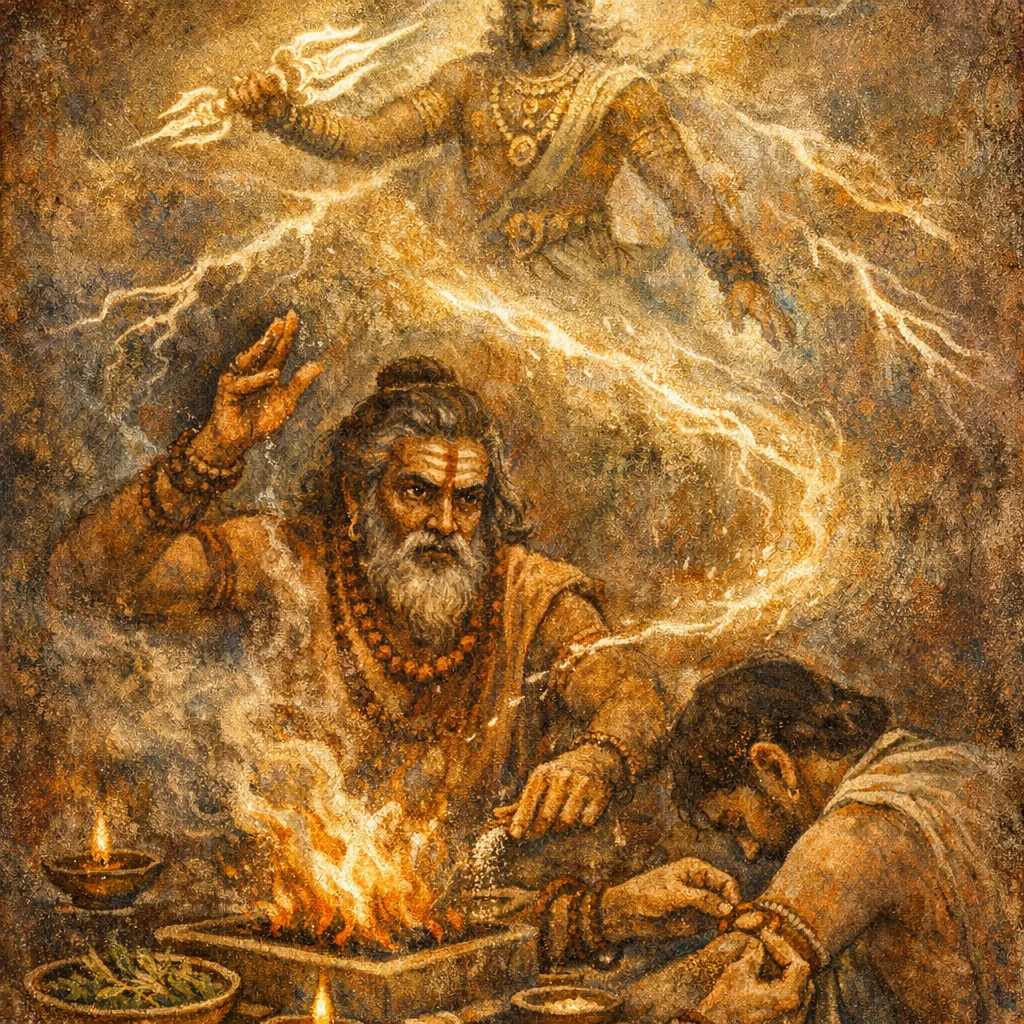
Sukta 97
Rishi: Rigvedic attribution (imported into AV 20): Indra-stotra tradition; specific r̥ṣi not determinable from the provided excerpt alone.
Devata: Indra (Vajrín)
Chandas: Likely Triṣṭubh/Jagatī-class stotra meter (exact meter requires full pada syllable count; excerpt suggests non-Anuṣṭubh).
Mantras
Mantra 1
वयमेनमिदा ह्योपीपेमेह वज्रिणम्। तस्मा उ अद्य समना सुतं भरा नूनं भूषत श्रुते
We, even now, have made him drink here, the Thunder-armed; yesterday (too). To him, then, to-day, in common accord, bring the pressed Soma: now make ready (the rite) for the Renowned, that he may hear.
Mantra 2
वृकश्चिदस्य वारण उरामथिरा वयुनेषु भूषति । सेमं नः स्तोमं जुजुषाण आ गहीन्द्र प्र चित्रया धिया
Even the wolf of him is a repeller; the strong-stirrers shine in their devices. Accepting this our hymn of praise, come hither, O Indra, with brilliant thought.
Mantra 3
कदू न्व१स्याकृतमिन्द्रस्यास्ति पौंस्यम्। केनो नु कं श्रोमतेन न शुश्रुवे जनुषः परि वृत्रहा
When, then, is there (made manifest) the deed of Indra—his manly might? By what report, pray, of whom is it not heard, that the Vr̥tra-slayer surpasses (all) from his very birth?
Frequently Asked Questions
To invite Indra to the ritual, bring him the pressed Soma, and secure his attentive presence so his heroic, protective power supports the sacrificer.
No. This is primarily a śrauta-derived stotra centered on Soma and formal praise (stoma), not a bhaisajya (medical) or amulet-based hymn.
Because ‘hearing/renown’ (śruti) functions as a ritual assurance: Indra’s Vr̥tra-slaying might is beyond dispute, so invoking it makes that victorious power present in the rite.