Sukta 9
Rishi: RV-derived (as preserved in AV 20).
Devata: Indra.
Chandas: RV-like (to be confirmed by critical metrical scan).
Mantras
Mantra 1
तं वो दस्ममृतीषहं वसोर्मन्दानमन्धसः । अभि वत्सं न स्वसरेषु धेनव इन्द्रं गीर्भिर्नवामहे
Him, for you—the wondrous, assault-subduing Indra, rejoicing in the Soma-juice, giver of wealth—we hymn with songs, as milch-cows at their waters press toward the calf.
Mantra 2
द्युक्षं सुदानुं तविषीभिरावृतं गिरिं न पुरुभोजसम्। क्षुमन्तं वाजं शतिनं सहस्रिणं मक्षू गोमन्तमीमहे
The heaven-bright, the bounteous, girt round with powers, like a mountain, widely helpful— Him, rich in nourishment, the prize of strength, hundredfold, thousandfold, swiftly rich in kine, we crave.
Mantra 3
तत् त्वा यामि सुवीर्यं तद् ब्रह्म पूर्वचित्तये । येना यतिभ्यो भृगवे धने हिते येन प्रस्कण्वमाविथ
To that thy noble hero-might I come; to that dread prayer, for ancient forethought: Wherewith thou helpedst Bhṛgu for the wealth set forth, wherewith thou didst befriend Praskaṇva.
Mantra 4
येना समुद्रमसृजो महीरपस्तदिन्द्र वृष्णि ते शवः । सद्यः सो अस्य महिमा न संनशे यं क्षोणीरनुचक्रदे
Wherewith thou loosedst to the sea the mighty waters—that, O Indra, Bull, is thy force. Straightway his majesty perisheth not—he whom the broad lands follow in their course.
Frequently Asked Questions
It is primarily a paustika (prosperity) hymn to attract wealth and cattle-like abundance, while also calling on Indra to subdue assaults and grant victory-strength.
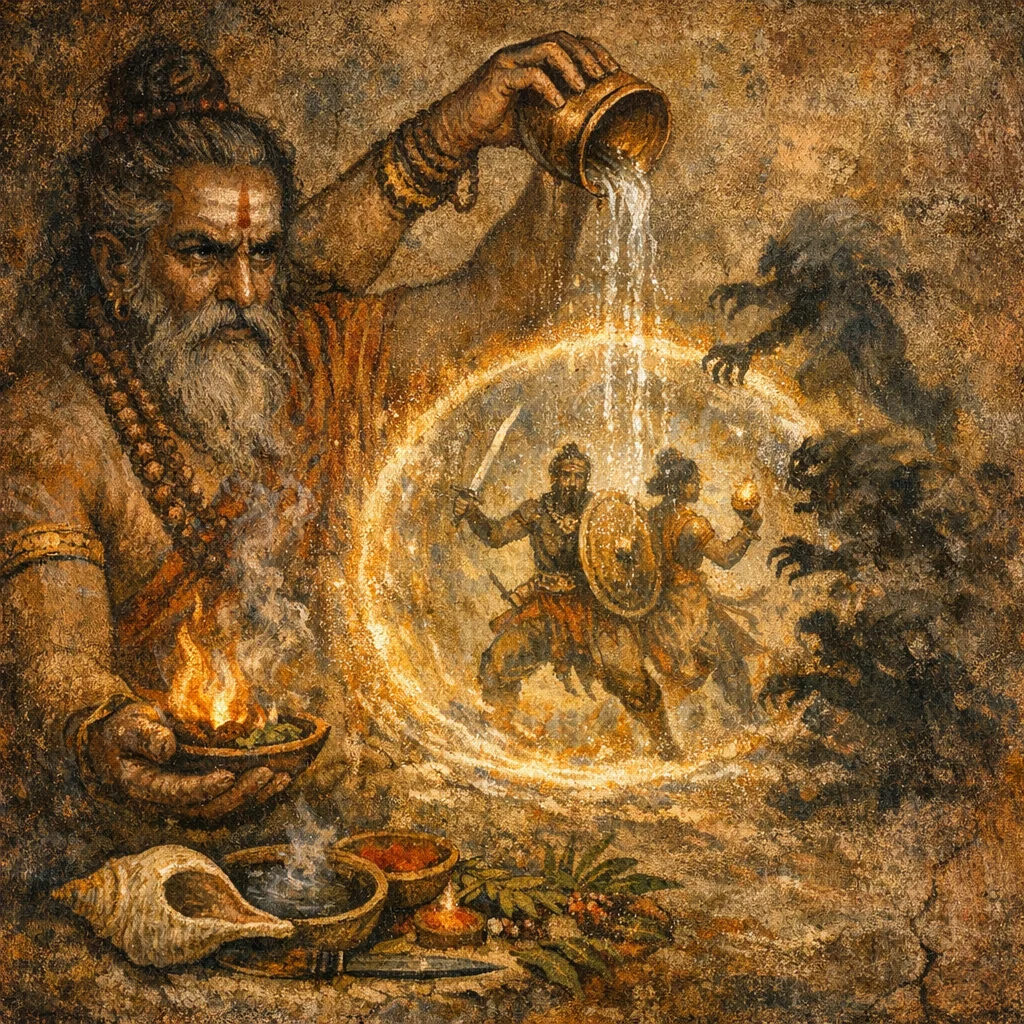
The image explains the hymn’s ritual logic: just as cows naturally rush to the calf, concentrated praise and offering-symbolism are meant to draw Indra quickly toward the patron.
In its oldest setting it is Soma-oriented, but later household use often treats milk/curd/ghee as a respectful substitute while keeping the core act—focused recitation and offering-intent—intact.