Sukta 59
Rishi: Atharvanic liturgical tradition (not specified in excerpt)
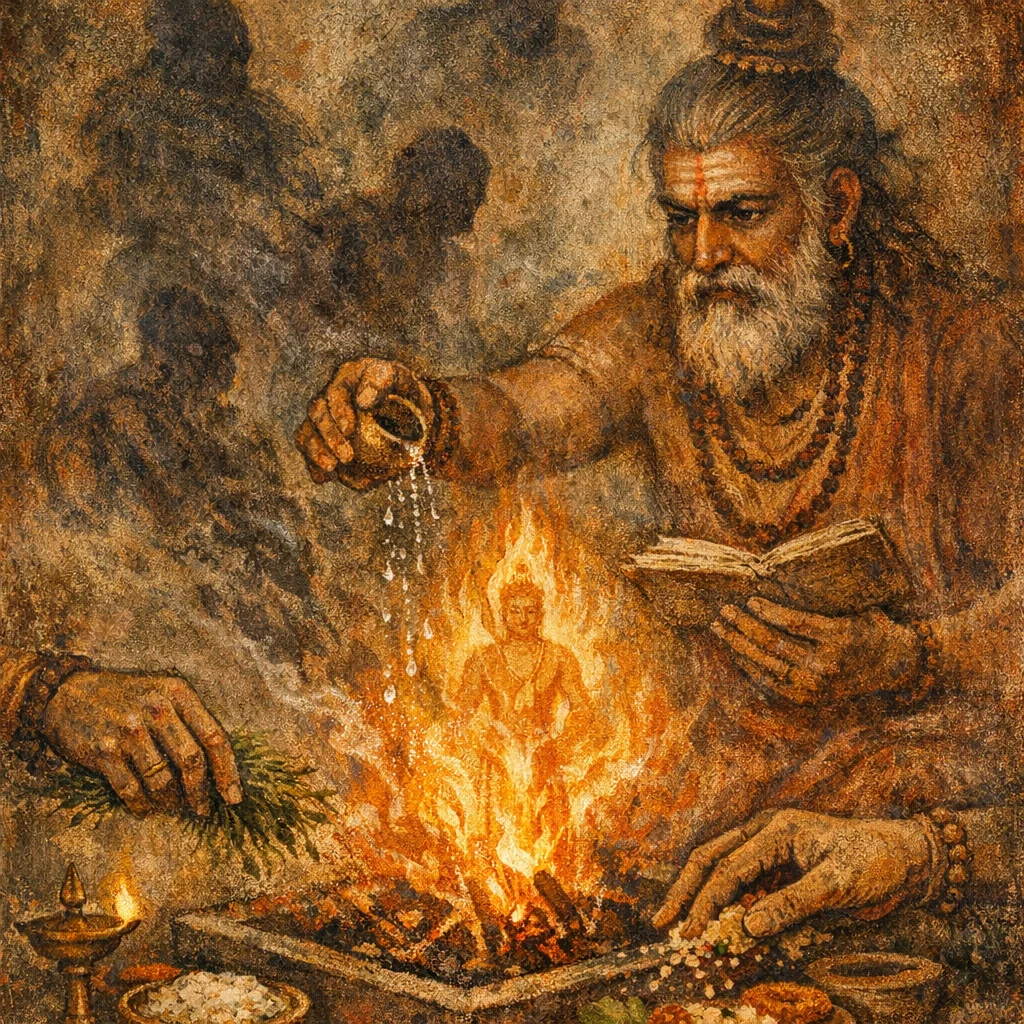
Devata: Agni (as Yajña and Vratapā)
Chandas: Anuṣṭubh-like (short liturgical line; exact metrical scan uncertain from excerpt alone)
Mantras
Mantra 1
यज्ञः। त्वमग्ने व्रतपा असि देव आ मर्त्येष्वा। त्वं यज्ञेष्वीड्यः
Thou, Agni, art the guardian of ordinance, a God come hither among mortals; thou, in sacrifices, art to be invoked with praise.
Mantra 2
यद् वो वयं प्रमिनाम व्रतानि विदुषां देवा अविदुष्टरासः । अग्निष्टद् विश्वादा पृणातु विद्वान्त्सोमस्य यो ब्राह्मणां आविवेश
What ordinances of yours, O Gods—most kindly unto the unknowing—we have transgressed, (even) those known to the wise: let Agni make that good from every side, he the knowing one, who, of Soma, hath entered into the Brahmans.
Mantra 3
आ देवानामपि पन्थामगन्म यच्छक्नवाम तदनुप्रवोढुम्। अग्निर्विद्वान्त्स यजात् स इद्धोता सोऽध्वरान्त्स ऋतून् कल्पयाति
Up to the very path of the Gods have we advanced, so far as we have power to bear the work onward in due course. Let Agni, the knowing one, sacrifice: he indeed is Hotar; he orders the sacrifices, he sets the seasons in their right array.
Frequently Asked Questions
To safeguard a sacrifice: it invites Agni as the guardian of ritual observance and asks him to repair any inadvertent mistake so the rite remains valid and effective.
Because many ritual faults are accidental (due to ignorance, distraction, or complexity). The hymn frames Agni as the competent fixer who can restore completeness even when the performer cannot specify the exact error.
No. Its primary ‘substance’ is the ritual fire itself. In a yajña setting it may accompany ghee offerings, but the hymn works chiefly through correct recitation and the intention of expiation and ordering.