Adhyaya 276
Chapter 276 — राजवंशवर्णनम् (Description of Royal Lineages)
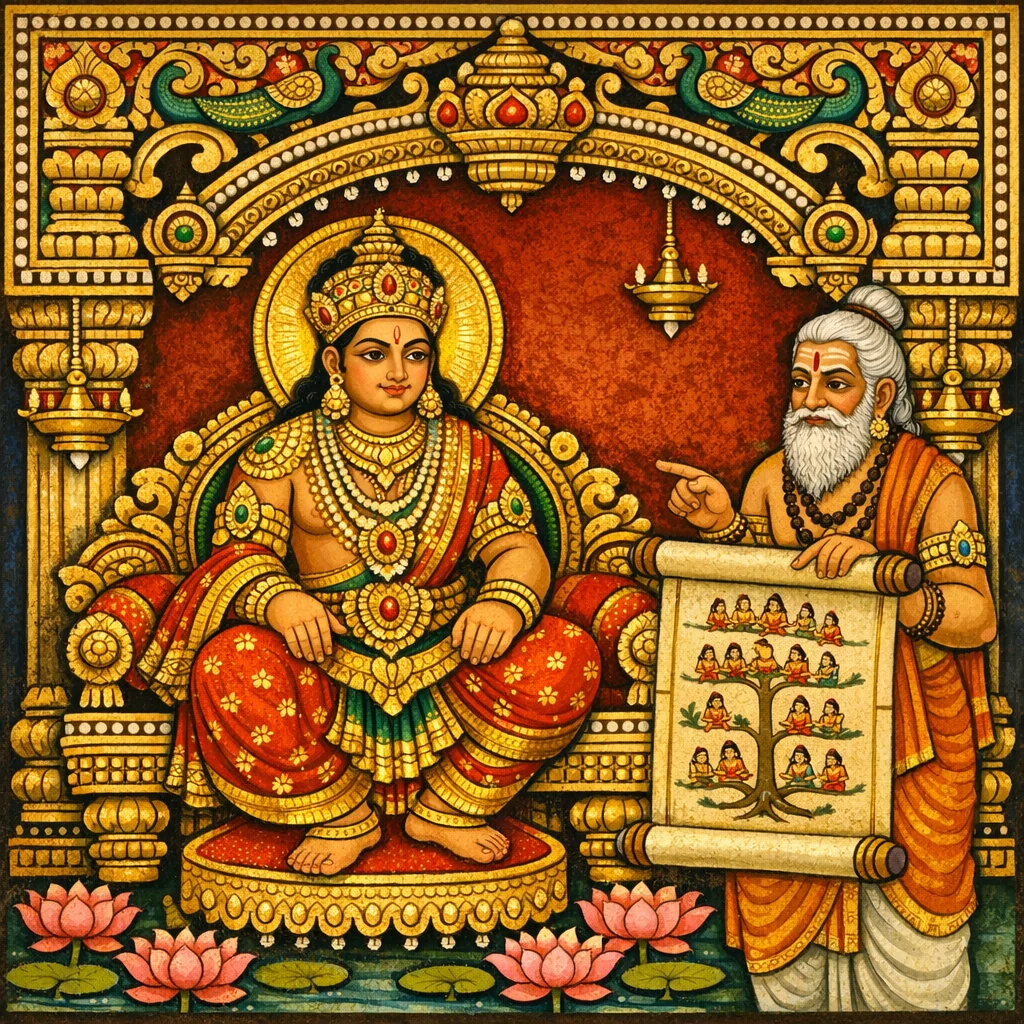
In the Agni–Vasiṣṭha transmission, this chapter turns from earlier cosmological and heroic narration to vamśa-vidyā: the ordered remembrance of royal lineages and the naming of janapadas. Agni traces descent from Turvasu through successive kings—Varga, Gobhānu, Traiśāni, Karaṇdhama, Marutta, Duṣmanta, Varūtha, Gāṇḍīra—and then extends genealogy into cultural geography by listing powerful territorial peoples: Gāndhāra, Kerala, Cola, Pāṇḍya, and Kola, showing how dynastic memory and regional identity interlock. The account continues through Druhyu’s line (Vabhrusetu, Purovasu, Dharma, Ghṛta, Viduṣ, Pracetas and a hundred sons), onward to Sṛñjaya/Jā-Sṛñjaya and Janamejaya, and into Uśīnara-linked branches that yield named regions through Śivi’s sons (Pṛthudarbha, Vīraka, Kaikeya, Bhadraka). It then consolidates an Aṅga dynasty sequence (Aṅga → Dadhivāhana → Diviratha → … → Karṇa → Vṛṣasena → Pṛthusena) and signals a transition to the Puru lineage next. The dharmic purpose is to ground Rajadharma in sacred continuity: kingship, territory, and social order are presented as parts of a divinely remembered world-system.
Shlokas
Verse 1
पञ्चसप्तत्यधिकद्विशततमो ऽध्यायः सुरासुरैर् अमन्थाब्धिमिति क , छ च देवासुरहरो ऽभवदिति क , घ , ञ , ट च अथ षट्सप्तत्यधिकद्विशततमो ऽध्यायः राजवंशवर्णनं अग्निर् उवाच तुर्वसोश् च सुतो वर्गो गोभानुस्तस्य चात्मजः गोभानोरासीत् त्रैशानिस्त्रैशानेस्तु करन्धमः
“Chapter 275” is titled “How the gods and the Asuras churned the ocean,” and in some recensions, “The slayer of gods and Asuras came to be.” Now begins Chapter 276, the description of royal lineages. Agni said: From Turvasu was born Varga; his son was Gobhānu. From Gobhānu was born Traiśāni; and from Traiśāni, Karandhama.
Verse 2
करन्धमान्मरुत्तोभूद् दुष्मन्तस्तस्य चात्मजः दुष्मन्तस्य वरूथो ऽभूद्गाण्डीरस्तु वरूथतः
From Karaṇdhamān was born Marutta; and his son was Duṣmanta. From Duṣmanta was born Varūtha, and from Varūtha was born Gāṇḍīra.
Verse 3
गाण्डीराच्चैव गान्धारः पञ्च जानपदास्ततः गान्धाराः केरलाश्चोलाः पाण्ड्याः कोला महाबलाः
From (the region called) Gāṇḍīra there is also Gāndhāra; thereafter are enumerated five territorial peoples: the Gāndhāras, the Keralas, the Colas, the Pāṇḍyas, and the Kola—all described as very mighty.
Verse 4
द्रुह्यस्तु वभ्रुसेतुश् च बभ्रुसेतोः पुरोवसुः ततो गान्धारा गान्धारैर् धर्मो धर्माद् घृतो ऽभवत्
From Druhyu came Vabhrusetu; from Vabhrusetu, Purovasu. From him arose the Gandhāras; among the Gandhāras was born Dharma, and from Dharma was born Ghṛta.
Verse 5
घृतात्तु विदुषस्तस्मात् प्रचेतास्तस्य वै शतम् आनद्रश् च सभानरश्चाक्षुषः परमेषुकः
From Ghṛta was born the wise Viduṣ; from him was born Pracetas. And of him, indeed, there were a hundred sons—Ānadra, Sabhānara, Ākṣuṣa, and Parameṣuka.
Verse 6
सभानरात् कालानलः कालानलजस्रृञ्जयः पुरञ्जयः सृञ्जयस्य तत्पुत्रो जनमेजयः
From Sabhānara was born Kālānala; from Kālānala came Jā-Sṛñjaya; (from him) Purañjaya; and Sṛñjaya’s son was Janamejaya.
Verse 7
तत्पुत्रस्तु महाशालस्तत्पुत्रो ऽभुन्महामनाः तस्मादुशीनरो ब्रह्मन्नृगायान्तु नृगस्ततः
His son indeed was Mahāśāla; Mahāśāla’s son was Mahāmanā, the great-minded. From him arose Uśīnara, O Brahmin; and from Uśīnara came Nṛga—thus the lineage proceeds.
Verse 8
नरायान्तु नरश्चासीत् कृमिस्तु कृमितः सुतः शोभानुस्तस्य चात्मज इति ख शोभानोरासीदिति ख कर्णा इति ज , ट च दशायां सुब्रतो जज्ञे दृशद्वत्यां शिविस् तथा
From Narāyāntu, Nara was born. From Nara came Kṛmi; and Kṛmita was Kṛmi’s son. His son was Śobhānu (in one recension; another reads Śobhānor). Some manuscripts read the name as Karṇā. In Daśā, Suvrata was born; and likewise, in the region/river-land of Dṛśadvatī, Śivi was born.
Verse 9
शिवे पुत्रास्तु चत्वारः पृथुदर्भश् च वीरकः कैकेयो भद्रकस्तेषां नाम्रा जनपदाः शुभाः
Śivi had four sons—Pṛthudarbha, Vīraka, Kaikeya, and Bhadraka; and from their names arose auspicious territorial regions (janapadas).
Verse 10
तितिक्षुरुशीनरजस्तितिक्षोश् च रुषद्रथः रुषद्रथादभूत्पैलः पैलाच्च सुतपाः सुतः
From Titikṣu was born Uśīnarajas; from Titikṣu also was born Ruṣadratha. From Ruṣadratha came Paila; and from Paila, the son Sutapā was born.
Verse 11
महायोगि बलिस्तस्मादङ्गो वङ्गश् च मुख्यकः पुण्ड्रः कलिङ्गो बालेयो बलिर्योगी बलान्वितः
From that Bali—who was a great yogin—were born Aṅga and Vaṅga (the foremost), as well as Puṇḍra, Kaliṅga, and Bāleya. That Bali was a yogin endowed with strength.
Verse 12
अङ्गाद्दधिवाहनो ऽभूत् तस्माद्दिविरथो नृपः दिविरथाद्धर्मरथस्तस्य चित्ररथः सुतः
From Aṅga was born Dadhivāhana; from him was born the king Diviratha. From Diviratha came Dharmaratha, and his son was Citraratha.
Verse 13
चित्ररथात्सत्यरथो लोमपदश् च तत्सुतः लोमपादाच्चतुरङ्गः पृथुलाक्षश् च तत्सुतः
From Citraratha was born Satyaratha, and Lomapada was his son. From Lomapada was born Caturaṅga, and his son was Pṛthulākṣa.
Verse 14
पृथुलाक्षाच्च चम्पो ऽभूच्चम्पाद्धर्यङ्गको ऽभवत् हर्यङ्गाच्च भद्ररथो बृहत्कर्मा च तत्सुतः
From Pṛthulākṣa was born Campa; from Campa arose Haryaṅga. From Haryaṅga came Bhadraratha, and his son was Bṛhatkarmā.
Verse 15
तस्मादभूद्वॄहद्भानुर्वृहद्भानोर्बृहात्मवान् तस्माज्जयद्रथो ह्य् आसीज्जयद्रथाद्वृहद्रथः
From him was born Vṛhadbhānu; from Vṛhadbhānu was born Bṛhātmavān. From him indeed arose Jayadratha; and from Jayadratha was born Vṛhadratha.
Verse 16
वृहद्रथाद्विश्वजिच्च कर्णो विश्वजितो ऽभवत् कर्णस्य वृषसेनस्तु पृथुसेनस्तदात्मजः एतो ऽङ्गवंशजा भूपाः पूरोर्वंशं विबोध मे
From Vṛhadratha arose Viśvajit; and from Viśvajit was born Karṇa. Karṇa’s son was Vṛṣasena, and his son was Pṛthusena. Thus are the kings born in the Aṅga lineage; understand from me the lineage of Puru.
Frequently Asked Questions
It presents rajavaṁśa-varṇana—genealogical succession of kings and the emergence of janapadas—linking dynastic memory to dharmic kingship and cultural geography.
Gāndhāras, Keralas, Colas (Cholas), Pāṇḍyas, and Kola are enumerated as powerful territorial peoples.
By grounding sovereignty in sacred lineage and remembered precedent, it frames governance and territory as dharmically ordered realities rather than merely political constructs.
Yes—names such as Śobhānu/Śobhānor and Karṇā appear as manuscript variants, indicating a living transmission and the need for critical comparison across recensions.