Adhyaya 86
Vidyā-viśodhana-vidhāna (Procedure for Purifying Mantra-Vidyā)
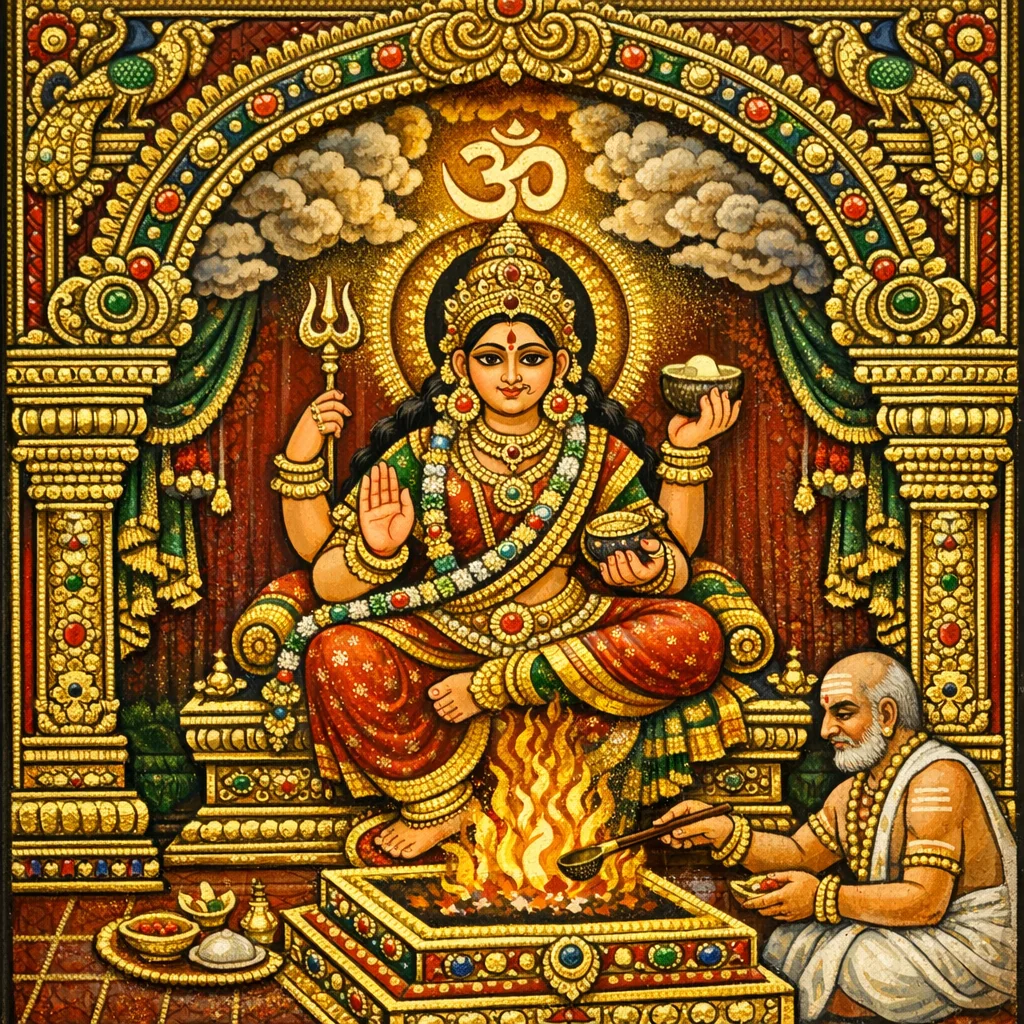
Lord Agni (Īśvara) turns from the earlier purification of the consecration kalaśa to the purification of mantra-vidyā within the Nirvāṇa-dīkṣā. He teaches a sandhāna (ritual joining) marked by specific bīja-signs and sets the rite upon a septad of tattvas—rāga, śuddhavidyā, niyati with kalā, kāla, māyā, and avidyā—so it rests on a metaphysical map, not mere technique. The text then gives letter-sets and the count of sacred padāni beginning with the praṇava, along with variant manuscript readings that preserve multiple recitational lineages. Agni next presents a Rudra-cosmology: Vāmadeva as the first Rudra and a succession of names culminating in twenty-five. The ritual science intensifies as two bījas, nāḍīs, and vāyus are named, and sensory objects/guṇas are briefly related to perception. From the heart-region the practitioner performs tāḍana (striking), chedana (cutting), praveśa (insertion), yojana (fixing), and ākarṣaṇa-grahaṇa (drawing and seizing), deposits kalā into the kuṇḍa, invokes Rudra as kāraṇa, and installs the presence into the initiate (child). The chapter concludes with expiatory homa (100 oblations), worship of Rudrāṇī, installation of consciousness into the pāśa-sūtra, a pūrṇāhuti, and the rule that vidyā-purification is done with one’s own bīja—thus completing the vidyā-śodhana.
Shlokas
Verse 1
इत्य् आदिमहापुराणे आग्नेये निर्वाणदीक्षायां प्रतिष्ठाकलाशोधनं नाम पञ्चाशीतितमो ऽध्यायः अथ षडशीतितमो ऽध्यायः विद्याविशोधनविधानं ईश्वर उवाच सन्धानमथ विद्यायाः प्राचीनकलया सह कुर्वीत पूर्ववत् कृत्वा तत्त्वं वर्णय तद्यथा
Thus, in the Agni Purāṇa, within the section on the Nirvāṇa-dīkṣā, the eighty-fifth chapter—called “Purification of the Consecration Pitcher (kalaśa) for Installation (pratiṣṭhā)”—is concluded. Now begins the eighty-sixth chapter: “The Procedure for Purifying (Mantra-)Vidyā.” The Lord said: “Then one should perform the sandhāna, the connection of the Vidyā together with the ancient Kalā, just as before. Having done so, describe its true principle (tattva), namely as follows.”
Verse 2
ॐ हों क्षीमिति सन्धानं राग्श् च शुद्धविद्या च नियतिः कलया सह कालो मया तथाविद्या तत्त्वानामिति सप्तकं
“Oṃ, hoṃ, kṣīm”—these are the mantric designations of the connective principle (sandhāna). Also (there are) Rāga and Śuddhavidyā; Niyati together with Kalā; Kāla; Māyā; and likewise Avidyā—this is the group of seven tattvas (principles).
Verse 3
रलवाः शषसाः वर्णाः षड् विद्यायां प्रकीर्तिताः पदानि प्रणवादीनि एकविंशतिसङ्ख्यया
In the sixfold system of learning (ṣaḍ-vidyā), the letters beginning with ra, la, va and those of the śa–ṣa–sa group are declared; and the sacred terms (padāni) beginning with the praṇava (Oṃ) are stated to be twenty-one in number.
Verse 4
पूर्ववत् धृत्वेति ख, चिह्नितपुस्तकपाठः इं शिवाय इति ख, चिह्नितपुस्तकपाठः वचोगुह्याय इति ख, चिह्नितपुस्तकपाठः सद्योजाताय मूर्तये इति ख, चिह्नितपुस्तकपाठः अथ निधाय सर्वाधिपतय इति ख, चिह्नितपुस्तकपाठः ॐ रुद्राणां भुवनानाञ्च स्वरूपमथ कश्यपे प्रथमो वामदेवः स्यात्ततः सर्वभवोद्भवः
“‘As before, having placed (it),’—so reads the marked manuscript; ‘(say) iṃ śivāya,’—so reads the marked manuscript; ‘(say) vaco-guhyāya,’—so reads the marked manuscript; ‘(say) sadyojātāya mūrtaye,’—so reads the marked manuscript; and ‘then, having deposited (it), (say) sarvādhipataye,’—so reads the marked manuscript. Now, O Kaśyapa, I shall state the true form of the Rudras and of the worlds: first is Vāmadeva; from him arises the origin of all existence.”
Verse 5
वज्रदेहः प्रभुर्धाता क्रविक्रमसुप्रभाः वटुः प्रशान्तनामा च परमाक्षरसञ्ज्ञकः
He is of vajra-like, adamantine body; the Lord; Dhātṛ, the Sustainer and Creator; he whose stride is fierce and whose radiance is splendid; the divine youth (Vaṭu); the one named “Praśānta” (Perfectly Tranquil); and the one designated by the Supreme Imperishable Syllable, the Paramākṣara.
Verse 6
शिवश् च सशिवो बभ्रुरक्षयः शम्भुरेव च अदृष्टरूपनामानौ तथान्यो रूपवर्धनः
And (He is) “Śiva”; “Saśiva”; “Babhru”; “Akṣaya”, the Imperishable; and indeed “Śambhu”. (He is) the one whose form and name are unseen (Adṛṣṭarūpa-nāmā); and also the other name: “Rūpavardhana”, “the increaser of form and splendour.”
Verse 7
मनोन्मनो महावीर्यश्चित्राङ्गस्तदनन्तरं कल्याण इति विज्ञेयाः पञ्चविंशतिसङ्ख्यया
“Manonmana”, “Mahāvīrya”, “Citrāṅga”, and thereafter “Kalyāṇa”—these are to be understood as the (next) names, completing the enumeration as the twenty-fifth.
Verse 8
मन्त्रो घोरामरौ वीजे नाड्यौ द्वे तत्र ते यथा पूषा च हस्तिजिह्वा च व्याननागौ प्रभञ्जनौ
In that (system), the mantra has two seed-syllables (bījas), “ghora” and “amara”; and there are two nāḍīs there, namely Pūṣā and Hastijihvā; likewise (there are the vāyus) Vyāna, Nāga, and Prabhañjana.
Verse 9
विषयो रूपमेवैकमिन्द्रिये पादचक्षुषी शब्दः स्पर्शश् च रूपञ्च त्रय एते गुणाः स्मृताः
Form alone is the object for the two sense-organs—foot and eye. Sound, touch, and form: these three are remembered as the qualities (guṇa) apprehended by the senses.
Verse 10
अवस्थात्र षुप्तिश् च रुद्रो देवस्तु कारणं विद्यामध्यगतं सर्वं भावयेद्भवनादिकं
Even in the state called sleep, Rudra—the divine one—is the causal principle (kāraṇa). One should contemplate that everything, abiding within Vidyā (knowledge), is to be realized as the manifested world—beginning with the body and the rest.
Verse 11
ताडनं छेदनं तत्र प्रवेशञ्चापि योजनं आकृष्य ग्रहणं कुर्याद्विद्यया हृत्प्रदेशतः
There, by means of the Vidyā, one should perform striking and cutting; also insertion and fixing. Then, having drawn (the target) toward oneself, one should seize it—directing the operation from the region of the heart.
Verse 12
आत्मन्यारोप्य सङ्गृह्य कलां कुण्डे निवेशयेत् रुद्रं कारणमावाह्य विज्ञाप्य च शिशुं प्रति
Having first superimposed it upon oneself and gathered up the ritual kalā, one should place it into the fire-pit (kuṇḍa). Then, having invoked Rudra as the causal principle (kāraṇa), one should make the formal declaration/instruction directed toward the child (śiśu).
Verse 13
पित्रोरावहनं कृत्वा हृदये ताडयेच्छिशुं प्रविश्य पूर्वमन्त्रेण तदात्मनि नियोजयेत्
Having performed the invocation of the two parents (father and mother), one should tap the child on the region of the heart. Then, entering—i.e., ritually identifying oneself with the invoked presence—by means of the preceding mantra, one should install that presence into the child’s very self.
Verse 14
आकृष्यादाय पूर्वोक्तविधिनाअत्मनि योजयेत् वामया योजयेत् योनौ गृहीत्वा द्वादशान्ततः
Having drawn it forth and taken it up, one should unite (place) it within oneself according to the procedure stated earlier. With the left (hand/nāḍī), one should apply it to the yoni (source/seat), having grasped the current from the dvādaśānta—the ‘twelve-finger’ terminal point above the crown.
Verse 15
बुद्ध इति घ, ङ, चिह्नितपुस्तकपाठः आवाहनं कुर्यादिति ग, घ, चिह्नितपुस्तकपाठः कुर्वीत देहसम्पत्तिं जन्माधिकारमेव च भोगं लयन्तथा श्रोतःशुद्धितत्त्वविशोधनं
Marked manuscript readings differ here: some read “buddha,” while others read “one should perform the invocation (āvāhana).” In this rite one should effect bodily well-being, confirm one’s rightful eligibility by birth, secure enjoyment (bhoga) and also dissolution (laya), along with purification of the channels (śrotas) and cleansing of the principles (tattvas).
Verse 16
निःशेषमलकर्मादिपाशबन्धनिवृत्तये निष्कृत्यैव विधानेन यजेत शतमाहुतीः
For the complete cessation of bondage in the form of fetters arising from impure deeds and the like, one should perform the expiatory rite (niṣkṛti) according to the prescribed procedure and offer a hundred oblations (āhuti) into the fire.
Verse 17
अस्त्रेण पाशशैथिल्यं मलशक्तिं तिरोहितां छेदनं मर्दनं तेषां वर्तुलीकरणं तथा
By the astra (missile/weapon-mantra) one causes the loosening of bonds; one renders the enemy’s defiling power ineffective and veiled; and one also brings about their cutting, crushing, and circular whirling (disorientation) as well.
Verse 18
दाहं तदक्षराभावं प्रायश्चित्तमथोदितं रुद्राण्यावाहनं पूजा रूपगन्धसमर्पणं
Then the expiatory rite is prescribed: perform a dāha (burning, i.e., homa) as atonement for that omission of syllables; and thereafter invoke Rudrāṇī (āvāhana), worship her, and offer form (iconic embodiment) and fragrance.
Verse 19
ॐ ह्रीं रूपगन्धौ शुल्कं रुद्र गृहाण स्वाहा संश्राव्य शाम्भवीमाज्ञां रुद्रं विसृज्य कारणं विधायात्मनि चैतन्यं पाशसूत्रे निवेशयेत्
“Oṃ, Hrīṃ—(I offer) form and fragrance as the fee; O Rudra, accept (them); svāhā.” Having thus proclaimed Śāmbhavī’s command, one should dismiss Rudra, establish the causal principle (kāraṇa) within oneself, and then install consciousness (caitanya) into the pāśa-sūtra, the ritual cord/noose-string.
Verse 20
विन्दुं शिरसि विन्यस्य विसृजेत् पितरौ ततः दद्यात् पूर्णां विधानेन समस्तविधिपूरणीं
Placing the ritual drop (bindu) upon the head, he should then dismiss the two Fathers (ancestral spirits); thereafter, according to the prescribed procedure, he should offer the pūrṇā—the concluding, complete oblation that fulfills all rites.
Verse 21
पूर्वोक्तविधिना कार्यं विद्यायां ताडनादिकं स्ववीजन्तु विशेषः स्यादिति विद्या विशोधिता
In accordance with the procedure stated earlier, one should perform, with respect to the vidyā (mantra), acts such as tāḍana (ritual striking) and the like; the distinctive feature, however, is that it is done together with one’s own bīja (seed-syllable). Thus the vidyā is purified.
Frequently Asked Questions
The chapter emphasizes vidyā-śodhana as a precise ritual-technology: sandhāna with bīja-markers, tattva-enumeration, heart-centered operations (tāḍana/chedana/praveśa/yojana/ākarṣaṇa/grahaṇa), kuṇḍa deposition, and a structured expiation (100 oblations) culminating in pūrṇāhuti and caitanya installation into the pāśa-sūtra.
By treating mantra as a living vidyā requiring purification, the chapter links ritual correctness to inner transformation: loosening pāśa-bonds, cleansing mala-based impediments, aligning tattvas, and establishing consciousness (caitanya) in a controlled rite—so technical mastery becomes a vehicle for dharmic eligibility (adhikāra) and movement toward liberation-oriented discipline.