Adhyaya 83
Chapter 83 — निर्वाणदीक्षाकथनम् (Description of the Nirvāṇa Initiation)
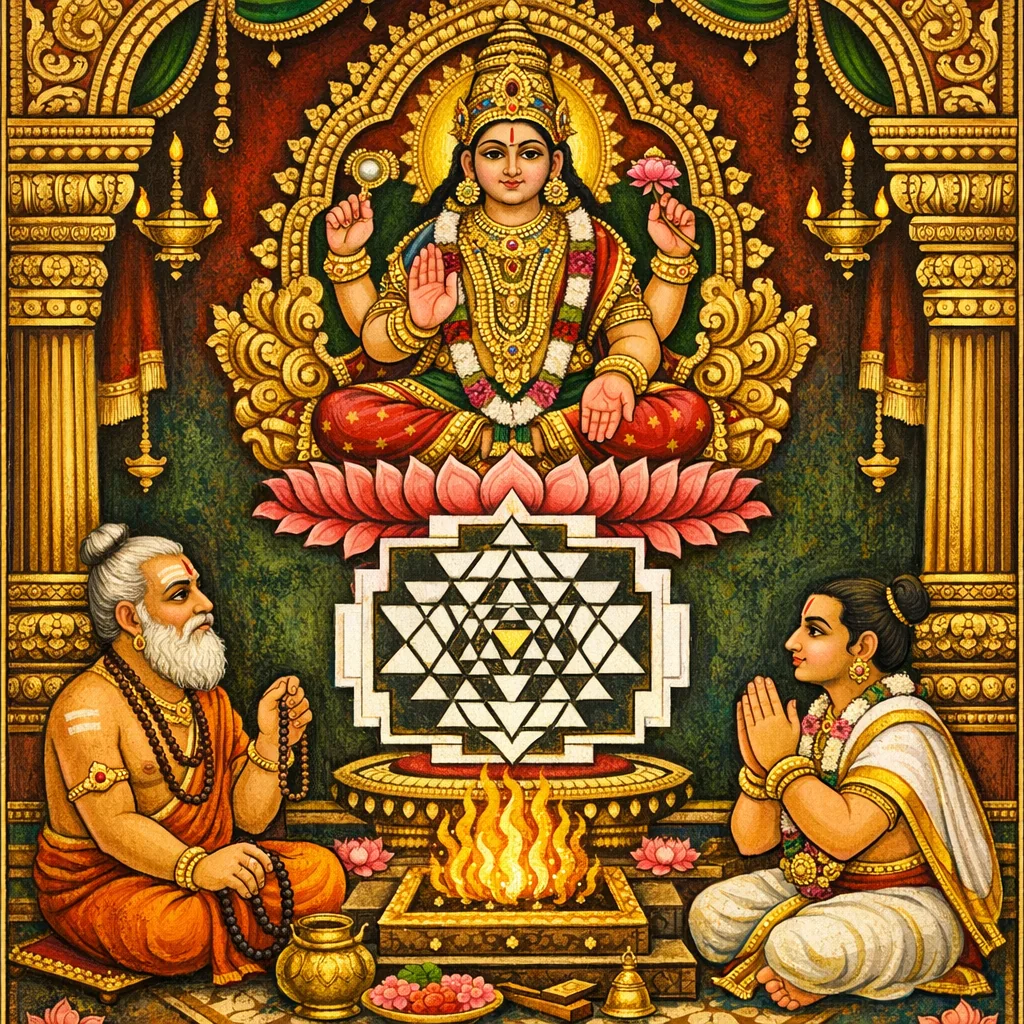
This chapter moves from Samaya-dīkṣā to Nirvāṇa-dīkṣā, outlining a liberation-oriented initiation within Īśāna-kalpa practice. It begins with mantra-dīpana (activation) of the mūla-mantra and aṅga-nyāsa placements at the heart, head, and mouth, then sets out homa patterns—single or triple oblations, vaṣaṭ/vauṣaṭ endings, and dhruvā formulas—suited to fierce, pacificatory, and prosperity rites. A key ritual device is the consecrated sūtra (thread), contemplated as Suṣumṇā and installed through mudrā-actions (especially Saṃhāra-mudrā), nāḍī operations, and protective avaguṇṭhana. Repeatedly, the aim is to establish sannidhi (divine presence) through triad oblations and use of the hṛdaya-mantra. The chapter then expands into purification and binding procedures involving kalā-pāśa (the noose of kalās), grahaṇa–bandhana (seizing and binding), and tattva-based visualizations, including śāntyatīta contemplations beyond pacification. It concludes with expiatory homas, disciple handling (orientation, bathing, dietary observances), dismissal rites (visarjana, Caṇḍeśa worship), and the closing dīkṣā-adhivāsana (overnight preparatory) observance, uniting technical precision with the stated goal of mokṣa.
Shlokas
Verse 1
इत्य् आदिमहापुराणे आग्नेये समयदीक्षाकथनं नाम द्व्यशीतितमो ऽध्यायः अथ त्र्यशीतितमो ऽध्यायः निर्वाणदीक्षाकथनं ईश्वर उवाच अथ निर्वाणदीक्षायां कुर्यान्मूलादिदीपनं पाशबन्धनशक्त्यर्थं ताडनादिकृतेन वा
Thus, in the Agni Purāṇa, the eighty-second chapter entitled “The Description of the Samaya Initiation (Samaya-dīkṣā)” concludes. Now begins the eighty-third chapter, “The Description of the Nirvāṇa Initiation (Nirvāṇa-dīkṣā).” The Lord said: Then, in the Nirvāṇa-initiation, one should perform the enkindling/activation beginning from the Mūla (root), in order to empower the rite of binding with the noose (pāśa); or it may alternatively be done by striking and related acts.
Verse 2
एकैकया तदाहुत्या प्रत्येकं तत्त्रयेण वा वीजगर्भशिखार्धन्तु हूं फडन्तध्रुवादिना
With a single oblation for each mantra—or alternatively with three oblations for each—one should make the offerings using mantras that include the bīja (seed), garbha, and śikhā portions, together with the fixed (dhruvā) formulas and endings such as “hūṃ” and “phaḍ,” and the like.
Verse 3
ॐ ह्रूं ह्रौं हौं ह्रूं फडिति मूलमन्त्रस्य दीपनं ॐ ह्रूं हौं हौं ह्रूं फडिति हृदय एवं शिरोमुखे
“Oṃ hrūṃ hrauṃ hauṃ hrūṃ phaḍ”—this is the dīpana (enkindling) of the root-mantra. “Oṃ hrūṃ hauṃ hauṃ hrūṃ phaḍ”—(to be applied as nyāsa) upon the heart, and likewise upon the head and the mouth.
Verse 4
प्रत्येकं दीपनं कुर्यात् सर्वस्मिन् क्रूरकर्मणि शान्तिके पौष्टिके चास्य वषडन्तादिनाणुना
In every fierce operation of the abhicāra type, and likewise in pacificatory (śāntika) and prosperity-increasing (pauṣṭika) rites, one should perform the dīpana separately for each case, employing the appropriate mantra-syllable marked by the ending “vaṣaṭ” and the like.
Verse 5
वषड्वौषट्समोपेतैः सर्वकाम्योपरि स्थितैः हवनं संवरैः कुर्यात् सर्वत्राप्यायनादिषु
One should perform the havana (fire-offering) with the prescribed saṃvara (enclosing/protective) formulas, employing mantras furnished with the exclamations “vaṣaṭ” and “vauṣaṭ” and placed above the Sarvakāmya rite; and this is to be done in all rites, such as those of āpyāyana (nourishment and increase) and the like.
Verse 6
ततः स्वसव्यभागस्थं मण्डले शुद्धविग्रहं अडिति ख, चिह्नितपुस्तकपाठः ॐ हूं हों हूं फडिति ग, चिह्नितपुस्तकपाठः३ ॐ हूं हां हां हूं फडिति ख, चिह्नितपुस्तकपाठः ॐ ह्रं ह्रीं ह्रं ह्रं फडिति ग, चिह्नितपुस्तकपाठः वषडन्तादिनात्मनेति ख, ग, चिह्नितपुस्तकपाठः शिष्यं सम्पूज्य तत् सूत्रं सुषुम्णेति विभावितं
Then, within the maṇḍala, one should contemplate the purified form (of the deity) abiding on one’s own left side. (According to marked manuscript readings, the mantra is variously given as “oṃ hūṃ hoṃ hūṃ phaṭ”, or “oṃ hūṃ hāṃ hāṃ hūṃ phaṭ”, or “oṃ hraṃ hrīṃ hraṃ hraṃ phaṭ”, and in some readings as having the nature of syllables beginning and ending with “vaṣaṭ”.) Having duly worshipped the disciple, one should consecrate that thread (sūtra), meditating upon it as “Suṣumṇā”, the central subtle channel.
Verse 7
मूलेन तच्छिखाबन्धं पादाङ्गुष्ठान्तमानयेत् संहारेण मुमुक्षोस्तु बध्नीयाच्छिष्यकायके
By the “mūla” (root principle), one should draw that topknot-binding (śikhā-bandha) down to the very end of the great toe; and by “saṃhāra” (withdrawal and reabsorption), for the seeker of liberation, it should be firmly bound within the disciple’s body.
Verse 8
पुंसस्तु दक्षिणे भागे वामे नार्या नियोजयेत् शक्तिं च शक्तिमन्त्रेण पूजितान्तस्य मस्तके
For a man, one should place (the rite/seat) on the right side; for a woman, on the left. And at the conclusion of worship, Śakti should be installed and worshipped with the Śakti-mantra at the crown of the worshipper’s head.
Verse 9
संहारमुद्रयाअदाय सूत्रं तेनैव योजयेत् नाडीन्त्वादाय मूलेन सूत्रे न्यस्य हृदार्चयेत्
Having taken up the ritual cord (sūtra) with the Saṃhāra-mudrā, one should fasten it by that very mudrā. Then, taking up the nāḍīs (subtle channels) by the mūla, placing them upon the cord, one should worship (the deity) at the hṛd, the heart.
Verse 10
अवगुण्ठ्य तु रुद्रेण हृदयेनाहुतित्रयं प्रदद्यात्सन्निधानार्थं शक्तावप्येवमेव हि
Having performed the veiling rite (avaguṇṭhana) with the Rudra-mantra, one should then offer three oblations (āhuti) with the Hṛdaya (heart) mantra, in order to establish the deity’s presence (sannidhāna); even if one has full capacity to do more, it is to be done in exactly this way.
Verse 11
ॐ हां वर्णाध्वने नमो हां भवनाध्वने नमः ॐ हां कालाध्वने नमः शोध्याध्वानं हि सूत्रके
“Oṃ.” Homage, with the seed-syllable hāṃ, to the path of phonemes; homage, with hāṃ, to the path of worlds/planes of existence; “Oṃ.” homage, with hāṃ, to the path of time. Indeed, in the Sūtra (the subtle thread/principle), the path that is to be purified is thus purified.
Verse 12
न्यस्यास्त्रवारिणा शिष्यं प्रोक्ष्यास्त्रमन्त्रितेन च पुष्पेण हृदि सन्ताड्य शिष्यदेहे प्रविश्य च
Having performed nyāsa with the “astra-water,” and having sprinkled the disciple with water empowered by the Astra-mantra, one should strike/touch the disciple’s heart with a flower; and the mantra-power should enter into the disciple’s body.
Verse 13
गुरुश् च तत्र हूङ्कारयुक्तं रेचकयोगतः चैतन्यं हंसवीजस्थं विश्लिष्येदायुधात्मना
And there, the Guru—by the discipline of exhalation (recaka) conjoined with the syllable hūṃ—should separate/dissolve the vital consciousness (caitanya) abiding in the Haṃsa-seed, by assuming the form of a weapon, i.e., a sharply cutting, mantra-empowered inner force.
Verse 14
ॐ हौं हूं फट् आछिद्य शक्तिसूत्रेण हां हं स्वाहेति चाणुना संहारमुद्रया सूत्रे नाडीभूते नियोजयेत्
Uttering “Oṃ hauṃ hūṃ phaṭ,” one should cut/sever (the obstruction) and, with the śakti-thread (śakti-sūtra), apply the subtle, atom-like mantric impulse—“hāṃ haṃ svāhā”; then, by means of the Saṃhāra-mudrā, one should implant it into the thread that has been made to function as a nāḍī (subtle channel).
Verse 15
ॐ हां हं हां आत्मने नमः व्यापकं भावयेदेनं तनुत्राणावगुण्ठयेत् अपुस्तकपाठः ॐ हां पदात्मने नमः ॐ हां वर्णात्मने नमः ॐ हां मन्त्रात्मने नमः ॐ हां कालात्मने नम इति ङ, चिह्नितपुस्तकपाठः ॐ हां हौं हूं फट् इति ग, चिह्नितपुस्तकपाठः तन्मात्रेणावगुण्ठयेदिति ग, चिह्नितपुस्तकपाठः आहुतित्रितयं दद्यात् हृदा सन्निधिहेतवे
With the mantra “Oṃ hāṃ haṃ hāṃ—salutation to the Ātman (Self),” one should contemplate this (deity/mantra) as all-pervading and then perform the avaguṇṭhana, an envelopment as protective body-armor (tanutrāṇa). (Manuscript variants record: “Oṃ hāṃ—salutation to the padātman; … to the varṇātman; … to the mantrātman; … to the kālātman,” and also “Oṃ hāṃ hauṃ hūṃ phaṭ,” and “one should envelop with that alone.”) Then one should offer three oblations (āhuti) with the heart(-mantra), for the purpose of divine presence/manifestation.
Verse 16
विद्यादेहञ्च विन्यस्य शान्त्यतीतावलोकनं तस्यामितरतत्त्वाद्यं मन्त्रभूतं विचिन्तयेत्
Having performed nyāsa by installing upon oneself the “body of vidyā” (mantric power), one should contemplate the vision that transcends peace; and within it reflect upon the manifold principles, beginning with the “other” (the differentiated tattvas), as being of the nature of mantra.
Verse 17
ॐ हां हौं शान्त्यतीतकलापाशाय नम इत्य् अनेनावलोकयेत् हे तत्त्वे मन्त्रमप्येकं पदं वर्णाश् च षोडश तथाष्टौ भुवनान्यस्यां वीजनाडीकथद्वयं
With the formula “Oṃ hāṃ hauṃ—obeisance to the pāśa (noose) constituted of the series of kalās that transcends śānti,” one should perform avalokana (ritual visualization/inspection). O Principle (tattva)! In this practice there is also a mantra consisting of a single pada; there are sixteen varṇas and likewise the eight bhuvanas; and here is taught the twofold doctrine concerning the bīja and the nāḍī.
Verse 18
विषयञ्च गुणञ्चैकं कारणं च सदा शिवं सितायां शान्त्यतीतायामन्तर्भाव्य प्रपीडयेत्
Having merged the object of meditation (viṣaya), the quality (guṇa), the single integrating principle, and the causal ground (kāraṇa) into Sadāśiva—within the White Śakti, in the state of Transcendent Peace—one should firmly press, that is, intensify and stabilize that absorption.
Verse 19
ॐ हौं शान्त्यतीतकलापाशाय हूं फट् संहारमुद्रयाअदाय विदध्यात् सूत्रमस्तके पूजयेदाहुतींस्तिस्रो दद्यात् सन्निधिहेतवे
Reciting, “Oṃ hauṃ—unto the pāśa of the assemblage of kalās beyond śānti, hūṃ phaṭ,” and employing the Saṃhāra-mudrā, one should fasten/arrange the consecrated thread upon the head; then one should perform worship and offer three oblations (āhuti), for the sake of securing the deity’s presence.
Verse 20
तत्त्वे द्वे अक्षरे द्वे च वीजनाडीकथद्वयं गुणौ मन्त्रौ तथाब्जस्थमेकं कारणमीश्वरं
There are two tattvas, two syllables, and a twofold account of the bīja and the nāḍī; there are two guṇas and two mantras; and likewise the one Lord, abiding in the lotus, is the single causal source.
Verse 21
पदानि भानुसङ्ख्यानि भुवनानि दश सप्त च एकञ्च विषयं शान्तौ कृष्णायामच्युतं स्मरेत्
In rites of pacification (śānti), one should remember Acyuta (Viṣṇu): reciting words equal in number to the Sun (twelve), meditating on the worlds as ten, seven, and one, and fixing the mind on the single object of contemplation in the dark night (kṛṣṇāyām).
Verse 22
ताडयित्वा समादाय मुखसूत्रे नियोजयेत् जुहुयान्निजवीजेन सान्निध्यायाहुतित्रयं
Having struck (it) and then taking it up, one should fasten it to the mouth-cord (mukha-sūtra); then, using one’s own fan or whisk, one should offer three oblations (āhuti) for the sake of the deity’s manifest nearness (sānnidhya).
Verse 23
विद्यायां सप्त तत्त्वानि पादानामेकविंशतिं षड् वर्णान् सञ्चरं चैकं लोकानां पञ्चविंशतिं
In this metrical science (vidyā), there are seven fundamental principles (tattvas); twenty-one varieties of metrical feet (pādas); six syllabic classes; and one principal rule called ‘sañcāra’; and it further teaches twenty-five classifications of worlds.
Verse 24
गुणानान्त्रयमेकञ्च विषयं रुद्रकारणं अन्तर्भाव्यातिरिक्तायां जीवनाडीकथद्वयं
Three types of poetic qualities (guṇas), and also one topic (viṣaya); the cause termed ‘Rudra-kāraṇa’; inclusion (antarbhāva) and surplus/excess (atirikta); and the pair of discussions on the life-pulse channel (jīva-nāḍī)—these are to be explained.
Verse 25
अस्त्रमादाय दध्याच्च पदं द्व्यधिकविंशतिं लोकानाञ्च कलानाञ्च षष्टिं गुणचतुष्टयं
Having taken up the sacred weapon (astra), one should meditate upon the cosmic ‘pada’ as twenty-two in number; and upon the worlds and the kalās as sixty; and upon the fourfold set of guṇas.
Verse 26
ॐ हां हौं हों शान्त्यतीतकलापाशायेति ग, चिह्नितपुस्तकपाठः मन्त्राणां त्रयमेकञ्च विषयं कारणं हरिं अन्तर्भाव्य प्रतिष्ठायां शुक्लयान्ताडनादिकं
“Oṃ hāṃ hauṃ hoṃ”—(the mantra) “for the pacification of the bonds of the transcendent array of kalās”—so it is stated in the marked reading of the text. In the installation rite (pratiṣṭhā), one should employ three mantras and also a single additional mantra, incorporating the object (viṣaya), the cause (kāraṇa), and Hari (Viṣṇu), together with procedures such as striking/energizing the white yantra and related acts.
Verse 27
विधाय नाभिसूत्रस्थां सन्निधायाहुतीर्यजेत् ह्रीं भुवनानां शतं साग्रंपदानामष्टविंशतिं
Having arranged (the rite) with the (nyāsa/mantra) situated at the navel-thread (nābhi-sūtra), and having placed the oblations (āhuti) nearby, one should perform the offering. One should employ the bīja “hrīṃ”, with a hundred (recitations/offerings) relating to the bhuvanas (worlds), and twenty-eight units of the padāni (metrical/word-units) in full.
Verse 28
वीजनाडीसमीराणां द्वयोरिन्द्रिययोरपि वर्णन्तत्त्वञ्च विषयमेकैकं गुणपञ्चकं
He explains, in due order for each, the principle (tattva), the object (viṣaya), and the set of five qualities (guṇa-pañcaka) pertaining to the fan (vījana), the tubular channel (nāḍī), and the winds (samīra), and also to the two senses (indriya).
Verse 29
हेतुं ब्रह्माण्डमन्त्रस्थं शम्बराणां चतुष्टयं निवृत्तौ पीतवर्णायामन्तर्भाव्य प्रताडयेत्
One should place the ‘Hetu’ (causal) formula within the Brahmāṇḍa-mantra; then, in the Nivṛtti (withdrawing) rite, having enclosed the four Śambara (formulae/forces) in the yellow-colored visualization, one should strike—i.e., apply it with force—against the obstruction.
Verse 30
आदौ यत्तत्त्वभागान्ते सूत्रे विन्यस्यपूजयेत् जुहुयादाहुतीस्तिस्रः सन्निधाय पावके
First, having placed (nyāsa) and worshipped that principle (tattva) at the end portion of the ritual sūtra (thread/formula), one should then offer three oblations (āhuti), with the Fire (pāvaka) present and duly established.
Verse 31
इत्यादाय कलासूत्रे योजयेच्छिष्यविग्रहात् सवीजायान्तु दीक्षायां समयाचारयागतः
Thus, having taken the required ritual mark or implement, one should apply it upon the kalā-sūtra (the cord/line of ritual divisions), drawing it forth from the disciple’s bodily form. But in an initiation “with bīja” (seed-syllables of mantra), one should proceed according to the established samaya and ācāra—namely, the prescribed vows and ritual conduct.
Verse 32
देहारम्भकरक्षार्थं मन्त्रसिद्धिफलादपि इष्टापूर्तादिधर्मार्थं व्यतिरिक्तं प्रबन्धकं
A “prabandhaka” (systematic undertaking) is that which is distinct from ordinary aims: it is performed to protect one’s embodied existence and one’s undertakings, to obtain the fruits of mantra-accomplishment, and to fulfill the dharmic purpose of rites such as iṣṭa and pūrta.
Verse 33
चैतन्यबोधकं सूक्ष्मं कलानामन्तरे स्मरेत् अमुनैव क्रमेणाथ कुर्यात्तर्पणदीपने
One should contemplate, within the intervals of the kalā-s (ritual moments), the subtle principle that awakens consciousness. Then, following this very sequence, one should perform the rites of tarpaṇa (oblations of satisfaction) and dīpana (kindling/illumination, activation).
Verse 34
आहुतिभिः स्वमन्त्रेण तिसृभिस्तिसृभिस् तथा ॐ हौं शान्त्यतीतकलापाशाय स्वाहेत्यादितर्पणं ॐ हां हं हां शान्त्यतीतकलापाशाय हूम्फडित्यादिदीपनं तत् सूत्रं व्याप्तिबोधाय कलास्थानेषु पञ्चसु
Then, with oblations (āhuti)—three and three—using one’s own assigned mantra: the tarpaṇa offering is begun with “Oṃ hauṃ, to Śāntyatīta-kalāpāśa, svāhā”; and the dīpana rite (kindling/activation) is begun with “Oṃ hāṃ haṃ hāṃ, to Śāntyatīta-kalāpāśa, hūṃ phaṭ.” That mantric sūtra is for making known vyāpti (pervasion) in the five loci called the kalā-sthānas.
Verse 35
ह्रीं त्रिभुवनाधिपानामिति ख, चिह्नितपुस्तकपाठः पदानामूनविंशतिमिति ग, चिह्नितपुस्तकपाठः आदौ सतत्त्वभावेनेति ग, चिह्नितपुस्तकपाठः ॐ हां हौं हौं इति ग, चिह्नितपुस्तकपाठः सङ्गृह्य कुङ्कुमाज्येन तत्र साङ्गं शिवं यजेत् हूम्फडन्तैः कलामन्त्रैर् भित्त्वा पाशाननुक्रमात्
After gathering the offering-substance with kunkuma (saffron) mixed into ghee, one should worship Śiva there together with His aṅga-s (associated limbs/aspects). Then, using the kalā-mantras that end with the exclamations “hūṃ” and “phaḍ,” one should pierce and cut through the pāśa-s (bonds) sequentially, in the prescribed order. (Variant readings noted in marked manuscripts include: “hrīṃ, (of) the lords of the three worlds…,” “nineteen minus (one) syllables/words…,” “at the beginning, with the disposition of sat-tattva…,” and “oṃ hāṃ hauṃ hauṃ….”)
Verse 36
नमो ऽन्तैश् च प्रविश्यान्तः कुर्याद् ग्रहणबन्धने ॐ हूं हां हौं हां हूं फट् शान्त्यतीतकलां गृह्णामि बध्नामि चेत्यादिमन्त्रैः कलानां ग्रहणबन्धनादिप्रयोगः पाशादीनाञ्च स्वीकारो ग्रहणं बन्धनं पुनः
Having entered within the prescribed ritual space and concluding with the salutation formula (“namo …”), one should perform the rite of “seizing and binding” (grahaṇa–bandhana) with the mantra: “oṃ hūṃ hāṃ hauṃ hāṃ hūṃ phaṭ.” Saying, “I seize; I bind the kalā that has gone beyond pacification,” and similar mantras—this is the application for the seizing, binding, and related operations of the kalās; and one should also ritually take up the noose (pāśa) and other implements. Thus, once again, the procedure of seizing and binding is stated.
Verse 37
पुरुषं प्रति निःशेषव्यापारप्रतिपत्तये उपवेश्याथ तत् सूत्रं शिष्यस्कन्धे निवेशयेत्
So that the person may fully comprehend the entire procedure in all its details, having first seated him, one should then place that sacred cord (sūtra) upon the disciple’s shoulder.
Verse 38
विस्तृताघप्रमोषाय शतं मूलेन होमयेत् शरावसम्पुटे पुंसः स्त्रियाश् च प्रणितोदरे
For the removal of widespread sins, one should offer a hundred homa oblations with the prescribed root (mūla); this rite is performed in a covered vessel (śarāva-sampuṭa) placed upon the abdomen of a man or of a woman.
Verse 39
हृदस्त्रसम्पुटं सूत्रं विधायाभ्यर्चयेद्धृदा सूत्रं शिवेन साङ्गेन कृत्वा सम्पातशोधितं
Having prepared the ritual thread enclosed and protected by the Hṛd-astra mantra, one should worship it with the Hṛd (heart) mantra. Then, having empowered the thread with the Śiva-mantra together with its ancillary parts (aṅgas), and purified it by sampāta (mantric sprinkling/oblation), it becomes cleansed.
Verse 40
निदध्यात् कलशस्याधो रक्षां विज्ञापयेदिति शिष्यं पुष्पं करे दत्वा सम्पूज्य कलशादिकं
He should place the protective cord/amulet (rakṣā) beneath the consecrated water-pot (kalaśa) and instruct the disciple regarding the rite of protection. Then, placing a flower in the disciple’s hand, he should complete the worship of the kalaśa and the associated ritual implements.
Verse 41
प्रणमय्य वहिर्यायाद् यागमन्दिरमध्यतः मण्डलत्रितयं कृत्वा मुमुक्ष्वनुत्तराननान्
Having bowed in reverence, one should depart from the middle of the sacrificial hall; having formed the triple maṇḍala, as a seeker of liberation one should worship the deities whose faces are unsurpassed.
Verse 42
भुक्तये पूर्ववक्त्रांश् च शिष्यांस्तत्र निवेशयेत् प्रथमे पञ्चगव्यस्य प्राशयेच्चुल्लकत्रयं
For the meal rite, he should seat the disciples there facing east. On the first occasion, he should have them partake of pañcagavya in three small portions.
Verse 43
पाणिना कुशयुक्तेन अर्चितानन्तरान्तरं चरुन्ततस्तृतीये तु ग्रासत्रितयसम्मितं
With the hand furnished with kuśa-grass, one should offer the consecrated caru at proper intervals; and on the third occasion, the portion should be equal to three mouthfuls (grāsa).
Verse 44
अष्टग्रासप्रमाणं वा दशनस्पर्शवर्जितं पालाशपुटके मुक्तौ भुक्तौ पिप्पलपत्रके
One should take food in the measure of eight mouthfuls, avoiding contact with the teeth; having placed it in a palāśa-leaf packet, one should offer it and then eat it upon a pippala (aśvattha) leaf.
Verse 45
कुम्भमाज्येनेति ग, चिह्नितपुस्तकपाठः निदध्यान् पूर्ववद्धृदा इति ङ, चिह्नितपुस्तकपाठः हृदा सम्भोजनं दत्वा पूतैर् आचामयेज्जलैः दन्तकाष्ठं हृदा कृत्वा प्रक्षिपेच्छोभने शुभं
With the heart (hṛdā) one should offer the prescribed oblation—(some manuscripts read) “(the pot) with ghee”—and meditate as before (another marked reading is also found). Then, with the heart, one should make the offering for ācamana (ritual mouth-rinsing) and rinse with purified waters. Having mentally consecrated the tooth-stick (dantakāṣṭha), one should cast it into a pleasing and auspicious place.
Verse 46
न्यूनादिदोषमोषाय मूलेनाष्टोत्तरं शतं विधाय स्थिण्डिलेशाय सर्वकर्मसमर्पणं
To remove defects such as deficiency in the rite, one should perform one hundred and eight (108) oblations or recitations with the mūla-mantra, and then dedicate all the ritual actions to Sthiṇḍileśa, the Lord presiding over the altar and ritual ground.
Verse 47
पूजाविसर्जनञ्चास्य चण्डेशस्य च पूजनं निर्माल्यमपनीयाथ शेषमग्नौ यजेच्चरोः
One should also perform the formal concluding dismissal (visarjana) of this worship, and worship Caṇḍeśa as well. Then, having removed the nirmālya—the sanctified floral remnants—one should offer into the fire the remaining portion of the cooked oblation (caru).
Verse 48
कलशं लोकपलांश् च पूजयित्वा विसृज्य च विसृजेद्गणमग्निञ्च रक्षितं यदि वाह्यतः
Having worshipped the ritual water-pot (kalaśa) and the Lokapālas, the Guardians of the Directions, and then formally dismissed them, one should also dismiss the attendant gaṇas; and the consecrated fire—if it has been maintained externally, outside the main enclosure—should be duly safeguarded and concluded in accordance with the rite.
Verse 49
वाह्यतो लोकपालानां दत्वा सङ्क्षेपतो बलिं भस्मना शुद्धतोयैर् वा स्नात्वा या गालयं विशेत्
Outside the sacred precinct, having briefly offered the bali-offering to the Lokapālas, the Guardians of the Directions, and having bathed either with ash or with purified water, one should then enter the yāga-śālā, the sacrificial hall.
Verse 50
गृहस्थान् दर्भशय्यायां पूर्वशीर्षान् सुरक्षितान् हृदा सद्भस्मशय्यायां यतीन् दक्षिणमस्तकान्
Householders (gṛhasthas) should be carefully laid upon a bed of kuśa/darbha grass with the head oriented to the east; ascetics (yatis) should be laid, with due ritual care, upon a bed of sacred ash, with the head oriented to the south.
Verse 51
शिखाबद्धसिखानस्त्रसप्तमाणवकान्वितान् विज्ञाय स्नापयेच्छिष्यांस्ततो यायात् पुनर्वहिः
Having ascertained that they wear the śikhā properly tied and are armed together with the seven young attendants (māṇavakas), he should have the disciples bathe; thereafter he should again go outside.
Verse 52
ॐ हिलि हिलि त्रिशूलपाणये स्वाहा पञ्चगव्यञ्चरुं प्राश्य गृहीत्वा दन्तधावनं समाचम्य शिवं ध्यात्वा शय्यामास्थाय पावनीं
“Om—hili hili—unto the Trident-bearing One, svāhā.” Having partaken of the pañcagavya and the caru (the consecrated offering), then taking up the tooth-cleaning twig, performing ācamana, and meditating on Śiva, one should lie down upon the purifying bed.
Verse 53
दीक्षागतङ्क्रियाकाण्डं संस्मरन् संविशेद्गुरुः इति सङ्क्षेपतः प्रोक्तो विधिर्दीक्षाधिवासने
Recalling the ritual section (kriyā-kāṇḍa) pertaining to dīkṣā (initiation), the guru should then retire to rest. Thus, in brief, the procedure for the dīkṣā-adhivāsana—the preparatory overnight rite preceding initiation—has been stated.
Frequently Asked Questions
The technical core is the activation (dīpana) and deployment of mūla/aṅga mantras through nyāsa and homa, centered on consecrating and installing a sūtra envisioned as Suṣumṇā, then performing kalā-pāśa purification and grahaṇa–bandhana operations to establish sannidhi and loosen bondage.
It frames initiation as a controlled purification-and-binding technology: the sūtra/nāḍī work, kalā-pāśa visualization, and seizing-binding rites function to reorganize subtle forces, establish divine presence, and progressively ‘pierce’ bonds (pāśa), making the procedure explicitly mokṣa-oriented rather than merely protective or prosperity-focused.