Adhyaya 70
Chapter 70 — वृक्षादिप्रतिष्ठाकथनम् (Consecration of Trees and Related Objects)
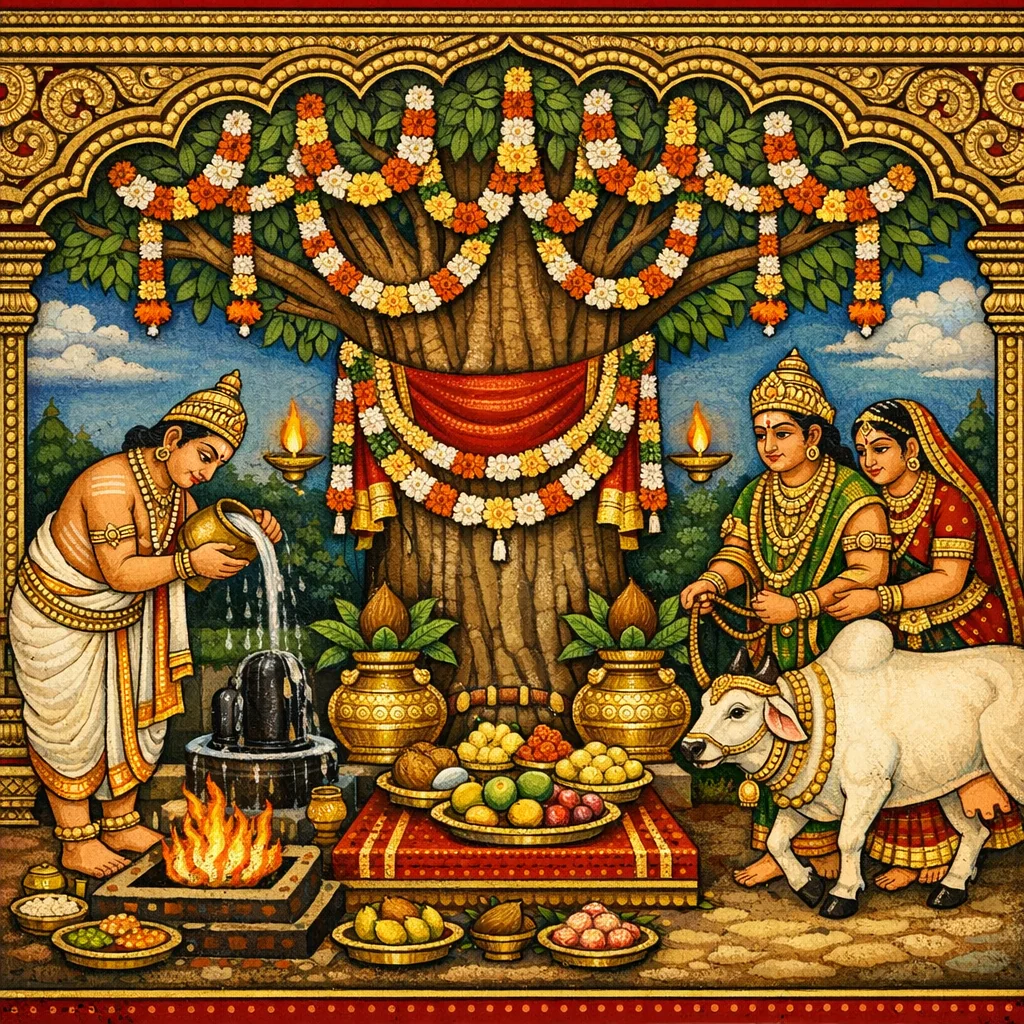
In this chapter, Bhagavān teaches a structured pratiṣṭhā-vidhi for trees (vṛkṣa/vanaspati) and garden spaces, explicitly promising both bhukti and mukti through the sacralization of living vegetation. The rite begins with unction using medicinally infused water and ornamentation with garlands and cloth-wrapping, followed by a symbolic kārṇavedha (ear-piercing) with a golden needle and the application of añjana with a golden implement. The altar sequence prescribes adhivāsa of seven fruits and bali offerings for each ghaṭa, then adhivāsa for Indra and other deities and a homa to Vanaspati. A distinctive act—releasing a cow from the middle of the tree—precedes abhiṣeka performed with the prescribed abhiṣeka-mantras. Snāpana is carried out with Ṛg/Yajur/Sāma mantras, Varuṇa-mantras, auspicious sounds, and kumbhas arranged on a wooden vedikā. The chapter also defines yajamāna support, dakṣiṇā (cows, land, ornaments, garments), four-day milk-based feeding, homa with sesame and palāśa fuel, doubled honorarium to the ācārya, and concludes that consecrating tree-groves destroys sin and brings spiritual consummation, transitioning toward further consecrations of Hari’s retinue.
Shlokas
Verse 1
इत्य् आदिमहापुराणे आग्नेये यज्ञावभृतस्नानं नाम ऊनसप्ततितमो ऽध्यायः अथ सप्ततितमो ऽध्यायः वृक्षादिप्रतिष्ठाकथनं भगवानुवाच प्रतिष्ठां पादपानाञ्च वक्ष्ये ऽहं भुक्तिमुक्तिदां सर्वौषध्युदकैर् लिप्तान् पिष्टातकविभूषितान्
Thus, in the Agni Purāṇa of the primordial Mahāpurāṇa, the sixty-ninth chapter titled “The Avabhṛtha Bath of the Sacrifice” comes to an end. Now begins the seventieth chapter: “The account of the consecration (pratiṣṭhā) of trees and related (objects).” The Blessed Lord said: “I shall declare the rite of consecration for trees, which bestows both worldly enjoyment and liberation—after anointing (the saplings/trees) with water infused with all medicinal herbs, and adorning them with piṣṭātaka preparations.”
Verse 2
वृक्षान्माल्यैर् अलङ्कृत्य वासोभिरभिवेष्टयेत् सूच्या सौवर्णया कार्यं सर्वेषां कर्णवेधनम्
Having adorned the trees with garlands and wrapped them with cloths, the ear-piercing rite should be performed for all using a golden needle.
Verse 3
हेमशलाकयाञ्जनञ्च वेद्यान्तु फलसप्तकम् अधिवासयेच्च प्रत्येकं घटान् बलिनिवेदनं
Using a golden applicator-stick, one should apply collyrium (añjana). On the altar, one should perform adhivāsa for the seven fruits; and for each ritual pot (ghaṭa), one should present the bali-offering (food-oblation).
Verse 4
इन्द्रादेरधिवासो ऽथ होमः कार्यो वनस्पतेः वृक्षमध्यादुत्सृजेद्गां ततो ऽभिषेकमन्त्रतः
Then the preliminary consecration (adhivāsa) of Indra and the other deities should be performed; and a homa is to be offered to Vanaspati, the lord of vegetation. From the middle of the tree one should release a cow, and thereafter perform the consecration (abhiṣeka) in accordance with the abhiṣeka-mantras.
Verse 5
ऋग्यजुःसाममन्त्रैश् च वारुणैर् मङ्गलै रवैः वृक्षवेदिककुम्भकैश् च स्नपनं द्विजपुङ्गवाः
O best of the twice-born, the consecratory bathing (snāpana) is to be performed with mantras from the Ṛg-, Yajur-, and Sāma-veda, with Varuṇa-mantras, with auspicious sounds, and with water-pots (kumbhas) placed upon a wooden platform/altar (vedikā).
Verse 6
तरूणां यजमानस्य कुर्युश् च यजमानकः भूषितो दक्षिणां दद्याद्गोभूभूषणवस्त्रकं
For a youthful yajamāna, the assisting officiants should carry out the rite; and the yajamāna, duly adorned, should bestow the dakṣiṇā (sacrificial fee) consisting of cows, land, ornaments, and garments.
Verse 7
वारुणमनुमिर्वररिति ङ, चिह्नितपुस्तकपाठः वृक्षवेदीशकुम्भैस्तु इति ङ, चिह्नितपुस्तकपाठः क्षीरेण भोजनं दद्याद्यावद्दिनचतुष्टयं होमस्तिलाद्यैः कार्यस्तु पलाशसमिधैस् तथा
“Varuṇa (rite/mantra)”—so reads a marked manuscript variant; and “with (vessels such as) a wooden altar and a kumbha (ritual pot)”—so also reads a marked variant. One should provide food prepared with milk for a full four days; and a homa should be performed with sesame and similar offerings, using palāśa (Butea frondosa) fuel-sticks as the samidh.
Verse 8
आचार्ये द्विगुणं दद्यात् पूर्ववन् मण्डपादिकम् पापनाशः परा सिद्धिर्वृक्षारामप्रतिष्ठया
One should give the ācārya (officiating teacher) a double honorarium, and arrange the maṇḍapa and related ritual structures as previously prescribed. By establishing and consecrating a grove and garden of trees, sins are destroyed and supreme spiritual attainment is gained.
Verse 9
स्कन्दायेशो यथा प्राह प्रतिष्ठाद्यं तथा शृणु सूर्येशगणशक्त्यादेः परिवारस्य वै हरेः
Hear likewise the rites beginning with consecration (pratiṣṭhā), as the Lord Īśa taught Skanda—namely, concerning the retinue of Hari (Viṣṇu), such as Sūryeśa, Gaṇa, Śakti, and the rest.
Frequently Asked Questions
The chapter details a full vṛkṣa-pratiṣṭhā sequence: medicinal-water anointment, ornamentation, symbolic kārṇavedha with a golden needle, añjana application with a golden stick, adhivāsa of seven fruits, bali per ghaṭa, Indrādi adhivāsa, Vanaspati-homa, cow-release, and abhiṣeka/snāpana using Ṛg–Yajus–Sāman and Vāruṇa mantras with kumbha-vedikā arrangements.
By presenting grove and tree consecration as a dharmic act that destroys sin (pāpa-nāśa) and yields supreme attainment (parā siddhi), it turns environmental and civic cultivation into sādhana—uniting prosperity-oriented ritual efficacy (bhukti) with liberation-oriented merit (mukti).