Adhyaya 67
Jīrṇoddhāra-vidhāna (Procedure for Renovation / Replacement of Dilapidated Installations)
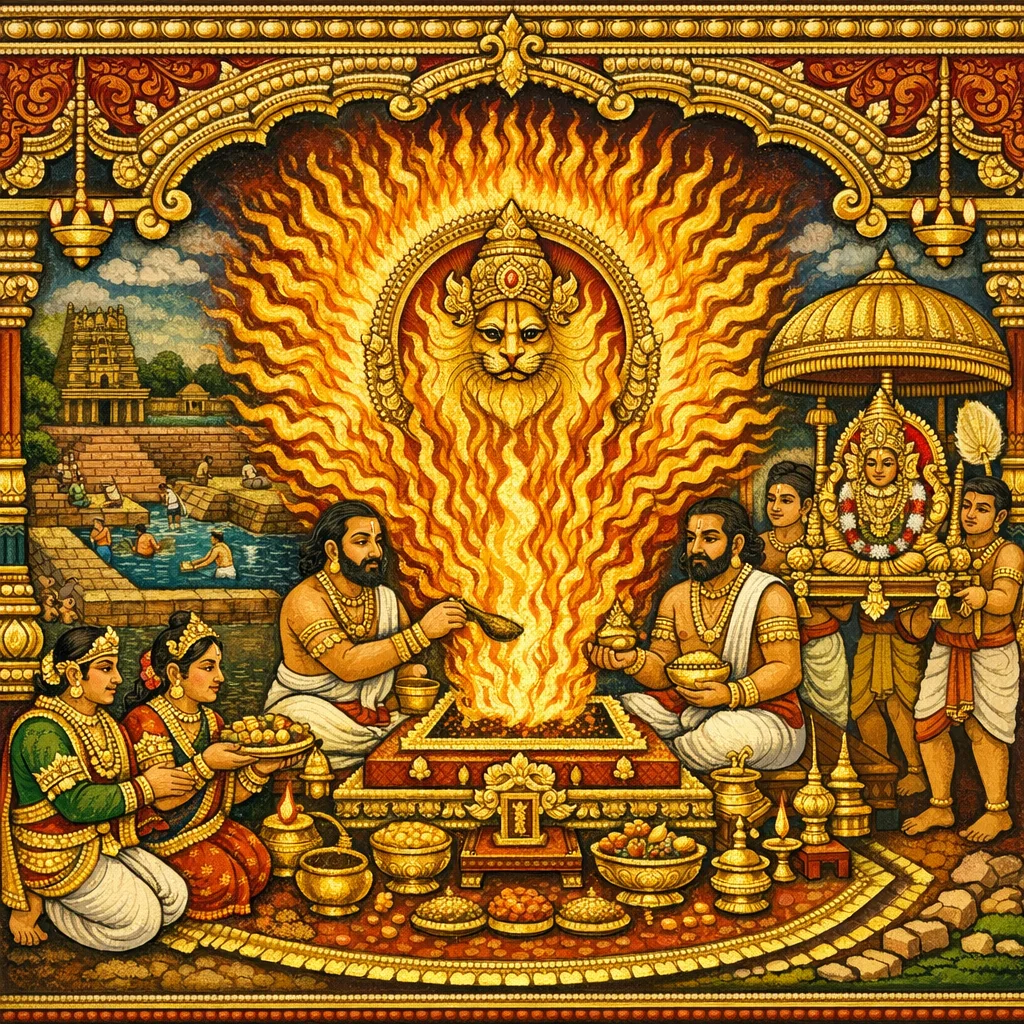
Continuing the teaching on collective consecration, Lord Agni instructs Sage Vasiṣṭha on jīrṇoddhāra—the proper procedure for dealing with sacred images and installations that are worn, defective, or broken. The rite begins by preparing and bathing the adorned image, then deciding whether it should be retained (if stable/immovable and fit for service) or discarded (if excessively decayed). When replacement is required, the officiating ācārya installs the substitute “as before” and performs saṃhāra-vidhi, ritually withdrawing the tattvas (constitutive principles) from the old form back into their source. Disposal is prescribed by material: wooden forms are split and consigned to fire, stone forms are cast into water, and metal or gem forms are respectfully carried away on a conveyance, covered with cloth. The process concludes with Nārasiṃha-mantra oblations, musical accompaniment for water-offerings, and suitable dakṣiṇā to the guru, stressing that correct measures and materials must be fixed on the same day. Renovation of public waterworks—wells, ponds, and tanks—is singled out as yielding great religious merit, linking civic infrastructure to sacred duty.
Shlokas
Verse 1
इत्य् आदिमहापुराणे आग्नेये समुदायप्रतिष्ठाकथनं नाम षट्षष्टितमो ऽध्यायः अथ सप्तषष्टितमो ऽध्यायः जीर्णोद्धारविधानं भगवानुवाच जीर्णाद्धारविधिं वक्ष्ये भूषितां स्नपयेद्गुरुः अचलां विन्यसेद्गेहे अतिजीर्णां परित्यजेत्
Thus, in the Agni Purāṇa—the primordial Mahāpurāṇa—ends the sixty-sixth chapter called “The Account of Collective Consecration (Samudāya-pratiṣṭhā).” Now begins the sixty-seventh chapter: “The Procedure for Renovation (Jīrṇoddhāra).” The Blessed Lord said: “I shall teach the method of renovation. The officiating preceptor should bathe the image after it has been duly adorned; he should install the immovable (fixed) image within the house or temple; but an image that is excessively decayed should be discarded and replaced.”}]}json_end_marker}</final>```json_end_marker to=verse_translations code_block {
Verse 2
व्यङ्गां भग्नां च शैलाढ्यां न्यसेदन्यां च पूर्ववत् संहारविधिना तत्र तत्त्वान् संहृत्य देशिकः
The officiating teacher (deśika), skilled in ritual, should install another form/arrangement as before, even if it is defective, broken, or heavy like stone; and there, by the prescribed rite of dissolution (saṃhāra-vidhi), he should withdraw and reabsorb the tattvas (constitutive principles) back into their source.
Verse 3
सहस्रं नारसिंहेन हुत्वा तामुद्धरेद् गुरुः दारवीं दारयेद्वह्नौ शैलजां प्रक्षिपेज्जले
Having offered a thousand oblations with the Nārasiṃha mantra, the teacher should then remove it. A wooden object should be split in fire, while an object born of stone should be cast into water.
Verse 4
धातुजां रत्नजां वापि अगाधे वा जले ऽम्बुधौ यानमारोप्य जीर्णाङ्गं छाद्य वस्त्रादिना नयेत्
Whether it is made from metals or from gems, or even (if recovered) from the ocean’s unfathomable waters—having placed the worn-out body upon a conveyance and covered it with cloth and the like, one should carry it away.
Verse 5
वादित्रैः प्रक्षिपेत्तोये गुरवे दक्षिणां ददेत् यत्प्रमाणा च यद्द्रव्या तन्मानां स्थापयेद्दिने कूपवापीतडागादेर्जीर्णोद्धारे महाफलं
One should cast (the prescribed offerings) into the water accompanied by musical instruments, and give the guru dakṣiṇā (a ritual honorarium). Whatever the prescribed measurements and required materials may be, their proper quantities should be fixed on that very day. In renovating dilapidated wells, stepwells, ponds, and the like, the spiritual reward is very great.
Frequently Asked Questions
The chapter emphasizes saṃhāra-vidhi with tattva-saṃhāra (ritual withdrawal of constitutive principles) before removal, plus material-specific disposal (wood to fire, stone to water, metal/gem carried away respectfully) and the requirement that measurements and materials be fixed on the same day.
It frames renovation as dharmic stewardship: preserving sanctity through correct rites (saṃhāra and re-installation), honoring the guru through dakṣiṇā, and treating civic waterworks renovation as high merit—integrating disciplined action (karma) with purity of worship and social welfare.