Adhyaya 233
Chapter 233 — Ṣāḍguṇya (The Six Measures of Royal Policy) and Foreign Daṇḍa
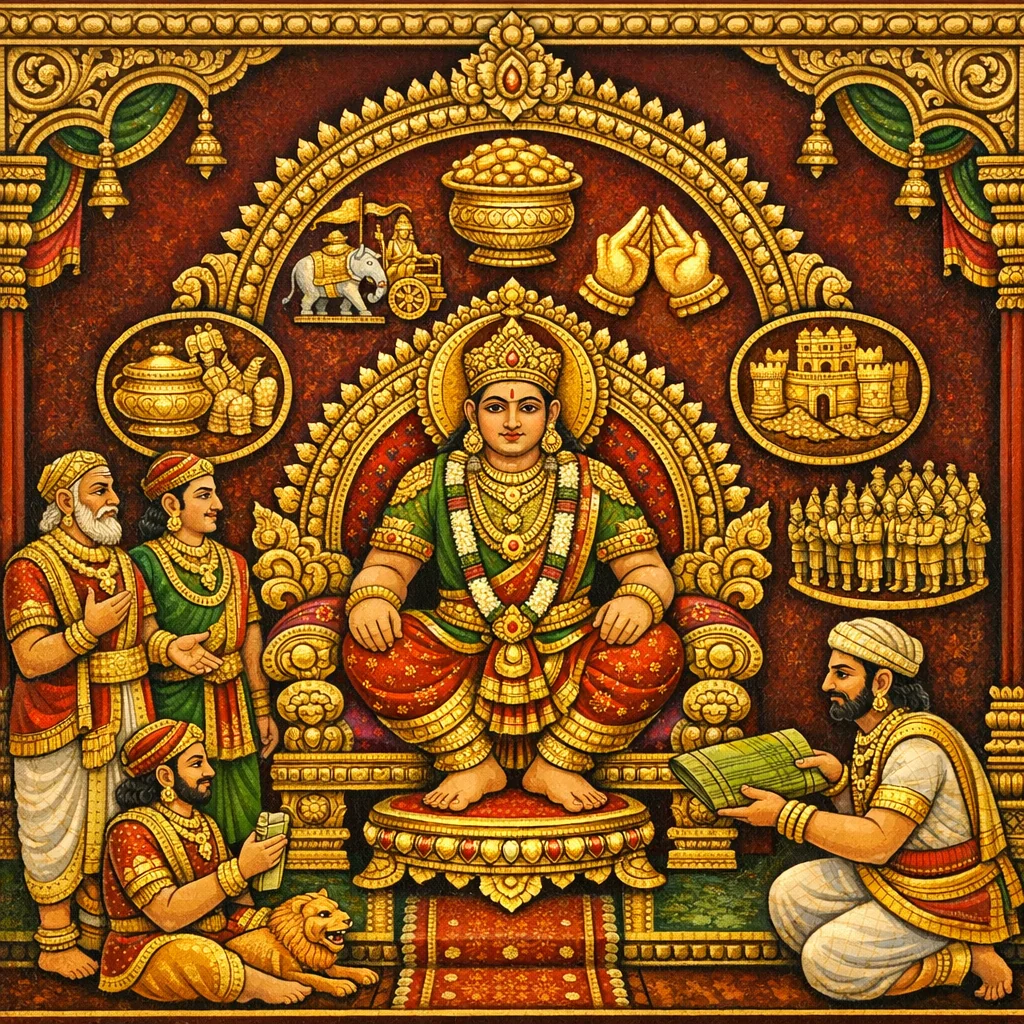
This chapter shifts from internal punishment (daṇḍa) to foreign policy. Puṣkara describes coercive measures against external enemies and then defines ṣāḍguṇya, the six strategic postures of kingship. Daṇḍa is classified as open or covert, including disruptive acts—plunder, destruction of villages and crops, arson, poisoning, targeted killing, defamation, and water contamination—meant to sever an enemy’s support. It teaches upekṣā (strategic non-engagement) when conflict yields no profit or would drain resources without gain. It also presents māyopāya (deceptive stratagems): fabricated portents, manipulated omens (even meteor-like fire devices), propaganda, battle-cries, and “Indrajāla” war-illusion to demoralize foes and strengthen one’s own side. Finally, it codifies the six measures—sandhi, vigraha, yāna, āsana, dvaidhībhāva, and saṃśraya/samśaya—adding rules for choosing allies (equals or stronger) and guidance on when to hold fast, march, double-deal, or seek refuge under a superior power.
Shlokas
Verse 1
इत्य् आग्नेये महाओपुराणे यात्रामण्डलचिन्तादिर्नाम द्वात्रिंशदधिकद्विशततमो ऽध्यायः अथ त्रयस्त्रिंशदधिकद्विशततमो ऽध्यायः षाड्गुण्यं पुष्कर उवाच सामभेदौ मया प्रोक्तौ दानदण्डौ तथैव च दण्डः स्वदेशे कथितः परदेशे व्रवीमि ते
Thus, in the Agni Mahāpurāṇa, the two-hundred-and-thirty-second chapter entitled “Reflections on the Campaign, the Circle of States, and related matters” concludes. Now begins the two-hundred-and-thirty-third chapter, on “Ṣāḍguṇya”—the six measures of policy. Puṣkara said: “I have explained conciliation (sāma) and division (bheda), and likewise gift (dāna) and punishment (daṇḍa). Punishment within one’s own realm has been described; I shall now tell you of policy in relation to foreign realms.”
Verse 2
शत्रुं जिहीर्षुरुच्छिन्द्यादिति घ , ञ च प्रकाशश्चाप्रकाशश् च द्विविधो दण्ड उच्यते लुण्ठनं ग्रामघातश् च शस्यघातो ऽग्निदीपनं
One who seeks to overpower an enemy should cut him off from resources and support—thus the rule is stated. Punishment (daṇḍa) is declared to be of two kinds: open (public) and covert (secret). Among coercive acts are plunder, the destruction of villages, the destruction of crops, and the kindling of fire (arson).
Verse 3
प्रकाशो ऽथ विषं वह्निर्विविधैः पुरुषैर् बधः दूषणञ्चैव साधूनामुदकानाञ्च दूषणं
And (these too are included): disclosure (of secrets), poison, fire, killing carried out by various persons, as well as the defamation of the virtuous and the contamination of waters.
Verse 4
दण्डप्रणयणं प्रोक्तमुपेक्षां शृणु भार्गव यदा मन्यते नृपती रणे न मम विग्रहः
The deployment of punishment (daṇḍa, coercive policy) has been explained; now hear, O Bhārgava, about “neglect/strategic non-engagement”—when a king, in the context of war, considers: “There is no contest worth undertaking with me.”
Verse 5
अनर्थायानुबन्धः स्यात् सन्धिना च तथा भवेत् सामलब्धास्पदञ्चात्र दानञ्चार्थक्षयङ्करं
An alliance may lead to a chain of harmful consequences; and through making peace (sandhi) this can likewise occur. Moreover, in this context, even the giving of gifts—when it has not secured a firm footing (a tangible strategic advantage)—becomes a cause of depletion of one’s resources.
Verse 6
भेददण्डानुबन्धः स्यात्तदोपेक्षां समाश्रयेत् न चायं मम शक्नोति किञ्चित् कर्तुमुपद्रवं
One should proceed by employing dissension (bheda) and punishment (daṇḍa), and then take recourse to strategic neglect. For this person is not capable of causing me any harm or disturbance whatsoever.
Verse 7
न चाहमस्य शक्नोमि तत्रोपेक्षां समाश्रयेत् अवज्ञोपहतस्तत्र राज्ञा कार्यो रिपुर्भवेत्
In that matter I cannot adopt indifference toward him; for one wounded by contempt becomes an enemy there, and the king should treat him as an enemy.
Verse 8
मायोपायं प्रवक्ष्यामि उत्पातैर् अनृतैश् चरत् शत्रोरुद्वेजनं शत्रोः शिविरस्थस्य पक्षिणः
I shall explain a stratagem of deception: by moving about and employing fabricated portents and false reports, one should create alarm in the enemy—especially by manipulating the birds within the enemy’s camp.
Verse 9
स्थूलस्य तस्य पुच्छस्थां कृत्वोल्कां विपुलां द्विज विसृजेच्च ततश् चैवमुल्कापातं प्रदर्शयेत्
O twice-born one, having fastened a large firebrand (ulkā) to the tail-end of that thick device, one should then release it; thus one can display the effect called ‘ulkā-pāta’, the appearance of a fiery meteor-like fall.
Verse 10
एवमन्ये दर्शनीया उत्पाता बहवो ऽपि च उद्वेजनं तथा कुर्यात् कुहकैर् विविधैर् द्विषां
Likewise, many other visible portents may be displayed; and in the same way, one may cause agitation and panic among enemies by means of various deceptive stratagems.
Verse 11
सांवत्सरास्तापसाश् च नाशं ब्रूयुः प्ररस्य च जिगीषुः पृथिवीं राजा तेन चोद्वेजयेत् परान्
If the annual prognosticators and the ascetics proclaim destruction for the enemy, then the king—desiring to conquer the earth—should, on that basis, strike fear into his opponents.
Verse 12
देवतानां प्रसादश् च कीर्तनीयः परस्य तु आगतन्नो ऽमित्रबलं प्रहरध्वमभीतवत्
One should proclaim the gracious favor of the gods; and when the hostile force has come upon us, strike down the enemy host fearlessly.
Verse 13
एवं ब्रूयाद्रणे प्राप्ते भग्नाः सर्वे परे इति क्ष्वेडाः किलकिलाः कार्या वाच्यः शत्रुर्हतस् तथा
Thus, when battle has commenced, one should proclaim: “All the enemy forces are broken!” One should raise loud battle-cries and ululations, and likewise announce: “The enemy has been slain.”
Verse 14
देवाज्ञावृंहितो राजा सन्नद्धः समरं प्रति इन्द्रजालं प्रवक्ष्यामि इन्द्रं कालेन दर्शयेत्
The king, strengthened by the command of the gods and armed for battle, advances toward the fight. I shall now teach the Indrajāla (art of war-illusion); at the proper time one should cause Indra to be made visible.
Verse 15
चतुरङ्गं बलं राजा सहायार्थं दिवौकसां बलन्तु दर्शयेत् प्राप्तं रक्तवृष्टिञ्चेन्द्रपौ
For the sake of assistance from the celestials, the king should display (muster) the fourfold army; and one should also recognize as having occurred the portent of a rain of blood—an omen associated with Indra’s banner.
Verse 16
छिन्नानि रिपुशीर्षाणि प्रासादाग्रेषु दर्शयेत् षाड्गुण्यं सम्प्रवक्ष्यामि तद्वरौ सन्धिविग्रहौ
Let the severed heads of enemies be displayed on the tops of palaces (as a deterrent). Now I shall fully expound the ṣāḍguṇya—the sixfold policy of statecraft—among which the two foremost are alliance (sandhi) and hostility/war (vigraha).
Verse 17
सन्धिश् च विग्रहश् चैव यानमासनमेव च द्वैधीभावः संशयश् च षड्गुणाः परिकीर्तिताः
Treaty or peace (sandhi) and hostility or war (vigraha), marching on expedition (yāna) and remaining stationed (āsana), adopting a dual policy (dvaidhībhāva), and keeping counsel in reserve through strategic doubt (saṃśaya)—these are declared to be the six measures of royal policy.
Verse 18
पणबन्धः स्मृतः सन्धिरपकारस्तु विग्रहः जिगीषोः शत्रुविषये यानं यात्राभिधीयते
A treaty (sandhi) is understood as a pact secured by stipulation or pledge (paṇabandha). Harmful aggression (apakāra) is indeed called war (vigraha). And an expedition (yāna)—also termed a march or campaign (yātrā)—is described as the act of one who seeks conquest (jigīṣu) undertaken with respect to the enemy.
Verse 19
विग्रहेण स्वके देशे स्थितिरासनमुच्यते बलार्धेन प्रयाणन्तु द्वैधीभावः स उच्यते
When hostilities (vigraha) prevail, remaining stationed within one’s own realm is called āsana (sitting, keeping quiet). But setting out with only half one’s forces is called dvaidhībhāva (a policy of divided deployment).
Verse 20
उदासीनो मध्यगो वा संश्रयात्संशयः स्मृतः समेन सन्धिरन्वेष्यो ऽहीनेन च बलीयसा
One who remains neutral or stands in the middle is said to be in saṃśaya (doubt) when seeking protection or dependence (saṃśraya). Therefore, an alliance (sandhi) should be sought with an equal, or—if not with an inferior—with one who is stronger.
Verse 21
हीनेन विग्रहः कार्यः स्वयं राज्ञा बलीयसा तत्रापि शुद्धपार्ष्णिस्तु बलीयांसं समाश्रयेत्
A stronger king should himself undertake vigraha (hostilities) against a weaker foe. Even then, however, one of unimpeachable conduct (the “pure-heeled” man) should take refuge with, that is, align himself to, the stronger party.
Verse 22
आसीनः कर्मविच्छेदं शक्तः कर्तुं रिपोर्यदा अशुद्धपार्ष्णिश्चासीत विगृह्य वसुधाधिपः
When the king, while seated, is able to break or interrupt the enemy’s operations, then the lord of the earth should sit in a posture of confrontation, with his heels unsteady or ill-placed.
Verse 23
अशुद्धपार्ष्णिर्बलवान् द्वैधीभावं समाश्रयेत् बलिना विगृहीतस्तु यो ऽसन्देहेन पार्थिवः
A powerful king who is, as it were, “impure in his heel”—that is, insecure in his base of support—should adopt the policy of dvaidhībhāva (double-dealing). But a ruler who has been seized and overpowered by a stronger power should, without doubt, submit and act accordingly.
Verse 24
संश्रयस्तेन वक्तव्यो गुणानामधमो गुणः प्रासादाग्रे प्रदर्शयेदिति ट विगृहीतस्तु इति ख बहुक्षयव्ययायासं तेषां यानं प्रकीर्तितं
Therefore one should state saṃśraya, dependence or protective support; among the “qualities/measures” it is regarded as the lowest. The reading “it should be shown at the front/top of the palace” is noted in the ṭa recension, while “but it is separated/detached” is the reading in the kha recension. Their journey or conveyance is declared to bring much loss, expense, and exertion.
Verse 25
बहुलाभकरं पश्चात्तदा राजा समाश्रयेत् सर्वशक्तिविहीनस्तु तदा कुर्यात्तु संश्रयं
Thereafter the king should resort to a protector or ally that yields abundant benefit; and when he is bereft of all power, then indeed he should seek saṃśraya—refuge and support.
Frequently Asked Questions
Sandhi (treaty), vigraha (war/hostility), yāna (march/expedition), āsana (remaining stationed), dvaidhībhāva (dual policy/partial deployment), and saṃśraya (seeking refuge/overlordship; discussed alongside saṃśaya/neutral doubt).
It explicitly names daṇḍa as twofold—public (prakāśa) and secret (aprakāśa)—and associates it with disruptive acts such as plunder, arson, poisoning, targeted killing, defamation, and contamination of resources to cut off the enemy.
It advises seeking alliance with an equal, or—if not inferior—with one who is stronger, and frames saṃśraya (dependence/refuge) as a last-resort posture when power is depleted or a stronger force dominates.
Through māyopāya and Indrajāla: engineered portents, false reports, visible ‘meteor’ effects, proclamations of divine favor, and battlefield announcements designed to instill panic in the enemy and confidence in one’s own troops.