Adhyaya 365
Chapter 365 — क्षत्रविट्शूद्रवर्गाः (The Classes of Kṣatriyas, Vaiśyas, and Śūdras)
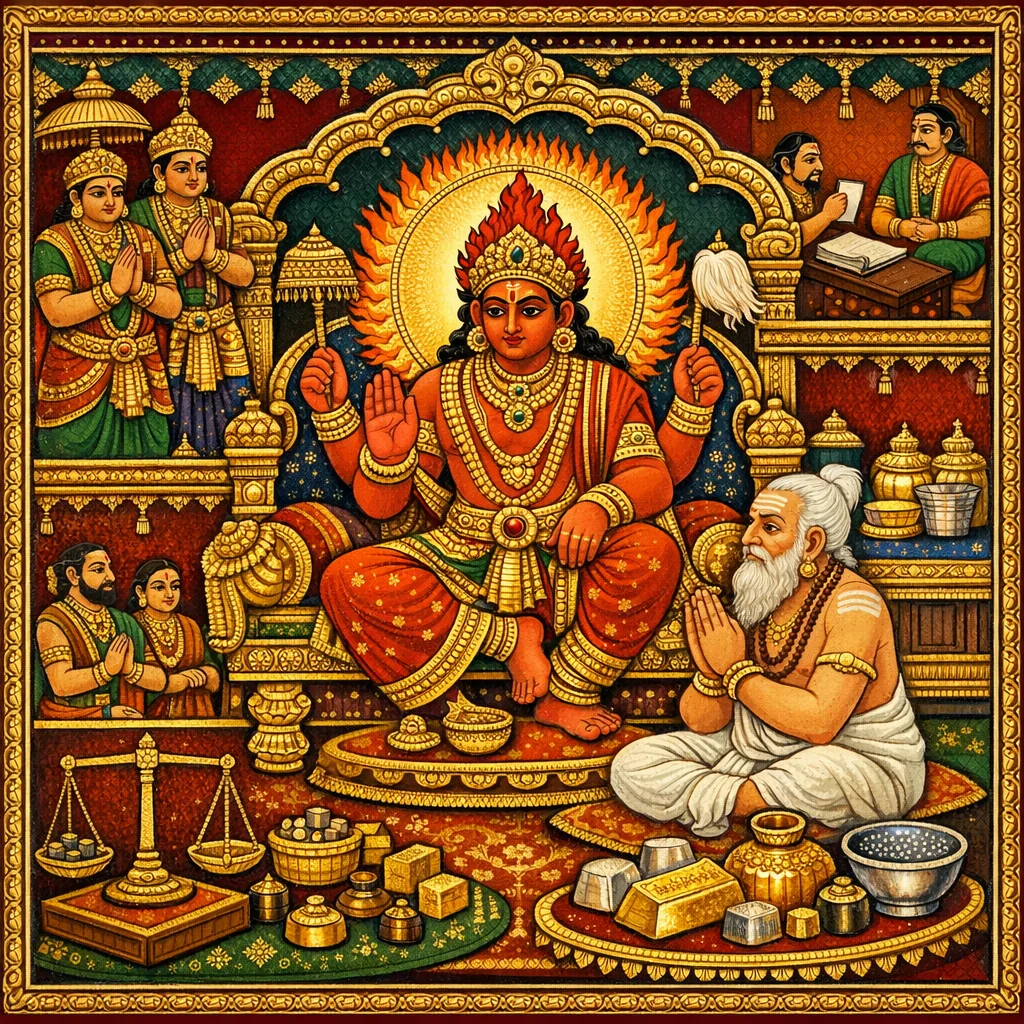
Lord Agni continues the Kosha by defining terms used in social and administrative practice. He outlines ranks of kingship (rājanya, kṣatriya/virāṭ, adhīśvara; cakravartin, sārvabhauma, maṇḍaleśvara), the ministerial-bureaucratic system (mantrin, dhī-saciva, amātya, mahāmātra), and judicial–fiscal oversight (prāḍvivāka, akṣadarśaka, bhaurika, kanakādhyakṣa). Palace governance is set out through inner-court offices (antarvaṃśika, sauvidalla, kañcukin, sthāpatya). The lexicon then turns to rājadharma-adjacent strategy: enemy and ally, udāsīna, pāṛṣṇigrāha; scouts and informants; immediate versus delayed results; seen versus unseen causality. An encyclopedic pivot follows—medical technical names and grammatical gender notes—before entering Dhanurveda: armour, troop arrays (vyūha, cakra, anīka), unit calculus up to akṣauhiṇī, and weapon nomenclature (bows, strings, arrows, quivers, swords, axes, knives, spears, banners). The chapter closes with Vaiśya livelihood terms (agriculture, usury, trade), measures and coinage, metals and alchemical substances, and finally Śūdra/antyaja guild and occupation vocabulary, showing that dharma depends on exact language for governance, economy, and craft.
Shlokas
Verse 1
इत्य् आग्नेये महापुराणे ब्रह्मवर्गो नाम चतुःषष्ट्यधिकत्रिशततमो ऽध्यायः अथ पञ्चषष्ट्यधिकत्रिशततमो ऽध्यायः क्षत्रविट्शूद्रवर्गाः अग्निर् उवाच मूर्धाभिशिक्तो राजन्यो बाहुजः क्षत्रियो विराट् राजा तु प्रणताशेषसामन्तः स्यादधीश्वरः
Thus, in the Agni Mahāpurāṇa, the three-hundred-and-sixty-fourth chapter, called “The Class of Brahmins,” comes to an end. Now begins the three-hundred-and-sixty-fifth chapter, “The Classes of Kṣatriyas, Vaiśyas, and Śūdras.” Agni said: “He who has been consecrated by the anointing upon the head is called a Rājanya. The Kṣatriya, born from the (cosmic) arms, is the Virāṭ. The king to whom all subordinate chiefs (sāmantas) bow is to be known as the overlord (adhīśvara).”
Verse 2
चक्रवर्ती सार्वभौमो नृपो ऽन्यो मण्डलेश्वरः मन्त्री धीसचिवो ऽमात्यो महामात्राः प्रधानकाः
A universal emperor is called a cakravartin; a sovereign ruler is a sārvabhauma; and another type of king is a maṇḍaleśvara, a regional lord. A counsellor is the mantrin; the intelligent secretary is the dhī-saciva; the executive officer is the amātya; and the chief high officials are the mahāmātras and the principal ministers.
Verse 3
द्रष्टरि व्यवहाराणां प्राड्विवाकाक्षदर्शकौ भौरिकः कनकाध्यक्षो ऽथाध्यक्षाधिकृतौ समौ
For the supervision of legal proceedings, there should be the Prāḍvivāka (chief judicial officer) and the Akṣadarśaka (inspector and auditor of accounts). Likewise, the Bhaurika (superintendent of weights and measures) and the Kanakādhyakṣa (superintendent of gold and the treasury) are to be regarded as equivalent in rank; and so too the Adhyakṣa and the Adhikṛta are equal in status and authority.
Verse 4
अन्तःपुरे त्वधिकृतः स्यादन्तर्वंशिको जनः सौविदल्लाः कञ्चुकिनः स्थापत्याः सौविदाश् च ते
In the inner palace (antaḥpura), the appointed superintendent should be an antarvaṃśika, a trusted inner-court officer (often a eunuch). Under him are the sauvidalla attendants, the kañcukins (chamberlains and guards of the women’s quarters), the sthāpatyas (overseers of works and construction), and the sauvidas (palace service staff).
Verse 5
षण्डो वर्षवरस्तुल्याः सेवकार्थ्यनुजीविनः विषयानन्तरो राजा शत्रुर्मित्रमतः परं
A eunuch (ṣaṇḍa) is regarded as equivalent to the best among women; and those who live by serving others—dependants who subsist on service and on petitions—are of that same class. A king whose realm lies adjacent to one’s own territory is to be treated as an enemy; beyond him is considered the ally.
Verse 6
उदासीनः परतरः पार्ष्णिग्राहस्तु पृष्ठतः चरः स्पर्शः स्यात्प्रणिधिरुत्तरः काल आयतिः
The “neutral” (udāsīna) stands farther off; the “heel-seizer” (parṣṇigrāha) is stationed at the rear. The scout is termed “touch-contact” (sparśa); the informant (praṇidhi) is placed to the north. “Time” (kāla) and “āyati” (approach/advance) are likewise to be understood as technical designations.
Verse 7
तत्कालस्तु तदात्वं स्यादुदर्कः फलमुत्तरं अदृष्टं वह्नितोयादि दृष्टं स्वपरचक्रजम्
“Immediate time” (tatkāla) is that which yields its effect at once; “udarka” is the later, subsequent result. The “unseen” (adṛṣṭa) is what arises from factors such as fire and water and the like, whereas the “seen” (dṛṣṭa) is what is produced by one’s own or an enemy’s forces (armies).
Verse 8
भद्रकुम्भः पूर्णकुम्भो भृङ्गारः कनकालुका प्रभिन्नो गर्जितो मातो वमथुः करशीकरः
“Bhadrakumbha”, “Pūrṇakumbha”, “Bhṛṅgāra”, “Kanakālukā”, “Prabhinna”, “Garjita”, “Māta”, “Vamathu”, and “Karaśīkara”—these are technical names in the medical tradition for specific disease-states or symptom-complexes.
Verse 9
स्त्रियां शृणिस्त्वङ्कुशो ऽस्त्री परिस्तोमः कुथो द्वयोः कर्णीरथः प्रवहणं दोला प्रेङ्खादिका स्त्रियां
“Śṛṇi” (ladle/scoop) is feminine. “Aṅkuśa” (goad) is not feminine (i.e., masculine). “Paristoma” and “kutha” are of two genders (used as masculine and neuter). “Karṇīratha” and “pravahaṇa” denote vehicles/carts. “Dolā” (swing/palanquin) and “preṅkhā” and the like are feminine.
Verse 10
आधोरणा हस्तिपका हस्त्यारोहा निषादिनः भटा योधाश् च योद्धारः कञ्चुको वारणो ऽस्त्रियां
“Ādhoraṇā”, “hastipakā”, “hastyārohā”, and “niṣādinaḥ” are terms for elephant-riders (mahouts/elephant-troopers). “Bhaṭā”, “yodhāḥ”, and “yoddhāraḥ” mean “warriors/soldiers”. “Kañcuka” and “vāraṇa” are names for an elephant (used in the non-feminine gender).
Verse 11
शीर्षण्यञ्च शिरस्त्रे ऽथ तनुत्रं वर्म दंशनं आमुक्तः प्रतिमुक्तश् च पिनद्धश्चापिनद्धवत्
The terms «śīrṣaṇya» and «śiras-tra» denote protection for the head; likewise «tanutra», «varman», and «daṃśana» denote body-armour. As for the manner of wearing armour: «āmukta» means “put on,” «pratimukta» “taken off,” «pinaddha» “fastened/strapped on,” and «apinaddha-vat» “as if unfastened” (i.e., worn loosely or appearing unstrapped).
Verse 12
व्यूहस्तु बलविन्यासश् चक्रञ्चानीकमस्त्रियां एकेभैकरथा त्र्यश्वाः पत्तिः पञ्चपदातिकाः
A «vyūha» is the tactical disposition of troops. In military terminology, «cakra» and «anīka» are (standard) array-formations. One (basic) unit consists of one elephant, one chariot, and three horses; and a «patti» consists of five infantrymen.
Verse 13
पत्त्यङ्गैस्त्रिगुणैः सर्वैः क्रमादाख्या यथोत्तरं सेनामुखं गुल्मगणौ वाहिनी पृतना चमूः
All these formations, increasing successively by a factor of three in every constituent arm (patti-aṅga), are named in due order as: «senāmukha», «gulma», «gaṇa», «vāhinī», «pṛtanā», and «camū».
Verse 14
अनीकिनी दशानीकिन्यो ऽक्षोहिण्यो गजादिभिः धनुः कोदण्ड+इष्वासौ कोटिरस्याटनी स्मृता
Ten «anīkinī» make up an «akṣauhiṇī», complete with elephants and other troops. For it, the number of bows—including the «kodaṇḍa» and the «iṣvāsa»—is said to be a crore; and this standard military reckoning is remembered as «āṭanī».
Verse 15
नस्तकस्तु धनुर्मध्यं मौर्वी ज्या शिञ्जिनी गुणः पृषत्कवाणविशिखा अजिह्मगखगाशुगाः
The middle portion of the bow is called «nastaka». The bowstring is termed «maurvī» or «jyā»; the string that produces a twanging sound is called «śiñjinī»; and a bowstring is also termed «guṇa». Arrows are called «pṛṣat», «kavāṇa», and «viśikhā»; and they are also designated as «ajihma», «ga», «khaga», and «āśuga».
Verse 16
तूणोपासङ्गतूणीरनिषङ्गा इषुधिर्द्वयोः असिरृष्टिश् च निस्त्रिंशः करवालः कृपालःकृपाणवत्
The terms tūṇa, upāsaṅga, tūṇīra, and niṣaṅga denote the quiver (and its varieties); likewise, iṣudhi is used for both, i.e., for the quiver and the arrow-container. As for bladed weapons: asi and r̥ṣṭi (sword and spear), nistriṁśa, karavāla, kṛpāla, and kṛpāṇa are all names for sword-like weapons.
Verse 17
सरुः खड्गस्य सुष्टौ स्यादीली तु करपालिका द्वयोः कुठारः सुधितिः छुरिका चासिपुत्रिका
‘Saru’ is a term for the sword. ‘Suṣṭi’ too is (a name for) the sword. ‘Īlī’ denotes a hand-held skull-cup (kapāla) vessel. For the paired terms: ‘kuṭhāra’ means an axe; ‘sudhiti’ means a knife/dagger; and ‘churikā’ is likewise called ‘āsiputrikā’ (a small knife, “daughter of the sword”).
Verse 18
प्रासस्तु कुन्तो विज्ञेयः सर्वला तोमरो ऽस्त्रियां वैतालिका बोधकरा मागधा वन्दिनस्तुतौ
The prāsa is to be understood as the weapon called kunta. Sarvalā is also called tomara. In the feminine, vaitālikā, bodhakarā, and māgadhā denote a panegyrist; and vandin and stuti denote praise (a eulogy).
Verse 19
संशप्तकास्तु समयात्सङ्ग्रामादनिवर्तिनः पताका वैजयन्ती स्यात्केतनं धजमिस्त्रियां
The Saṁśaptakas are those who, having made a vow, do not turn back from the battlefield. A patākā (banner) is also called vaijayantī; and ketana is termed dhaja—these are grammatically feminine.
Verse 20
अहं पूर्वमहं पूर्वमित्यहंपूर्विका स्त्रियां अहमहमिका सास्याद्यो ऽहङ्कारः परस्परम्
“I am first! I am first!”—this habit, in the case of a woman, is called ahaṃpūrvikā (“I-go-first”). And ahamahamikā (“I-I-ness”) is that mutual egoism (ahaṅkāra) by which people contend against one another.
Verse 21
शक्तिः पराक्रमः प्राणः शौर्यं स्थानसहोबलं मूर्छा तु कश्मलं मोहो ऽप्यवर्मद्दस्तु पीडनं
“Śakti” is bodily capacity; “parākrama” is vigorous exertion; “prāṇa” is the life-breath; “śaurya” is valor; “sthāna” is posture or steadiness; “saho” is endurance; and “bala” is strength. “Mūrchā” is fainting; “kaśmala” is distressing dejection; “moha” is delusion; and “avarmadda” denotes painful affliction (pīḍana).
Verse 22
अभ्यवस्कन्दनन्त्वभ्यासादनं विजयो जयः निर्वासनं संज्ञपनं सारणं प्रतिघातनं
“Abhyavaskandana” is a sudden onrush; “abhyāsādana” is wearing down by repeated pressure; “vijaya” and “jaya” are victory and triumph; “nirvāsana” is driving the enemy out; “saṃjñāpana” is bringing to submission/acknowledgment; “sāraṇa” is scattering and putting to flight; and “pratighātana” is counter-striking or repulse—these are the named tactical operations.
Verse 23
स्यात्पञ्चता कालधर्मो दिष्टान्तः प्रलयो ऽत्ययः विशो भूमिस्पृषो वैश्या वृत्तिर्वर्तनजीवने
“Pañcatā” denotes death (becoming the five elements). “Kāla-dharma” means the law of Time. “Diṣṭānta,” “pralaya,” and “atyaya” are terms for destruction or calamity (dissolution). “Viśaḥ” refers to the Vaiśyas; they are called “bhūmi-spṛśaḥ,” those who live by contact with the earth (agriculture). “Vṛtti” means livelihood—living by one’s occupation.
Verse 24
कृष्यादिवृत्तयो ज्ञेयाः कुसीदं वृद्धिजीविका उद्धरो ऽर्थप्रयोगः स्यात्कणिशं सस्यमञ्जरी
The occupations beginning with agriculture and the like are to be understood. Usury (“kuśīda”) is a livelihood based on interest. “Uddhāra” is to be understood as the disbursement or advance of money. And “kaṇiśa” is the ear or panicle of grain-crops.
Verse 25
किंशारुः सस्यशूकं स्यात् स्तम्बो गुत्सस्तृणादिनः धाम्यं व्रीहिः स्तम्बकरिः कडङ्गरो वुपं स्मृतं
“Kiṃśāru” denotes the awned ear (awned head) of a crop. “Stamba” means a tuft or clump of grasses and the like. “Dhāmya” is a name for rice (vrīhi). “Stambakarī” is also used as a term; and “kaḍaṅgara” is remembered as “vupa,” a synonymous designation.
Verse 26
माषादयः शमीधान्ये शुकधान्ये यवादयः तृणधान्यानि नीवाराः शूर्पं प्रस्फोटनं स्मृतं
Black gram (māṣa) and similar pulses are classed as “śamī-grains”; barley and the like are classed as “śuka-grains”. Wild rice (nīvāra) is regarded as a “grass-grain”; and the winnowing basket (śūrpa) is traditionally termed “prasphoṭana”, the implement for winnowing and cleansing grain.
Verse 27
स्यूतप्रसेवौ कण्डोलपिटौ कटकिनिञ्जकौ समानौ रसवत्यान्तु पाकस्थानमहानसे
Syūta and Praseva are synonymous; likewise Kaṇḍola and Piṭa, and also Kaṭakin and Niñjaka are equivalent terms. In the Rasavatī (culinary context), the cooking-place is called Pāka-sthāna, and the great kitchen is termed Mahānasa.
Verse 28
पौरोगवस्तदध्यक्षः सूपकारास्तु वल्लवाः आरालिका आन्धसिकाः सूदा औदनिका गुणाः
Mention is made of the pauroga, the superintendent under the city-governor; likewise of cooks and herdsmen; of makers of condiments and preparers of sauces; of kitchen-servants and rice-cookers—these are the guṇāḥ, the functional staff of the establishment.
Verse 29
क्लीवे ऽम्बरीषं भ्राष्टो ना कर्कर्यालुर्गलन्तिका आलिञ्जरः स्यान्मणिकं सुषवी कृषजीरके
In the neuter gender the word ambārīṣa is used; bhrāṣṭa is used as masculine. The names karkaryā, ālu, and galantikā are given; and āliñjara is also stated as a synonym. For black cumin (kṛṣa-jīraka), the names maṇika and suṣavī are used.
Verse 30
आरनालस्तु कुल्माषं वाह्लीकं हिङ्गु रामठं निशा हरिद्रा पीता स्त्री खण्डे मत्स्यण्डिफाणिते
“Āranāla” is another name for kulmāṣa (a sour gruel or fermented pulse preparation). “Vāhlīka” denotes hiṅgu (asafoetida), also called “rāmaṭha”. “Niśā” denotes turmeric (haridrā), also called “pītā” and “strī”. “Khaṇḍa” denotes matsyaṇḍī-phāṇita, a variety of jaggery or molasses preparation.
Verse 31
कूर्चिका क्षिरविकृतिः स्निग्धं मसृणचिक्कणं पृथुकः स्याच्चिपिटको धाना भ्रष्टयवास्त्रियः
Kūrcikā is a preparation derived from milk, described as unctuous—smooth, soft, and glossy. Pṛthuka is the flattened grain; likewise are cipiṭaka, dhānā, and the barley-grains roasted three times (bhraṣṭa-yava).
Verse 32
जेमनं लेप आहारो माहेयी सौरभी च गौः युगादीनाञ्च बोढारो युग्यप्रसाङ्ग्यशाटकाः
Jemana, Lepa, and Āhāra are (terms/names); likewise Māheyī and Saurabhī are names for the cow (gauḥ). Those that bear yokes and the like are called boḍhāra; and other designations are yugya, prasāṅgya, and śāṭaka.
Verse 33
चिरसूता वष्कयणी धेनुः स्यान्नवसूतिका सन्धिनी वृषभाक्रान्ता वेहद्गर्भोपघातिनी
A cow is termed: (1) cirasūtā, one that calved long ago; (2) vaṣkayaṇī, one whose milking is obstructed or defective; (3) nava-sūtikā, newly calved; (4) sandhinī, one that has conceived again or is in season/newly impregnated; (5) vṛṣabhākrāntā, one mounted by a bull; and (6) vehad-garbhopaghātinī, one barren or whose pregnancy has been harmed (miscarried).
Verse 34
पण्याजीवो ह्य् आपणिको न्यासश्चोपनिधिः पुमान् विपणो विक्रयः सङ्ख्या सङ्ख्येये ह्य् आदश त्रिषु
One who lives by trade is called an āpaṇika (shopkeeper/merchant). A trusted deposit (nyāsa) and a concealed deposit (upanidhi) are terms applied with reference to a person (as the responsible party). Trade is called vipaṇa, sale is vikraya, number is saṅkhyā; and among countables, “ten” is termed ādaśa within the triṣu (the three grammatical numbers).
Verse 35
विंशत्याद्याः सदैकत्वे सर्वाः संख्येयसंख्ययोः संख्यार्थे द्विबहुत्वे स्तस्तासु चानवतेः स्त्रियः
Numerals beginning with “twenty” are always treated as singular. In the relation between the counted object and the numeral—when the numeral is used in the sense of number—they occur only in the dual and plural; and among them, up to “ninety,” they are feminine.
Verse 36
पङ्क्तेः शतसहस्रादि क्रमाद्दशगुणोत्तरं मानन्तु लाङ्गुलिप्रस्थैर् गुञ्जाः पञ्चाद्यमाषकः
Beginning from the unit called paṅkti, the measures of weight increase in a tenfold sequence—then, in due order, through śata, sahasra, and the rest. In this system, five guñjā seeds, measured by the lāṅguli-prastha standard, constitute the initial māṣaka.
Verse 37
ते षोडशाक्षः कर्षो ऽस्त्री पलं कर्षचतुष्टयम् सुवर्णविस्तौ हेम्नो ऽक्षे कुरुविस्तस्तु तत्पले
Sixteen akṣa make one karṣa; four karṣas make one pala. In the gold-weight system, the suvarṇa measure is reckoned in terms of the akṣa, while the kuru measure is reckoned in terms of the pala.
Verse 38
तुला स्त्रियां पलशतं भारः स्याद्विंशतिस्तुलाः कार्षापणः कार्षिकः स्यात् कार्षिके ताम्रिके पणः
A tulā is one hundred palas; a bhāra amounts to twenty tulās. The kārṣāpaṇa coin is also called kārṣika; and in the kārṣika standard, the copper coin is termed a paṇa.
Verse 39
द्रव्यं वित्तं स्वापतेयं रिक्थमृथक्थं धनं वसु रीतिः स्त्रियामारकूटो न स्त्रियामथ ताम्रकम्
‘Dravya’ (substance/asset) is also called wealth, one’s own property, inheritance, separate property, money, and riches (vasu). The term rīti is feminine; ārakūṭa is not feminine; and likewise the word tāmraka is not feminine.
Verse 40
शुल्वमौदुम्बरं लौहे तीक्ष्णं कालांयसायसी क्षारः काचो ऽथ चपलो रसः सूतश् च पारदे
Śulva (copper), udumbara-metal, lauha (iron), tīkṣṇa (sharp steel), kālāyas (black iron), and āyasī; also kṣāra (alkali) and kāca (glass); then capala (mica), rasa (mercury), and sūta—these are all reckoned in connection with pārada (quicksilver).
Verse 41
गरलं माहिषं शृङ्गं त्रपुसीसकपिच्चटं हिण्डीरो ऽब्धिकफः फेणो मधूच्छिष्टन्तु सिक्थकम्
Poison is called «garala»; a buffalo’s horn is termed «māhiṣa-śṛṅga»; tin is «trapu»; lead is «sīsaka»; a certain mineral/earthy substance is «piccaṭa»; sea-foam is «hiṇḍīra», also called «abdhikapha» or «pheṇa»; and beeswax is the residue of honey («madhūcchiṣṭa»), namely «sikthaka».
Verse 42
रङ्गवङ्गे पिचुस्थूलो कूलटी तु मनःशिला यवक्षारश् च पाक्यः स्यात् त्वक्क्षीरा वंशलोचनाः
Tin and lead are to be taken in a coarse, cotton-wad-like granulation (pichu-sthūla). «Kūlaṭī» and realgar, «manaḥśilā», are also listed. Barley-alkali, «yava-kṣāra», should be prepared by cooking/calcination (extraction). Likewise, latex-bearing barks (tvak-kṣīrā) and bamboo-manna, «vaṁśa-locana», are included among usable substances.
Verse 43
वृषला जधन्यजाः शूद्राश्चाण्डालान्त्याश् चशङ्कराः कारुः शिल्पी संहतैस्तैर् द्वयोः श्रेणिः सजातिभिः
Vṛṣalas, those of low birth, Śūdras, Cāṇḍālas and Antyas, and also the mixed-caste groups (Śaṅkaras)—among them the artisan «kāru» and the craftsman «śilpī»—when organized together with their own kindred groups, constitute two guilds (śreṇīs).
Verse 44
रङ्गाजीवश्चित्रकरस्त्वष्टा तक्षा च वर्धकिः नाडिन्धमः स्वर्णकारो नापितान्तावसायिनः
Also included are the professional dyer, the painter, the worker in cast metal (tvāṣṭā), the carpenter/wood-cutter (takṣā), and the builder (vardhakī); likewise the maker of tubes or hollow instruments (nāḍi-ndhama), the goldsmith, the barber, and those engaged in low-end finishing or service occupations.
Verse 45
जावालः स्यादजाजीवो देवाजीवस्तु देवलः जायाजीवस्तु शैलूषा भृतको भृतिभुक्तथा
One who lives by tending goats is called «jāvāla»; one who lives by serving the gods (temple service) is called «devala». One who lives by his wife’s earnings is called «śailūṣa»; and one who lives on wages is called «bhṛtaka» (a hireling).
Verse 46
विवर्णः पामरो नीचः प्राकृतश् च पृथग्जनः विहीनोपसदो जाल्मो भृत्ये दासेरचेटकाः
(Such a person is called) of degraded status, a boor, low-born and vulgar; a mere commoner; lacking refinement, an outcaste by association, and a base fellow—fit to be termed a servant, a slave, and a menial attendant.
Verse 47
पटुस्तु पेशलो दक्षो मृगयुर्लुब्धकः स्मृतः चाण्डालस्तु दिवाकीर्तिः पुस्तं लेप्यादिकर्मणि
‘Paṭu’, ‘peśala’, and ‘dakṣa’ are used in the sense of “skilled/competent.” A hunter is termed ‘mṛgayu’ and is also called ‘lubdhaka’. A ‘cāṇḍāla’ is (also) designated ‘divākīrti’. ‘Pustam’ denotes plastering and related coating-works.
Verse 48
पञ्चालिका पुत्रिका स्याद्वर्करस्तरुणः पशुः मञ्जूषा पेटकः पेडा तुल्यसाधारणौ समौ प्रतिमा स्यात् प्रतिकृतिर्वर्गा ब्रह्मादयः स्मृताः
‘Pañcālikā’ is (also) called ‘putrikā’ (a doll/figurine). ‘Varkara’ denotes a young animal. A casket is termed ‘mañjūṣā’, ‘peṭaka’, or ‘peḍā’. ‘Tulya’ and ‘sādhāraṇa’ are synonymous with ‘sama’ (“equal/common”). ‘Pratimā’ is called ‘pratikṛti’ (“image/replica”). And the term ‘vargāḥ’ is understood to refer to groups such as Brahmā and the other (deities).
Frequently Asked Questions
It codifies precise technical vocabulary across governance (kingly grades, ministers, judges, treasury roles), Dhanurveda (formations from patti upward, akṣauhiṇī reckoning, armour and weapon synonyms), and economy (trade, coinage, and standardized weights).
By treating correct worldly nomenclature—administration, war-ethics, livelihood, and craft—as dharmic knowledge revealed by Agni, it frames competent action (pravṛtti) as a support for righteous order and thus a preparatory ground for inner discipline leading to mukti.