Adhyaya 364
Chapter 364 — ब्रह्मवर्गः (Brahmavarga: Lexical Classification of Brahminical/Ritual Terms)
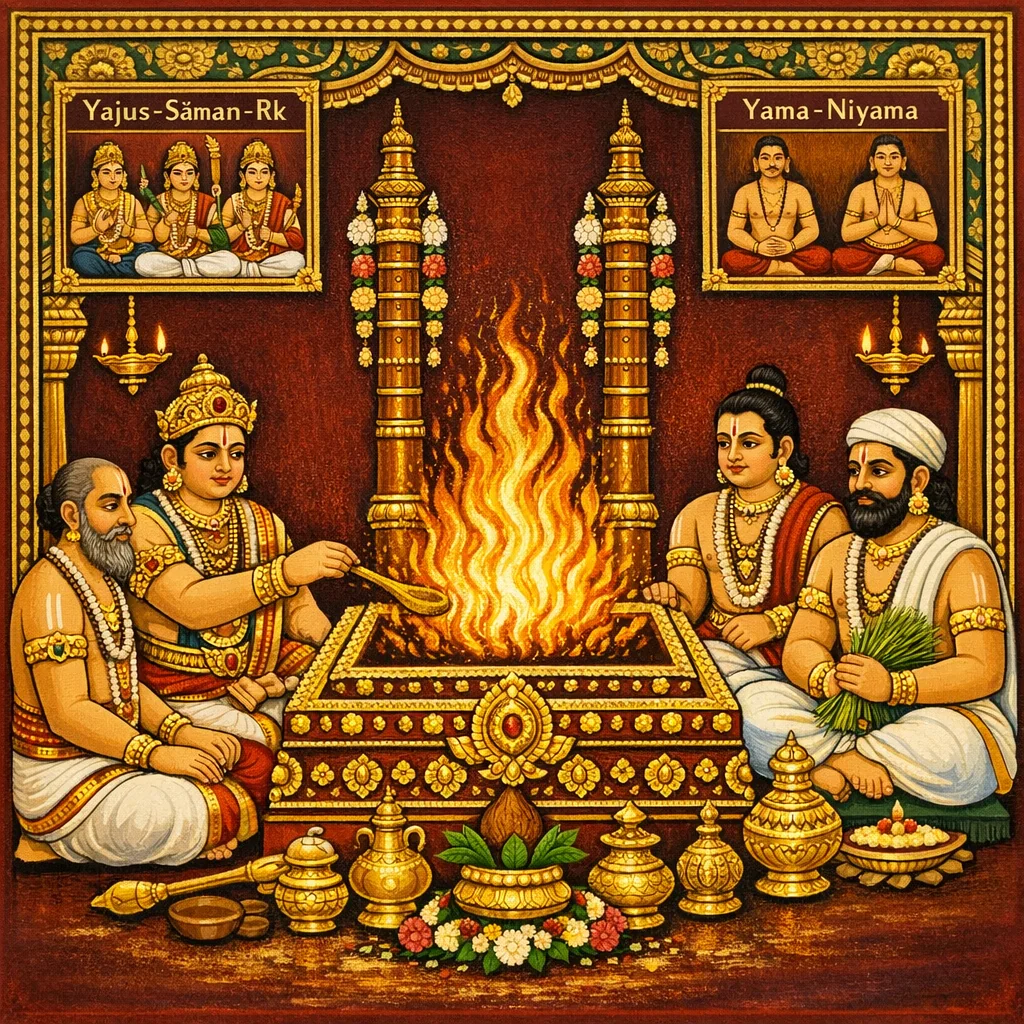
Continuing the Kosha style of compressed definitions, Lord Agni enumerates and clarifies precise terms needed for Vedic ritual literacy and Brahminical social‑ritual roles. He first defines descent and identity markers—vaṃśa (lineage), anvavāya (ancestral succession), gotra (clan line), and kula/abhijana‑anvaya (family houses and noble pedigree)—then specifies ritual offices: the ācārya as mantra‑exegete and the ādeṣṭā as directing officiant in an adhvara. The chapter maps the yajña ecosystem: yajamāna/yaṣṭā, ritual peers and assembly roles, and the ṛtvij triad (Adhvaryu, Udgātṛ, Hotṛ) aligned to Yajus, Sāman, and Ṛk expertise. It defines implements and offerings (caṣāla on the yūpa, altar quadrangle, āmikṣā, pṛṣadājya, paramānna, upākṛta animal), gives synonym sets for consecration/sprinkling and worship, distinguishes niyama from vrata, explains kalpa vs anukalpa and procedural discernment, notes upākaraṇa for śruti study, identifies ascetic types, and closes with a technical contrast of yama (constant, body‑disciplined restraint) versus niyama (occasional, externally aided observance), culminating in brahma‑bhūya/brahmatva/brahma‑sāyujya.
Shlokas
Verse 1
इत्य् आग्नेये महापुराणे नृवर्गो नाम त्रिषष्ट्यधिकत्रिशततमो ऽध्यायः अथ चतुःषष्ट्यधिकत्रिशततमो ऽध्यायः ब्रह्मवर्गः अग्निर् उवाच वंशो ऽन्ववायो गोत्रं स्यात् कुलान्यभिजनान्वयौ मन्त्रव्याख्याकृदाचार्य आदेष्टा त्वध्वरे व्रती
Thus, in the Agni Mahāpurāṇa ends the three-hundred-and-sixty-third chapter called “Nṛvarga” (classification of men). Now begins the three-hundred-and-sixty-fourth chapter, “Brahmavarga” (classification of Brahmins). Agni said: “Vaṃśa is ancestral succession (anvavāya); gotra is one’s clan-line. ‘Kula’ and ‘abhijana-anvaya’ denote noble descent and pedigree. The ācārya is the one who explains the mantras; the ādeṣṭā is the officiant who gives ritual directions; and in a sacrifice (adhvara) he is one who observes vows (vratī).”
Verse 2
यष्टा च यजमानः स्यात् ज्ञात्वारम्भ उपक्रमः सतीर्थ्याश् चैकगुरवः सभ्याः सामाजिकास् तथा
The sacrificer (yaṣṭā) should be the yajamāna (the patron who commissions the rite), having understood the proper commencement and the procedure of the undertaking. And there should be ritual peers or fellow-students, those of a single preceptor, as well as the learned members of the assembly and the officiating participants likewise.
Verse 3
सभासदः सभास्तारा ऋत्विजो याजकाश् च ते अध्वर्यूद्गातृहोतारो यजुःसामर्ग्विदः क्रमात्
They are the members of the assembly and the luminaries (leaders) of the assembly; likewise the officiating priests (ṛtvij) and the sacrificers. In due order they are the Adhvaryu, the Udgātṛ, and the Hotṛ, who are respectively versed in the Yajus, the Sāman, and the Ṛk (Vedas).
Verse 4
चषालो यूपकटकः समे स्थण्डिलचत्वरे आमिक्षा सा शृतोष्णे या क्षीरे स्याद्दधियोगतः
The term caṣāla denotes the ring (kaṭaka) of the sacrificial post (yūpa). The proper altar-quadrangle (catuḥsra space) is on level ground at the prepared altar-spot (sthaṇḍila). Āmikṣā is that preparation which arises in milk that is heated/boiled and still warm, through the addition of curds (dadhi).
Verse 5
पृषदाज्यं सदध्याज्ये परमान्नन्तु पायसम् उपाकृतः पशुरसौ यो ऽभिमन्त्र्य क्रतौ हतः
Pṛṣadājya (a mixed ghee-offering) is the ghee prepared with curds (dadhi); and paramānna is rice cooked in milk (pāyasa). That animal is called upākṛta which, having been consecrated by mantra, is slain in the sacrifice (kratu).
Verse 6
परम्पराकं समनं प्रोक्षणञ्च बधार्थकम् पूजा नमस्यापिचितिः सपर्यार्चार्हणाः समाः
‘Paramparāka’, ‘samana’, and ‘prokṣaṇa’ are terms for consecratory ritual sprinkling performed with the intent of subduing or binding an adverse force. ‘Pūjā’, ‘namasyā’, ‘apaciti’, ‘saparyā’, ‘arcā’, and ‘arhaṇā’ are synonymous terms for acts of worship and reverential honoring.
Verse 7
वरिवस्या तु शुश्रूषा परिचर्याप्युपासनम् नियमो ब्रतमस्त्री तच्चोपवासादि पुण्यकम्
“Varivasyā” is attentive service; “śuśrūṣā” is reverential attendance; and “paricaryā” likewise denotes ministrations performed as worship. “Niyama” is religious restraint; “vrata” is a vowed observance; and that (vrata) consists of meritorious acts such as fasting and the like.
Verse 8
मुख्यः स्यात् प्रथमः कल्पो ऽनुकल्पस्तु ततो ऽधमः कल्पे विधिक्रमौ ज्ञेयौ विवेकः पृथगात्मता
The primary (mukhya) kalpa is to be regarded as the first; the subsidiary kalpa (anukalpa) is inferior to it. In a kalpa, two procedural sequences (vidhi-krama) are to be understood: discernment (viveka) and the distinctness/separateness of the self (pṛthag-ātmatā).
Verse 9
संस्कारपूर्वं ग्रहणं स्यादुपाकरणं श्रुतेः भिक्षुः परिव्राट् कर्मन्दी पाराशर्यपि मस्करी
The undertaking (study/recitation) of the Śruti should be preceded by the prescribed purificatory rites (saṃskāras); this is called the upākaraṇa, the ceremonial commencement of the Veda. This rite is to be observed by the mendicant (bhikṣu), the wandering renunciant (parivrāṭ), the ritualist/ascetic (karmandī), the follower of Parāśara (pārāśarya), and also the Maskarī.
Verse 10
ऋषयः सत्यवचसःस्नातकश्चाप्लुतव्रती ये निर्जितेन्द्रियग्रामा यतिनो यतयश् च ते
Those sages who speak truth—who are duly established as snātakas in sacred discipline, who keep unbroken vows, and who have conquered the host of senses—are indeed yatins, the truly striving renunciants.
Verse 11
शरीरसाधनापेक्षं नित्यं यत् कर्म तद्यमः नियमस्तु स यत् कर्मानित्यमागन्तुसाधनम् स्याद् ब्रह्मभूयं ब्रह्मत्वं ब्रह्मसायुज्यमित्यपि
That action which is constant and depends upon bodily discipline is called yama (restraint). Niyama, however, is that action which is non-constant, accomplished through occasional or external means. (The resulting state is also spoken of as) becoming Brahman (brahma-bhūya), Brahmanhood (brahmatva), or union with Brahman (brahma-sāyujya).
Frequently Asked Questions
A ritual-lexical map: precise definitions for lineage identifiers (vaṃśa, gotra, kula), priestly roles (ācārya, ādeṣṭā; Adhvaryu/Udgātṛ/Hotṛ), and yajña technicalities (caṣāla, altar-space terms, āmikṣā, pṛṣadājya, paramānna, upākṛta), including synonym clusters for consecration and worship.
By standardizing terms for restraint, vows, worship, and disciplined study (upākaraṇa), it protects correct practice and right understanding; the culminative framing—yama/niyama leading toward brahma-bhūya/brahma-sāyujya—connects technical observance to liberation-oriented transformation.