Adhyaya 149
Lakṣa–Koṭi Homa (लक्षकोटिहोमः)
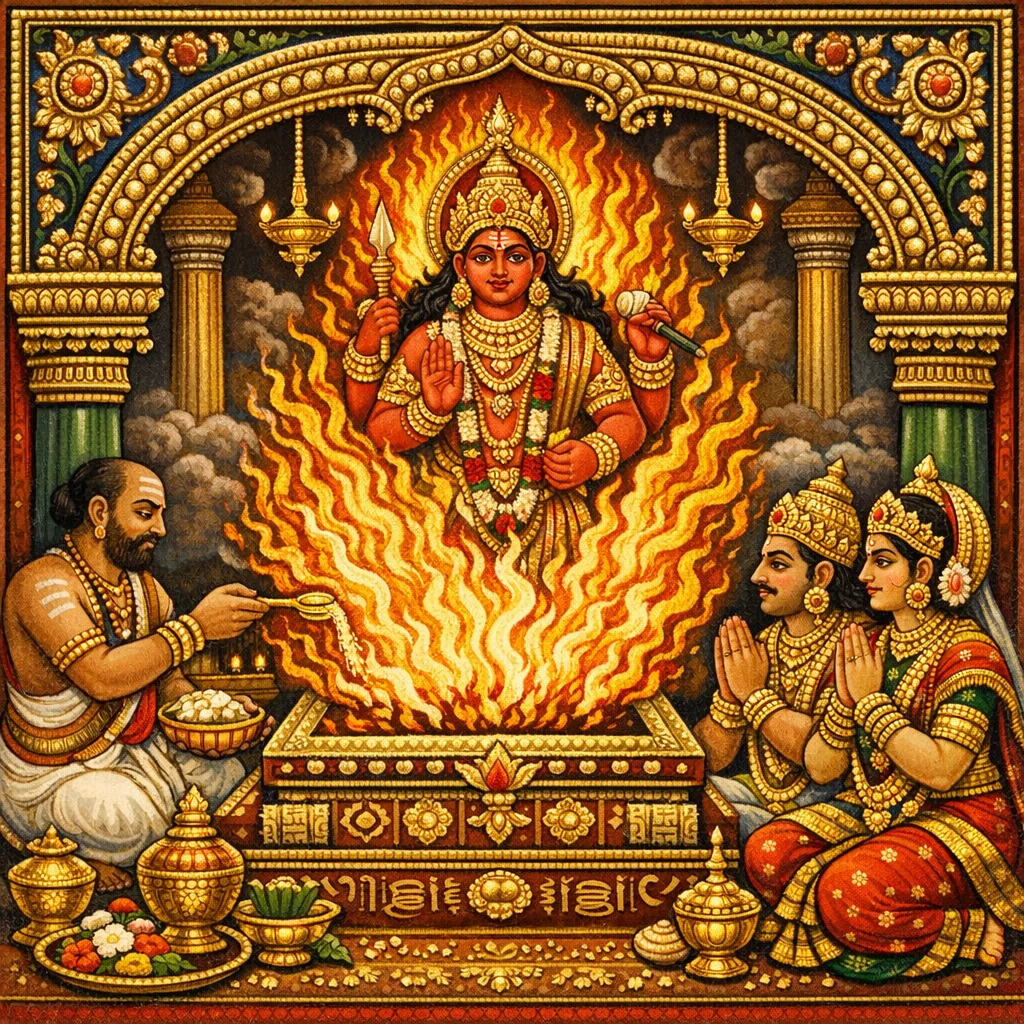
Lord Agni teaches, within the Yuddhajayārṇava tradition, a homa system that protects in war and upholds sovereignty. The chapter declares homa effective for immediate victory, gaining rulership, and destroying obstacles, yet grounds it in prior purification through Kṛcchra observance and disciplined prāṇāyāma. It prescribes preparatory japa and breath-control (including bīja-like utterances) and fixes the proper times for offerings into the consecrated fire, with a one-meal-per-day regimen to maintain purity until completion. The rite is graded by count—ayuta (10,000), lakṣa (100,000), and koṭi (crore/immense number)—with corresponding fruits: minor attainments, removal of afflictions, and comprehensive wish-fulfilment with protection. It is also presented as a universal pacifier of ominous portents (utpāta), subduing calamities such as drought, excessive rain, pests, and hostile beings. Finally, it gives operational details for large performances: numbers of priests, approved mantra-families (Gāyatrī, graha-mantras, deity-specific sets), permissible oblations (grains, sesame, milk, ghee, kuśa, leaves), and measured construction of the homa-pit—showing Agneya Vidyā as precise ritual engineering in service of dharma and polity.
Shlokas
No shlokas available for this adhyaya yet.
Frequently Asked Questions
The chapter emphasizes scalable ritual engineering: counts (ayuta/lakṣa/koṭi), priest selection numbers (20/100/1000), prescribed oblations (grains, ghee, kuśa, leaves), and precise construction measures for the homa-pit (eight hastas for koṭi; half for lakṣa), alongside timing (forenoon offerings) and prerequisites (Kṛcchra + prāṇāyāma).
It integrates outer efficacy (victory, obstacle removal, omen-pacification) with inner discipline (purification vows, regulated diet, prāṇāyāma, mantra-japa), presenting state-protection and personal welfare as dharmic outcomes grounded in sādhana.
Gāyatrī; graha (planetary) mantras; Kuṣmāṇḍī and Jātavedas; deity-linked sets (Aindra, Vāruṇa, Vāyavya, Yāmya, Āgneya, Vaiṣṇava); and also Śākta, Śāmbhava, and Saura mantras.
Portents in general (utpāta), excessive rain and drought, crop-raiding pests (rats, locusts, parrots), harmful beings such as rākṣasas, and enemies in battle.