Adhyaya 146
Chapter 146 — Aṣṭāṣṭaka Devī-s (अष्टाष्टकदेव्यः)
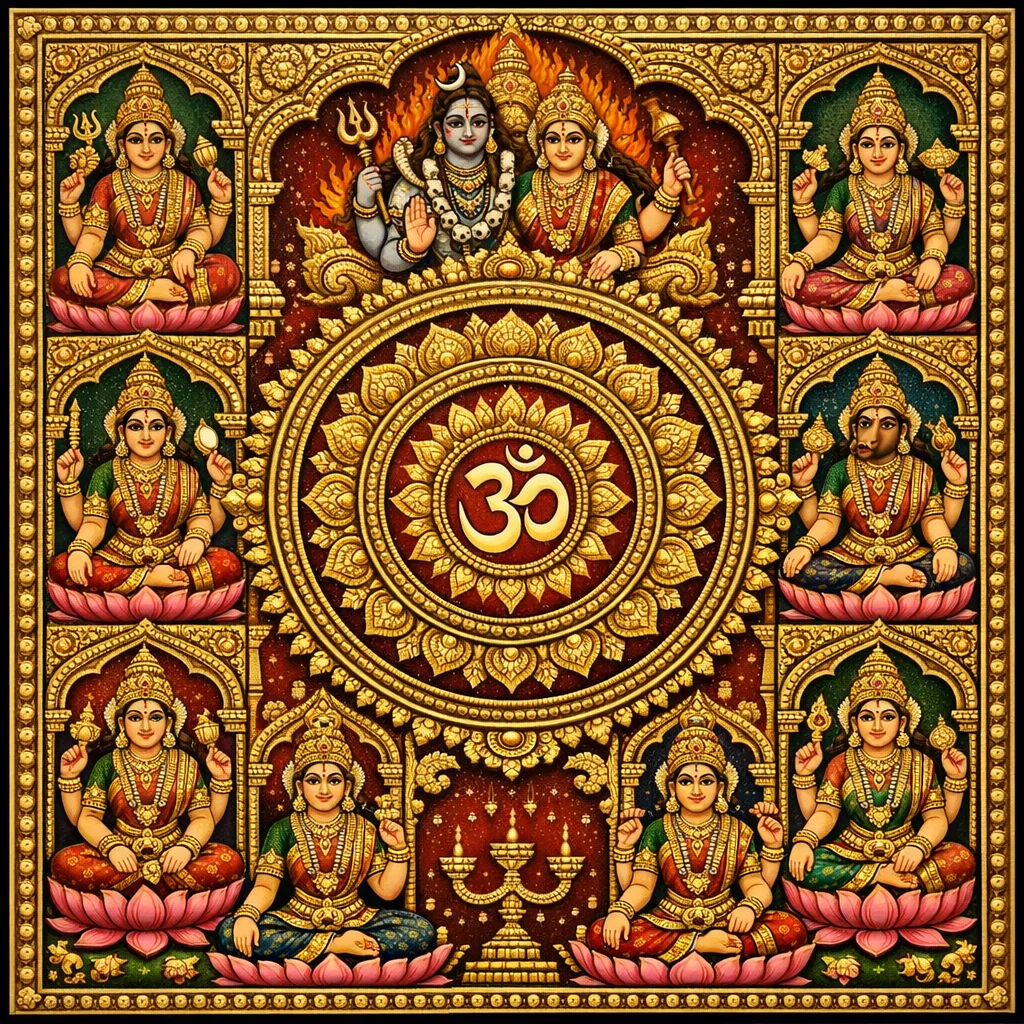
Lord Agni (speaking here as Īśvara’s voice) introduces Trikhaṇḍī—Brahmā, Viṣṇu, and Maheśvarī—as a mantra-structure bound to the secret “Heart” (hṛdaya) of the Mothers (Mātṛkā). The Mothers are presented as operative powers: they accomplish aims, remain undecaying, move unobstructed, and bring about subjugation, expulsion, and uprooting—especially to cut hostile rites and secure siddhi. The chapter then supplies mantra-units ending in “vicce svāhā,” notes manuscript variants, and lays down technical counts (pada/word totals and placement within a larger mantra-corpus). It prescribes japa and worship with five praṇava boundaries and insertion of the Kubjikā-hṛdaya at word-junctions (pada-sandhi), followed by phonetic placement rules (“middle-of-three” arrangements), Śikhā-Śivā/Bhairava formulas, and three-syllable bīja sets with/without seeds aligned to the 32-letter sequence. The latter half catalogs goddess-names by kula/lineage—Brahmāṇī, Māheśvarī, Kaumārī, Vaiṣṇavī, Vārāhī, Aindrī, Cāmuṇḍā, Mahālakṣmī—emphasizing maṇḍala worship for jaya (victory) in a Yuddhajayārṇava register.
Shlokas
No shlokas available for this adhyaya yet.
Frequently Asked Questions
A Trikhaṇḍī mantra-framework tied to the secret Mātṛkā-hṛdaya, with prescribed japa/worship, pada-sandhi insertion of Kubjikā-hṛdaya, and phonetic (varṇa) arrangements supporting maṇḍala-based victory rites.
It repeatedly frames the Mothers’ powers as operative for jaya: uprooting obstacles/enemies, cutting hostile rites (para-karma), and prescribing maṇḍala worship of specific kula-born goddess groups explicitly “for victory.”
Because mantra efficacy and transmission depend on exact phonetic forms; the chapter preserves variant endings and syllable-forms to document recensional differences while still maintaining counting schemes (pada totals; inclusion within larger mantra sets).