Adhyaya 143
Chapter 143 — Worship of Kubjikā (कुब्जिकापूजा)
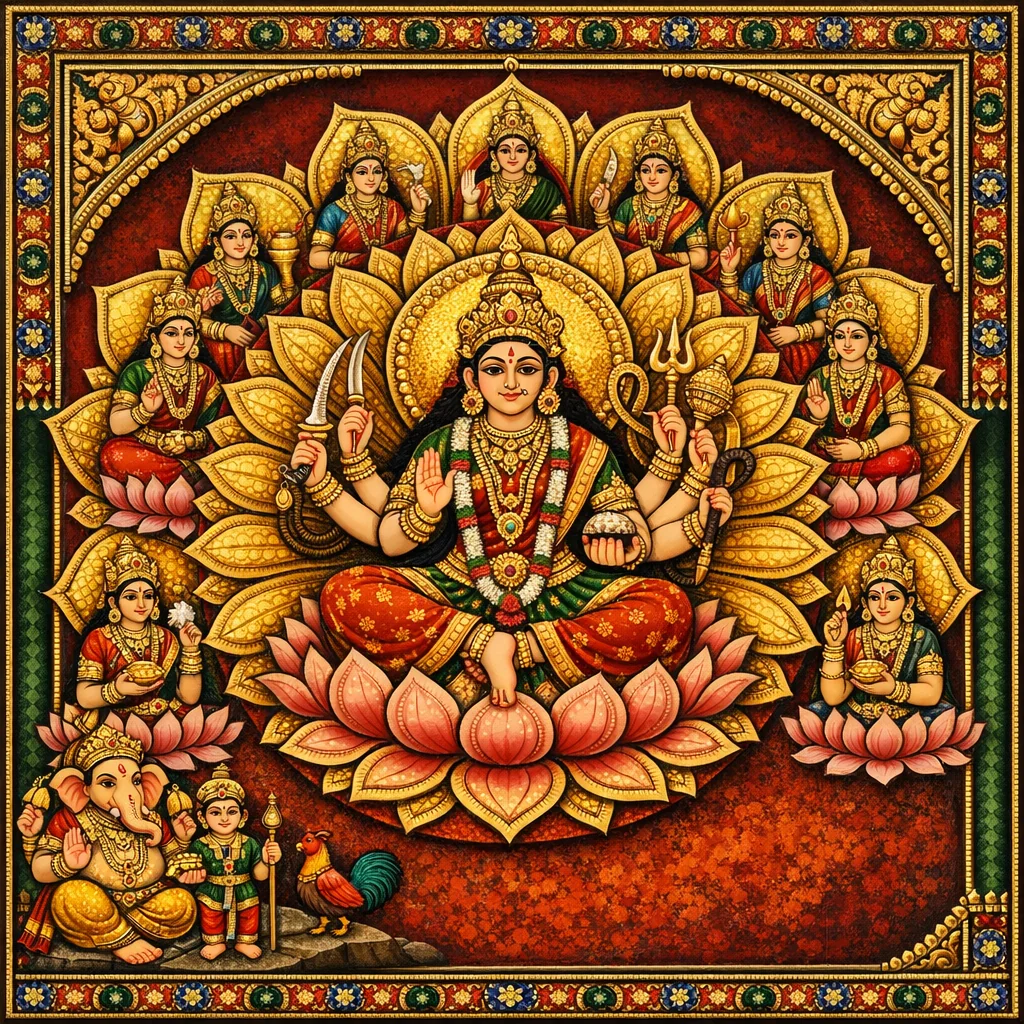
This chapter shifts from mantras and medicinal remedies to a Śākta-tantric victory rite within the Yuddhajayārṇava. The Lord teaches a stepwise (krama) worship of Kubjikā as “sarvārtha-sādhanī,” able to accomplish comprehensive aims, including success in battle when joined with consecrated substances—especially ājya/ghee—and weapon-empowerment. The rite is technically framed through chakra-pūjā markers, bīja syllables, and a nyāsa that installs mantras on bodily loci (secret organ, hand, heart, head), transforming the practitioner into a consecrated field of power. This power is then externalized into a maṇḍala: astra, kavaca, netra, śikhā and related mantras are stationed in the directional quarters, while an essential multi-syllabic bīja is स्थापित in a 32-petalled core. The ritual expands by pantheon-logic: the Mātṛkās emanate from Caṇḍikā’s supremacy; sacred pīṭhas and directional placements are invoked; and the Vimalapañcaka is distributed across quarters and peaks. It concludes with an ordered mandala population—Gaṇapati/Vaṭuka, gurus, nāthas, and surrounding deities—centering Kubjikā (and Kulaṭā) as the constant focus of sequential worship for protection, mastery, and dharmically framed victory.
Shlokas
No shlokas available for this adhyaya yet.
Frequently Asked Questions
A krama (sequential) Kubjikā worship that combines chakra-pūjā, nyāsa (body-installation of mantras), and maṇḍala-based directional placements of protective and weapon mantras (kavaca, netra, astra, śikhā, etc.).
The Māyā-bīja is placed on the secret organ; the ṣaṭkarma-astra is assigned to the hand; “Kālī, Kālī” is placed on the heart; and “Duṣṭa-cāṇḍālikā” is placed on the head.
It frames Kubjikā worship as sarvārtha-sādhanī and explicitly links success over adversaries to consecrated empowerment—weaponization through mantra (astra), protection through kavaca, and correct directional/mandala deployment.
Mantras are stationed by quarters (dik): kavaca and netra are centralized, astra is distributed to directions, and a specific essential bīja-string is installed in a 32-petalled core (karṇikā), establishing a layered protective grid.
The chapter invokes the Mātṛkās arising from Caṇḍikā, the Vimalapañcaka distributed across quarters/peaks, and a populated mandala including Gaṇapati/Vaṭuka, gurus, nāthas, and surrounding deities with Kubjikā at the center.