Adhyaya 123
युद्धजयार्णवीयनानायोगाः (Various Yogas from the Yuddha-jayārṇava)
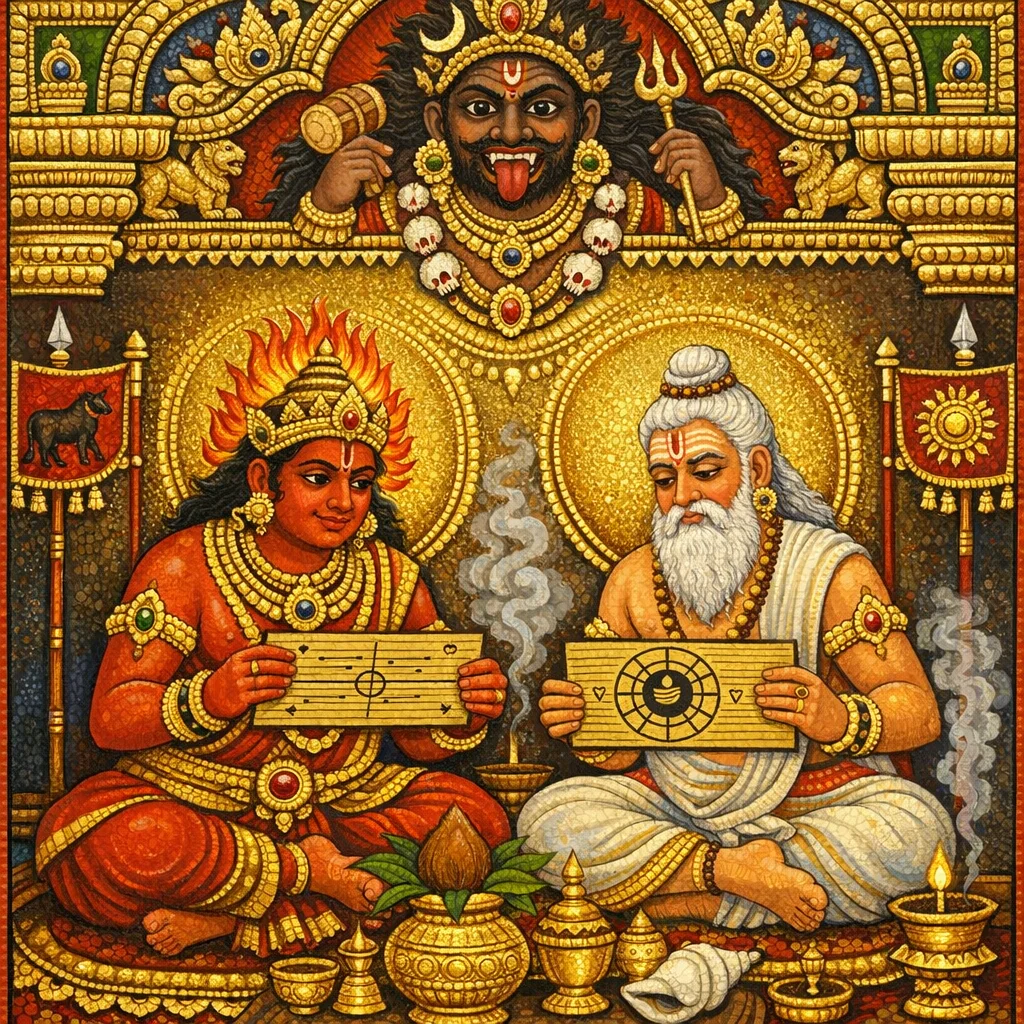
After concluding the prior unit on kāla-gaṇana (time computation), Lord Agni begins a war-victory digest drawn from the Yuddhajayārṇava. The chapter classifies phonemes and tithis into operational groups (starting with Nandā), assigns letter-ranges to planetary rulers, and thus frames divination as a coded linguistic–astral grid. It introduces diagnostic and measurement themes—nāḍī-spandana, ucchvāsa, and pala—linking bodily pulse and time-units to prognostic reading. It then develops cakra-based war astrology (Svarodaya-cakra, Śani-cakra, Kūrma-cakra, Rāhu-cakra), detailing divisions, directional placements, and death-giving portions, along with nakṣatra/muhūrta naming that governs what actions suit which times. Finally it turns to protection and victory practice: Bhairava-mantra applications (śikhā-bandha, tilaka, añjana, dhūpa-lepana) and wearable herbs and vaśīkaraṇa formulations (tilakas, lepas, oils). Through these layers, the chapter presents Agneya vidyā as a synthesis of Jyotiṣa, ritual technology, and applied pharmacology in service of dharma-guided victory.
Shlokas
No shlokas available for this adhyaya yet.
Frequently Asked Questions
A war-oriented Jyotiṣa toolkit: tithi and letter-to-graha mappings, multiple prognostic cakras (Svarodaya, Śani, Kūrma, Rāhu), and muhūrta-based prescriptions for what actions to perform or avoid.
They act as diagrammatic decision systems: divisions, directional placements, and specific ‘death-giving’ portions (notably linked with Śani) guide timing and risk assessment for actions related to conflict and protection.
The chapter treats victory as a synthesis of right timing (Jyotiṣa), protective rite (mantra and ritual acts like tilaka/añjana), and supportive materia medica—typical of the Agni Purana’s encyclopedic Agneya-vidyā approach.
Action-appropriateness: Raudra is prescribed for fierce acts, while Śveta is aligned with purification activities like bathing—demonstrating karmic regulation through time-quality.
Yes. Shloka 25 explicitly notes differences between manuscripts (e.g., a line absent in the Gha manuscript and alternate readings in the Kha manuscript), which is valuable for critical study.
Read Agni Purana in the Vedapath app
Scan the QR code to open this directly in the app, with audio, word-by-word meanings, and more.