Adhyaya 160
Vānaprastha-āśrama (The Forest-Dweller Stage of Life)
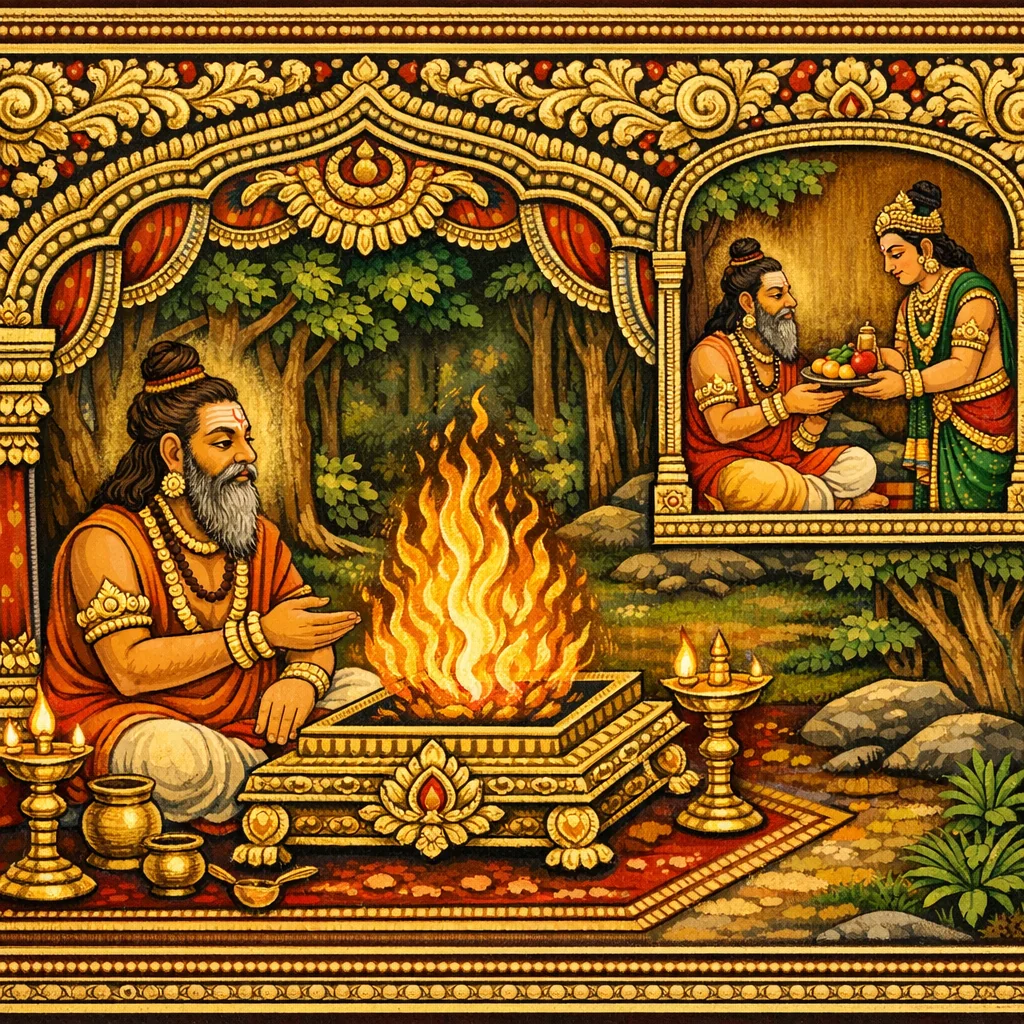
Continuing the Dharma-śāstra sequence, Puṣkara sets forth the regulated life of the vānaprastha and forest-ascetic as a disciplined bridge between gṛhastha duties and fuller renunciation. The chapter begins with outward marks and daily observances—matted hair, maintenance of Agnihotra, sleeping on the ground, and wearing a deer-skin—showing that Vedic rites continue even in withdrawal from society. It prescribes forest residence with a controlled diet (milk, roots, nīvāra wild rice, fruits), refusal of gifts, thrice-daily bathing, and brahmacarya as restraints that purify intention and lessen dependence. Dharma is expressed through worship of the gods and honoring guests, while yatis are directed to subsist on herbs. When a householder sees children and grandchildren settled, he may take refuge in the forest. Seasonal tapas is systematized—five-fire austerity in summer, exposure to rain and sky in monsoon, and severe winter practice in damp garments—culminating in the vow of unwavering forward movement without return, symbolizing irreversible commitment to dharmic detachment.
Shlokas
Verse 1
इत्य् आद्याग्नेये महापुराणे शौचं नामैकोनष्ट्यधिकतशततमो ऽध्यायः अथ षष्ट्यधिकशततमो ऽध्यायः वानप्रस्थाश्रमः पुष्कर उवाच वानप्रस्थयतीनाञ्च धर्मं वक्ष्ये ऽधुना शृणु जटित्वमग्निहोत्रित्वं भूशय्याजिनधारणं
Thus ends, in the Ādya-Āgneya Mahāpurāṇa, the one-hundred-and-fifty-ninth chapter called “Purity (Śauca).” Now begins the one-hundred-and-sixtieth chapter: “The Vānaprastha stage of life.” Puṣkara said: “Now listen; I shall declare the duties of forest-dwellers and yati ascetics—wearing matted hair, maintaining the Agnihotra, sleeping on the ground, and wearing a deer-skin.”
Verse 2
वने वासः पयोमूलनीवारफलवृत्तिता प्रतिग्रहनिवृत्तिश् च त्रिःस्नानं ब्रह्मचारिता
Dwelling in the forest; subsisting on milk, roots, wild rice (nīvāra), and fruits; refraining from accepting gifts; bathing three times daily; and maintaining celibate conduct (brahmacarya)—these are the prescribed disciplines.
Verse 3
देवातिथीनां पूजा च धर्मो ऽयं वनवासिनः औषधादीति क यतीनान्तु इति ङ गृही ह्य् अपत्यापत्यञ्च दृष्ट्वारण्यं समाश्रयेत्
For forest-dwellers, this is the duty: worship of the gods and honoring of guests. For yati ascetics, subsistence is by herbs and the like. A householder, having seen his children and grandchildren settled, should then take refuge in the forest.
Verse 4
तृतीयमायुषो भागमेकाकी वा सभार्यकः ग्रीष्मे पञ्चतपा नित्यं वर्षास्वभ्राविकाशिकः
For one third of his lifespan, whether dwelling alone or with his wife, he should regularly practise the “five-fire” austerity (pañcatapā) in summer; and in the rainy season he should keep the observance of remaining in the open amid the clouds, exposed to rain and sky.
Verse 5
आर्द्रवासाश् च हेमन्ते तपश्चोग्रञ्चरेद्बली अपरावृत्तिमास्थाय व्रजेद्दिशमजिह्मगः
In the Hemanta (winter) season, the strong ascetic should practise severe austerity while wearing damp garments; and, having undertaken the vow of not turning back, he should proceed in a straight direction, without crookedness or wavering.
Frequently Asked Questions
Forest residence; matted hair; Agnihotra; sleeping on the ground; deer-skin wearing; a restrained forest diet; refusal of gifts; thrice-daily bathing; brahmacarya; worship of gods and honoring guests.
By prescribing graded restraints (diet, celibacy, non-acceptance) and seasonal tapas while retaining Vedic ritual, it trains detachment and steadiness, making withdrawal from social life a structured dharmic progression toward renunciation.