Adhyaya 150
Chapter 150 — Manvantarāṇi (The Manvantaras) and the Purāṇic Map of Vedic Transmission
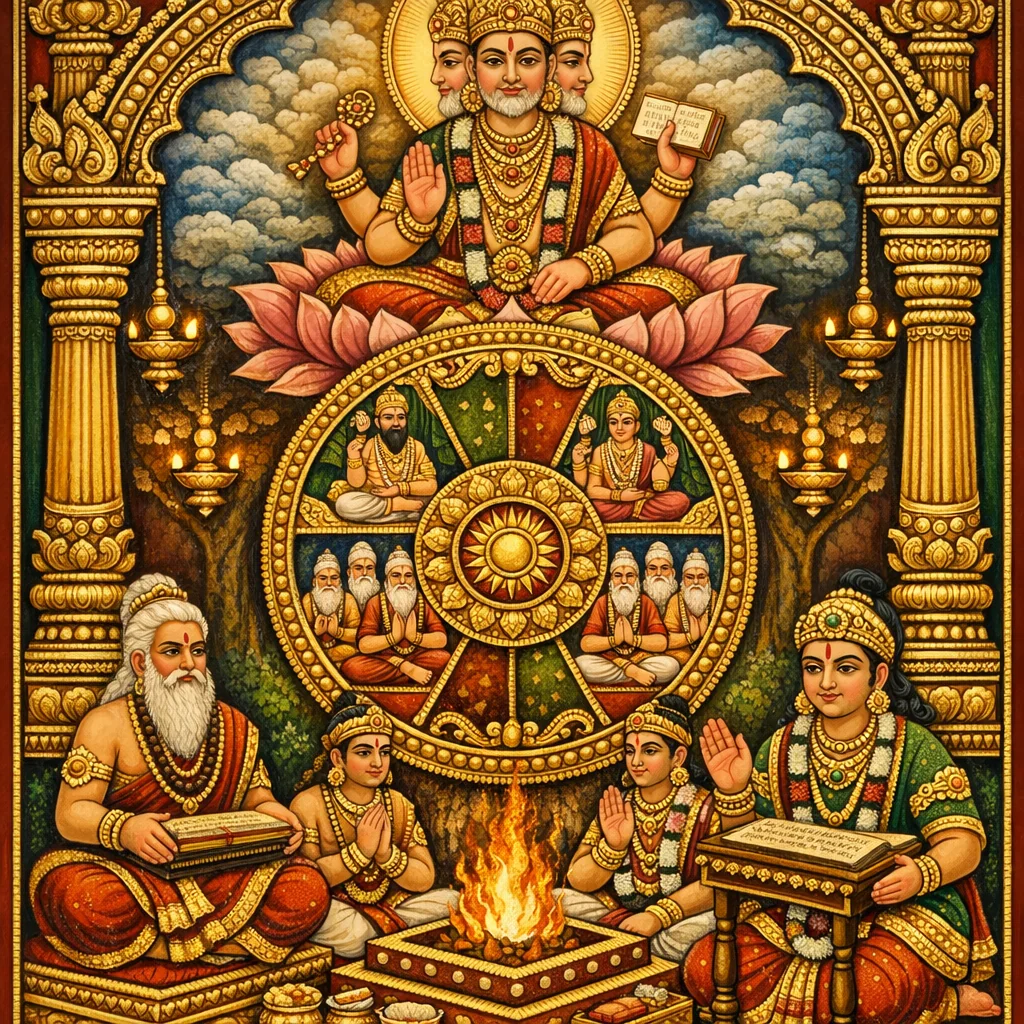
Lord Agni begins a dharma-centered cosmography by enumerating the manvantaras—successive aeons ruled by Manus—each defined by its offices: the Manu, the Indra, the deva-groups, the Saptarṣis, and the progeny that uphold earthly order. He moves from early cycles (Svāyambhuva and others) to the present markers—Śrāddhadeva/Vaivasvata Manu with the current Saptarṣis—and then to future Manus such as Sāvarṇi, stressing that a single day of Brahmā contains fourteen such administrations. Having set cosmic governance as a dharmic structure, Agni turns to the governance of knowledge: at the end of Dvāpara, Hari divides the primordial Veda, assigns priestly functions to the four Vedas, and traces their transmission through Vyāsa’s disciples (Paila, Vaiśampāyana, Jaimini, Sumantu) and later lineages and śākhās. Thus, cosmic cycles and textual lineages form one ordered continuum preserving yajña, knowledge, and Dharma.
Shlokas
Verse 1
इत्य् आग्नेये महापुराणे युद्धजयार्णवे अयुतलक्षकोटिहोमो नामोनपञ्चाशदधिकशततमो ऽध्यायः अथ पञ्चाशदधिकशततमो ऽध्यायः मन्वन्तराणि अग्निर् उवाच मन्वन्तराणि वक्ष्यामि आद्याः स्वायम्भुवो मनुः अग्नीध्राद्यास्तस्य सुता यमो नाम तदा सुराः
Thus, in the Agni Mahāpurāṇa—within the section called the “Ocean of Victory in Battle”—ends the one-hundred-and-forty-ninth chapter, titled “The Homa of Ten-Thousand, Hundred-Thousand, and Ten-Million (Offerings).” Now begins the one-hundred-and-fiftieth chapter: “The Manvantaras.” Agni said: “I shall describe the Manvantaras. The first is Svāyambhuva Manu; his sons, beginning with Agnīdhra, (ruled then), and among the gods at that time the prominent name was Yama.”}]}}
Verse 2
और्वाद्याश् च सप्तर्षय इन्द्रश् चैव शतक्रतुः पारावताः सतुषिता देवाः स्वारोचिषे ऽन्तरे
In the Svārociṣa Manvantara, the Seven Ṛṣis were led by Aurva; Indra was Śatakratu; and the gods were the Pārāvatas and the Satuṣitas.
Verse 3
विपश्चित्तत्र देवेन्द्र ऊर्जस्तम्भादयो द्विजाः चैत्रकिम्पुरुषाः पुत्रास्तृतीयश्चोत्तोतमो मनुः
There (in that Manvantara) were Vipaścit and Devendra, and the dvija sages beginning with Ūrjastambha. The sons were the Caitras and the Kimpuruṣas; and the third Manu was Ottotama.
Verse 4
सुशान्तिरिन्द्रो देवाश् च सुधामाद्या वशिष्ठजाः सप्तर्षयो ऽजाद्याः पुत्राश् चतुर्थस्तामसी मनुः
Suśānti was Indra; and the gods were those beginning with Sudhāmā. The Seven Ṛṣis were the sons of Vasiṣṭha; and the sons (of Manu) were those beginning with Aja. The fourth Manu is Tāmasa Manu.
Verse 5
स्वरूपाद्याः सुरगणाः शिखिरिन्द्रः सुरेश्वरः ज्योतिर्धामादयो विप्रा नव ख्यातिमुखाः सुताः
The divine hosts (suragaṇa) beginning with Svarūpa are thus named, and among them are Śikhirindra and Sureśvara. The brāhmaṇa sages beginning with Jyotirdhāman are nine sons, headed by Khyāti.
Verse 6
रैवते वितथश्चेन्द्रो अमिताभास् तथा सुराः हिरण्यरोमाद्या मुनयो बलबन्धादयः सुताः
In the Raivata Manvantara, Vitatha was the progenitor, and Indra was the lord of the gods; the gods were called the Amitābhās. The sages were led by Hiraṇyaroman; and the sons began with Balabandha (and others).
Verse 7
मनोजवश्चाक्षुषे ऽथ इन्द्रः स्वात्यादयः सुराः सुमेधाद्या महर्षयः पुरुप्रभृतयः सुताः
In the Cākṣuṣa Manvantara, Manojava was Indra; Svāti and the others were the gods; Sumedhā and the others were the great seers; and Puru and the rest were the sons (progeny).
Verse 8
विवस्वतः सुतो विप्रः श्राद्धदेवो मनुस्ततः आदित्यवसुरुद्राद्या देवा इन्द्रः पुरन्दरः
O brāhmaṇa, the son of Vivasvat was Śrāddhadeva Manu. From him arose the gods beginning with the Ādityas, Vasus, and Rudras; and (among them) Indra, the city-destroyer, Purandara.
Verse 9
वशिष्ठः काश्यपो ऽथात्रिर्जमदग्निः सगोतमः विश्वामित्रभरद्वाजौ मुनयः सप्त साम्प्रतं
Vasiṣṭha, Kāśyapa, then Atri, Jamadagni, and also Gotama—together with Viśvāmitra and Bharadvāja—these are the seven sages at present.
Verse 10
इक्ष्वाकुप्रमुखाः पुत्रा अंशेन हरिराभवत् स्वायम्भुवे मानसो ऽभूदजितस्तदनन्तरे
The sons beginning with Ikṣvāku became manifestations of Hari through a partial portion of his divine power. In the Svāyambhuva Manvantara, the incarnation named Mānasa arose; and after that, the incarnation Ajita appeared.
Verse 11
सत्यो हरिर्देवदरो वैकुण्ठो वामनः क्रमात् छायाजः सूर्यपुत्रस्तु भविता चाष्टमो मनुः
In due order, he is called Satya, Hari, Devadāra, Vaikuṇṭha, and Vāmana. And Chāyāja—indeed the Sun’s son—will become the eighth Manu.
Verse 12
पूर्वस्य च सवर्णो ऽसौ सावर्णिर्भविताष्टमः सुतपाद्या देवगणा दीप्तिमद्द्रौणिकादयः
And he will be of the same lineage as the former Manu; that Sāvarṇi will become the eighth Manu. The hosts of gods will be Sutapā and others, beginning with Dīptimat and Drauṇika.
Verse 13
मुनयो बलिरिन्द्रश् च विरजप्रमुखाः सुताः नवमो दक्षसावर्णिः पाराद्याश् च तदा सुराः
The sages, Bali and Indra, and the sons headed by Viraja—during that period the ninth Manu is Dakṣa-sāvarṇi; and then the gods are those beginning with Pāra.
Verse 14
इन्द्रश् चैवाद्भुतस्तेषां सवनाद्या द्विजोत्तमाः धृतकेत्वादयः पुत्रा ब्रह्मसावर्णिरित्यतः
And among them, the Indra is indeed Adbhuta. The foremost twice-born sages begin with Savana; and the sons begin with Dhṛtaketu. From this point onward, the account proceeds with Brahma-Sāvarṇi.
Verse 15
सुखादयो देवगणास्तेषां शान्तिः शतक्रतुः हिरण्यरोमाद्या ऋषय इति ञ तथा सुरा इति छ हविष्याद्याश् च मुनयः सुक्षेत्राद्याश् च तत्सुताः
The Deva-groups are named “Sukha” and the rest; among them are mentioned Śānti and Śatakratu (Indra). The Ṛṣis are Hiraṇyaroman and others. Likewise, there is a group called “Surā” (and others). Also, the sages are Haviṣya and the rest; and Sukṣetra and the rest are their sons.
Verse 16
धर्मसावर्णिकश्चाथ विहङ्गाद्यास्तदा सुराः गणेशश्चेन्द्रो नश् चराद्या मुनयः पुत्रकामयोः
Then (in that Manvantara) Dharmasāvarṇika is the Manu; the gods are headed by Vihaṅga; Gaṇeśa is also mentioned; and Indra is Naś (Naraśa/Naś). The sages are the Carādyā (beginning with Cara), connected with rites for those desiring a son.
Verse 17
सर्वत्रगाद्या रुद्राख्यः सावर्णिभविता मनुः ऋतधामा सुरेन्द्रश् च हरिताद्याश् च देवताः
The deities beginning with Sarvatragā are enumerated; Rudrākhya is the Indra; Sāvarṇi will be the Manu; Ṛtadhāman is also named as lord of the gods; and the deva-host beginning with Harita is declared.
Verse 18
तपस्याद्याः सप्तर्षयः सुता वैदेववन्मुखाः मनुस्त्रयोदशो रौच्यः सूत्रामाणादयः सुराः
In the Raucya (thirteenth) Manvantara, the Seven Ṛṣis begin with Tapasyā; the sons are headed by Vaidevavat; and the gods are headed by Sūtrāmāṇa.
Verse 19
इन्द्रो दिवस्पतिस्तेषां दानवादिविमर्दनः निर्मोहाद्याः सप्तर्षयश्चित्रसेनादयः सुताः
Among them, Indra—lord of the heavens, crusher of the Dānavas and the like—was foremost. Nirmoha and others were the Seven Ṛṣis, and Citraseṇa and others were (their) sons.
Verse 20
मनुश् चतुर्दशो भौत्यः शुचिरिन्द्रो भविष्यति चाक्षुषाद्याः सुरगणा अग्निबाह्णादयो द्विजाः
The fourteenth Manu will be Bhautya; Śuci will be the Indra. The hosts of gods will be those beginning with Cākṣuṣa, and the twice-born sages will be those beginning with Agnibāhu.
Verse 21
चतुर्दशस्य भौत्यस्य पुत्रा ऊरुमुखा मनोः प्रयर्तयन्ति देवांश् च भुवि सप्तर्षयो दिवः
In the fourteenth (Manvantara) of Bhautya, the sons of Manu—Ūrūmukha and others—set the gods in motion, that is, establish their functions in the world. On earth are the Seven Ṛṣis, and in heaven are the gods.
Verse 22
देवा यज्ञभुजस्ते तु भूः पुत्रैः परिपाल्यते ब्रह्मणो दिवसे ब्रह्मन्मनवस्तु चतुर्दश
The gods are the enjoyers of the sacrifices, and the earth is protected by their sons. O Brahman, within a single day of Brahmā there are indeed fourteen Manus.
Verse 23
मन्वाद्याश् च हरिर्वेदं द्वापरान्ते विभेद सः आद्यो वेदश् चतुष्पादः शतसाहस्रसम्मितः
Beginning with Manu and the other primordial sages, Hari (Viṣṇu) divided the Veda at the close of the Dvāpara age. The original Veda was fourfold (four-footed) and comprised a hundred thousand verses.
Verse 24
एकश्चासीद् यजुर्वेदस्तं चतुर्धा व्यकल्पयत् आध्वर्यवं यजुर्भिस्तु ऋग्भिर्होत्रं तथा मुनिः
The Yajurveda was once a single corpus; then the sage arranged it into four divisions: the Adhvaryu’s office through the Yajus formulas, and likewise the Hotṛ’s office through the Ṛg verses.
Verse 25
औद्गात्रं सामभिओश् चक्रे ब्रह्मत्वञ्चाप्यथर्वभिः प्रथमं व्यासशिष्यस्तु पैलो ह्य् ऋग्वेदपारगः
He assigned the Udgatṛ priestly function to the specialists of the Sāmaveda, and the Brahman-priestly function to the specialists of the Atharvaveda. Among Vyāsa’s disciples, the first was Paila, a master of the Ṛgveda.
Verse 26
इन्द्रः प्रमतये प्रादाद्वास्कलाय च संहितां बौध्यादिभ्यो ददौ सोपि चतुर्धा निजसंहितां
Indra gave the Saṁhitā to Pramata and also to Vāskala; and Vāskala, in turn, transmitted his own Saṁhitā in four divisions to Baudhya and the others.
Verse 27
यजुर्वेदतरोः शाखाः सप्तविंशन्महामतिः वैशम्पायननामासौ व्यासशिष्यश् चकार वै
The great-souled Vaiśampāyana—disciple of Vyāsa—indeed established twenty-seven branches (śākhās) of the tree of the Yajurveda.
Verse 28
काण्वा वाजसनेयाद्या याज्ञवल्क्यादिभिः स्मृताः सामवेदतरोः शाखा व्यासशिष्यः सजैमिनिः
The Kāṇva and Vājasaneyi schools and the rest are remembered as taught by Yājñavalkya and others. From the Sāma-Veda tree, the branch is represented by Jaimini, the disciple of Vyāsa.
Verse 29
सुमन्तुश् च सुकर्मा च एकैकां संहितां ततः गृह्णते च सुकर्माख्यः सहस्रं संहितां गुरुः
Thereafter, Sumantu and Sukarmā each received a single Saṃhitā; and the one called Sukarmā received from his teacher a thousand Saṃhitās.
Verse 30
सुमन्तुश्चाथर्वतरुं व्यासशिष्यो विभेद तं शिष्यानध्यापयामास पैप्यलादान् सहस्रशः
Sumantu, a disciple of Vyāsa, divided the Atharva-veda tradition into branches, and he caused his disciples—beginning with Paipyala—to study it in thousands of recitational lineages.
Verse 31
पुराणसंहितां चक्रे सुतो व्यासप्रसादतः
By Vyāsa’s gracious favor, Sūta composed the compendium (saṃhitā) of the Purāṇas.
Frequently Asked Questions
The chapter provides a structured taxonomy for each manvantara (Manu–Indra–deva-groups–Saptarṣis–progeny) and then gives a technical account of Veda-vibhāga: the fourfold priestly allocation (Hotṛ/Ṛg, Adhvaryu/Yajus, Udgātṛ/Sāman, Brahman/Atharvan) and the paramparā of śākhā formation through Vyāsa’s disciples.
By presenting cosmic administration and Vedic transmission as dharmic order, it frames yajña, lineage, and correct function as spiritual disciplines: knowing the cycles (kāla), authorities (Manu/ṛṣi), and textual sources (Veda-śākhās) supports right practice (ācāra) and aligns worldly duty with liberation-oriented Dharma.