Adhyaya 251
Dhanurveda-kathana (Exposition of Martial Science): Movements, Weapon-Operations, Combat Postures, and Battle Readiness
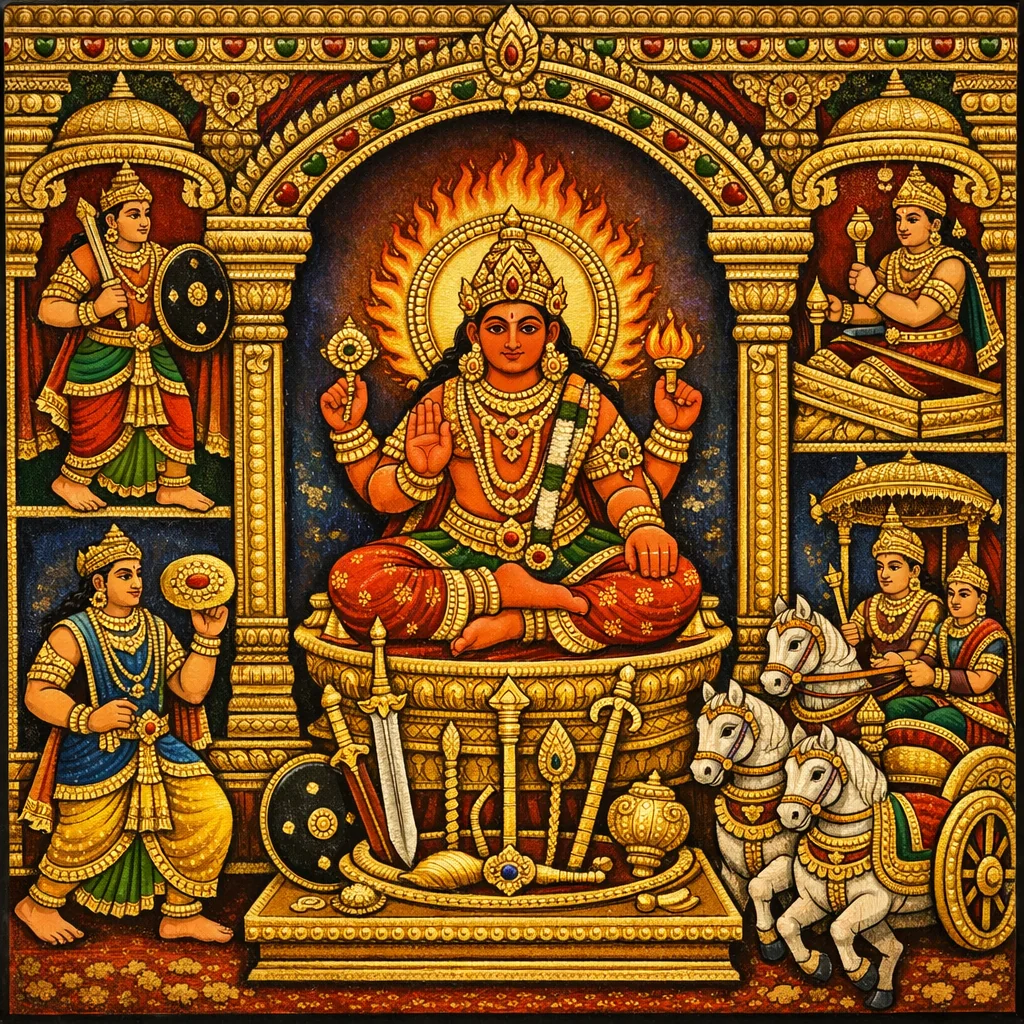
Lord Agni sets forth a technical taxonomy of battlefield movements and attack-patterns (bhrānta, udbhrānta, śyenapāta, ākula), then gives named pairs and structural units as codified categories for training and recitation. He teaches practical curricula: (1) sword-and-shield discipline with thirty-two stances (pratyālīḍha, ālīḍha, varāha, lulita), (2) grappling and wrestling maneuvers—turning, seizing, upward/downward throws, holding and dislodging, (3) punitive bonds and nooses with their classifications and prescribed operations (vyasta-pāśa), and (4) weapon-specific karmas for cakra, śūla, tomara, gadā, parāśu, mudgara, bhindipāla, laguḍa, vajra, paṭṭiśa, and the sword—culminating in yantra-karman (mechanical/engine operations). The chapter also lists hand-gestures (hastas/mudrās), bodily effects and markers, and protective or medicinal/ritual items. The closing verses address battlefield logistics—arming elephants and chariots, appointing goad-bearers, archers, sword-bearers, and shield-bearers, and sanctifying weapons with mantra—ending with the royal charge to conquer and then protect the realm in accordance with dharma.
Shlokas
No shlokas available for this adhyaya yet.
Frequently Asked Questions
A codified taxonomy of martial practice: named movement/attack modes, enumerated stance-systems (including thirty-two sword-and-shield postures), and weapon-specific karmas (operations) extending from hand weapons to cakra and yantra (mechanical devices), plus prescribed roles and equipment for elephants, chariots, and protective units.
By presenting warfare as Agneya Vidya governed by dharma: weapons are consecrated with mantra, skill is disciplined through named and countable methods, and victory is ethically completed by the duty to protect and govern—aligning embodied mastery (bhukti) with righteous order and higher purpose (mukti-oriented restraint).