Adhyaya 249
Chapter 249 — धनुर्वेदकथनम् (Exposition of Dhanurveda): Archery Procedure, Target-Training, and Yogic Restraint
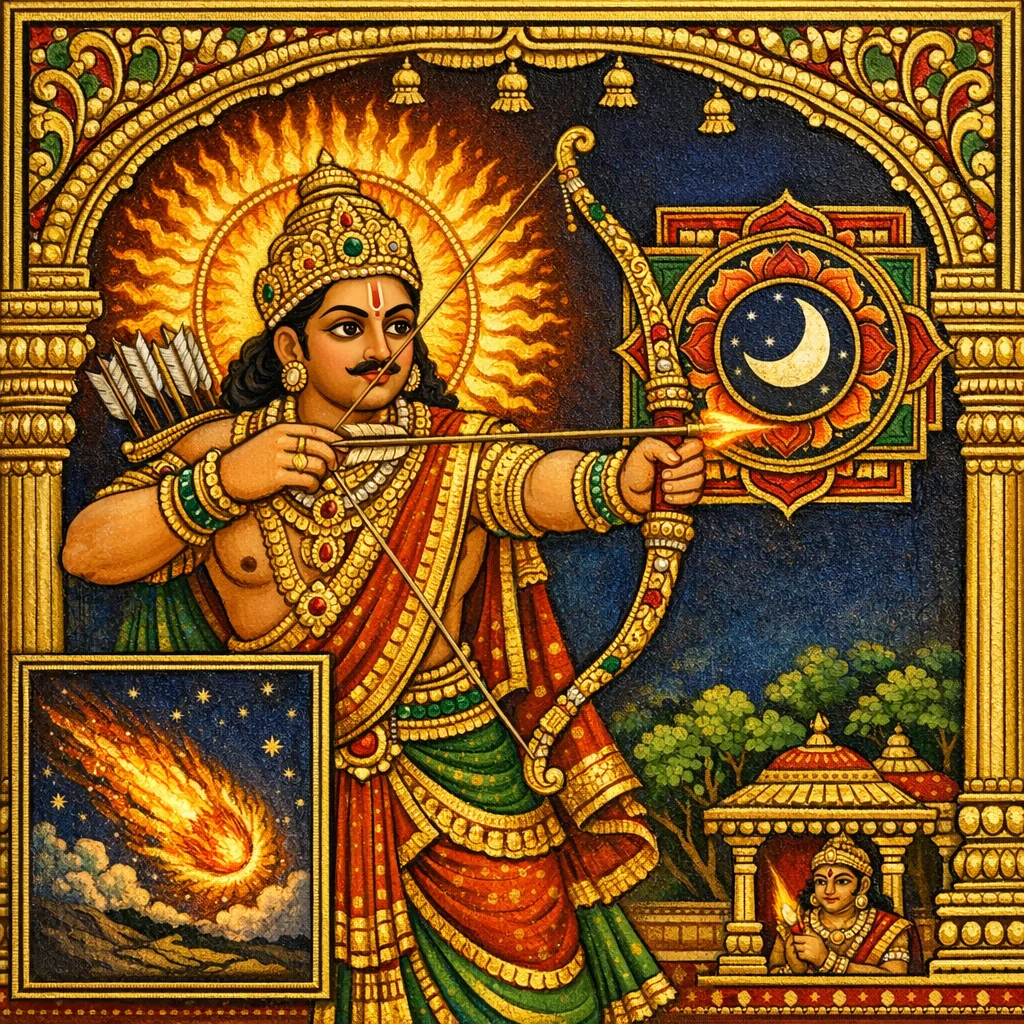
Lord Agni begins this Dhanurveda lesson with preparatory rites and readiness of equipment: the bow is made to proper full length, purified, and set within a sacrificial setting, showing martial training to be grounded in dharma. The archer then follows a strict sequence—take the arrow, bind the quiver-strap on the right, draw the arrow with the right hand while keeping the gaze locked on the target, lift the bow with the left, and nock the arrow firmly (including use of the siṃhakarṇa implement for secure seating). Skill is joined to inner discipline: the mind must not sink, it must stay fixed on the mark, and release is made from the correct bodily point on the right side. Practice advances through defined target-forms (including measured marks such as the sixteen-aṅgula candraka), post-release control drills (ulkā-śikṣā), and increasingly complex shots—eye-marks, square targets, turning shots, moving shots, and low/high piercings. Targets are classified as firm (dṛḍha), difficult (duṣkara), and wonderfully difficult (citra-duṣkara), with training prescribed on both right and left and with stable target mounting. The chapter culminates by linking procedural mastery (karma-yoga-vidhi) with yogic education: disciplined mind and gaze, and conquest of yama, uniting martial excellence with spiritual self-restraint.
Shlokas
No shlokas available for this adhyaya yet.
Frequently Asked Questions
A stepwise biomechanics-and-gear protocol: right-side quiver binding, drawing the arrow with the right hand while maintaining target-lock, lifting the bow with the left, firm nocking (puṅkha on guṇa) aided by the siṃhakarṇa implement, measured target marks (e.g., candraka of sixteen aṅgulas), and progressive drills including ulkā-śikṣā control after release.
It frames martial training as karma-yoga in practice: mental steadiness, disciplined gaze, correct method, and the conquest of yama are treated as integral to proficiency, making worldly skill (bhukti) a vehicle for dharmic self-mastery that supports spiritual refinement (mukti-orientation).