Adhyaya 248
Chapter 248: धनुर्वेदः (Dhanurveda — Science of War and Archery Discipline)
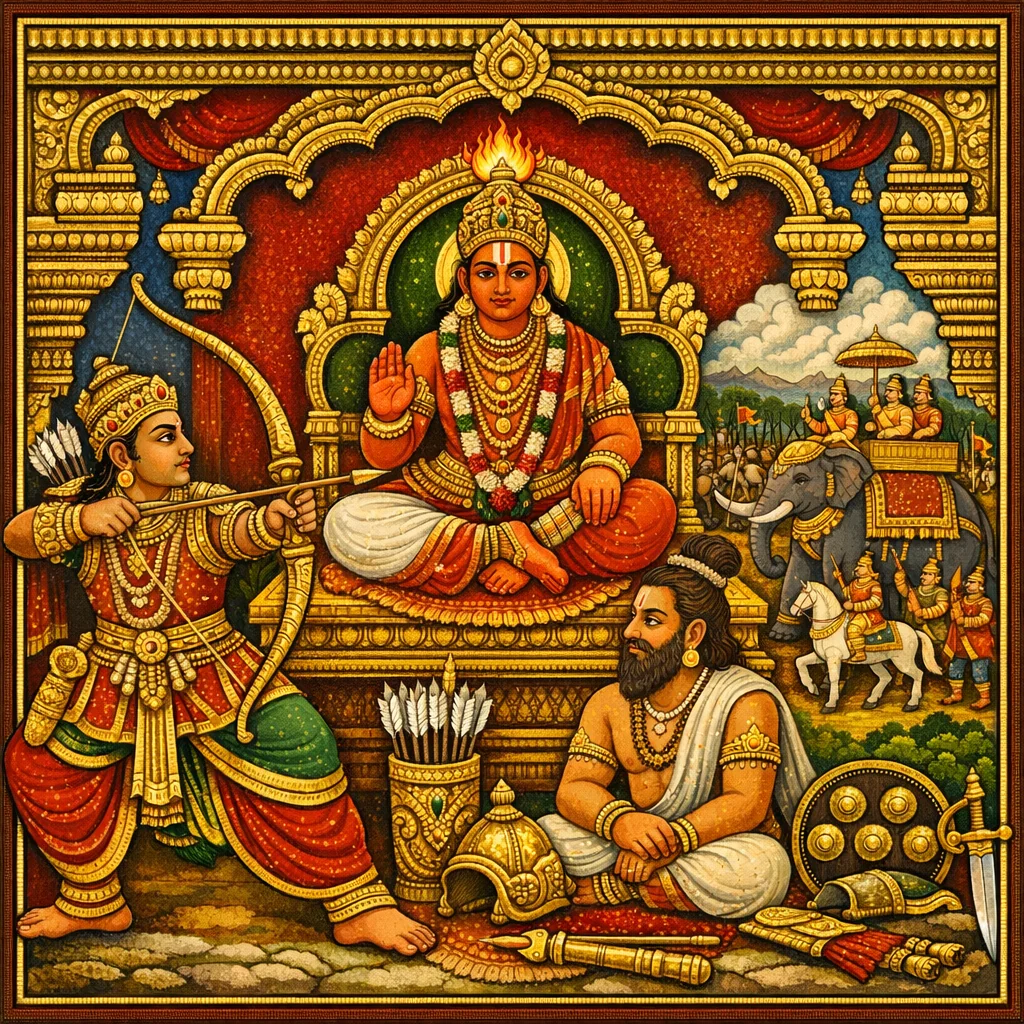
Lord Agni begins the Dhanurveda by defining warfare-science as “four-footed,” structured by the four military arms—chariot, elephant, horse, and infantry—and, in Vedic teaching terms, as “fivefold” by modes of weapon-use: discharged projectiles, hand-thrown weapons, set-and-released devices, non-discharged weapons, and unarmed/arm-to-arm combat. He further refines the subject through paired classifications—śastra vs. astra (weapons vs. missiles) and straightforward vs. deceptive (māyā) methods—naming representative mechanism-releases (yantra-mukta) and hand-releases (pāṇi-mukta). The chapter then turns to discipline: readiness through protective gear, graded engagements (bow-centered and spear-centered), and the social-pedagogic order of instruction (the Brāhmaṇa teaches Kṣatriya/Vaiśya; Śūdra participation is possible through training and auxiliary service to the king). A substantial technical core details stances and measures (samapada, vaiśākha, maṇḍala, ālīḍha, pratyālīḍha, vikaṭa, sampuṭa), followed by archery procedure: salutation, safe clearance while stringing, navel/hip placement, the eye–ear aiming line, finger-grips on the arrow, draw-and-release mechanics, follow-through, and performance grading. Standard measures for arrows and bows are prescribed, and the principles are extended to horse, chariot, and elephant contexts—presenting martial technique as a dharma-governed discipline.
Shlokas
No shlokas available for this adhyaya yet.
Frequently Asked Questions
Precise operational metrics and biomechanics: stance geometry and spacing (vitasti/aṅgula-based), bow brace/clearance set to twelve aṅgulas, standardized bow and arrow lengths (3–4 hasta bows; 10–12 muṣṭi arrows), and a procedural aiming line maintained between the eye and the ear.
It frames martial skill as dharma-sādhana: disciplined posture, restraint, correct measure, and role-based duty (service to the king and protection of order) convert warfare-knowledge into a regulated vidyā aligned with righteous conduct rather than mere violence.