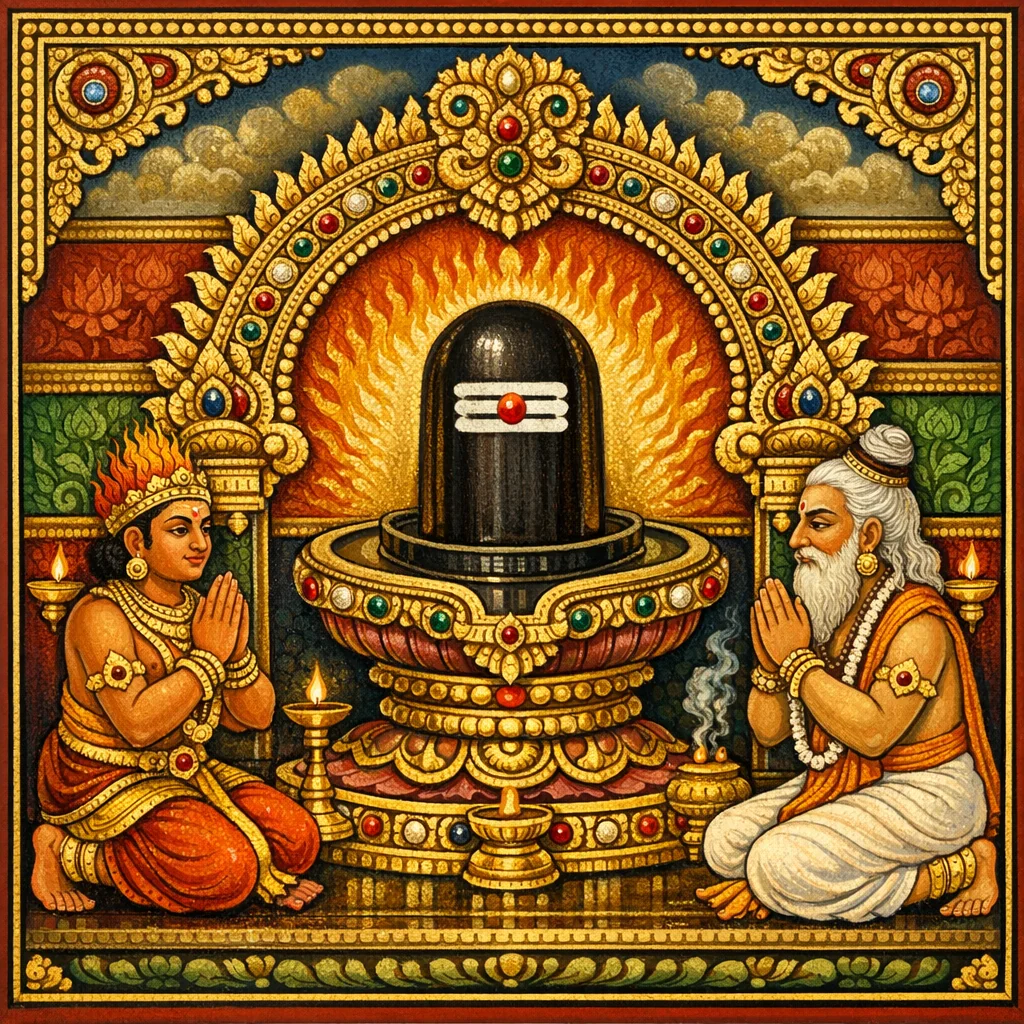
Adhyaya 217
Gāyatrī-nirvāṇa (गायत्रीनिर्वाणम्) — Śiva-Liṅga Stuti as a Path to Yoga and Nirvāṇa
Agni teaches that praising Śiva in His Liṅga-form leads to the attainment of yoga through the Gāyatrī, and that Vasiṣṭha and other sages received from Śaṅkara the supreme Brahman called Nirvāṇa. The chapter unfolds as a compact liṅga-stotra, saluting Śiva as golden, Vedic, supreme, sky-like, thousand-formed, fiery, primordial, and proclaimed by śruti. The hymn progressively identifies the liṅga with cosmological and Sāṃkhya categories—pātāla and brahma, the unmanifest (avyakta), intellect (buddhi), ego (ahaṅkāra), elements (bhūtas), senses (indriyas), subtle essences (tanmātras), puruṣa, bhāva, and the tri-guṇas—culminating in yajña and tattva as His emblem. A prayer follows for highest yoga, worthy progeny, imperishable Brahman, and supreme peace. Agni closes with an origin account: on Śrīparvata, Śiva, pleased by Vasiṣṭha’s praise, granted unbroken lineage and unwavering dharmic resolve, then disappeared—establishing the stotra as both metaphysical teaching and boon-bestowing practice.
Shlokas
No shlokas available for this adhyaya yet.
Frequently Asked Questions
That Śiva as Liṅga is the all-pervading reality mirrored in cosmic and psychological principles, and that Gāyatrī-linked devotion and yoga culminate in realization of Nirvāṇa (Parabrahman).
A layered identification of the liṅga with Sāṃkhya-style tattvas (avyakta, buddhi, ahaṅkāra, indriyas, tanmātras, bhūtas), the tri-guṇas, and yajña/tattva—presenting Śiva as both transcendence and immanence.
It frames stuti as sādhanā: devotion and mantra-yoga yield inner peace and Brahman-realization, while also legitimizing worldly stability through boons such as akṣaya lineage and steadfastness in dharma.