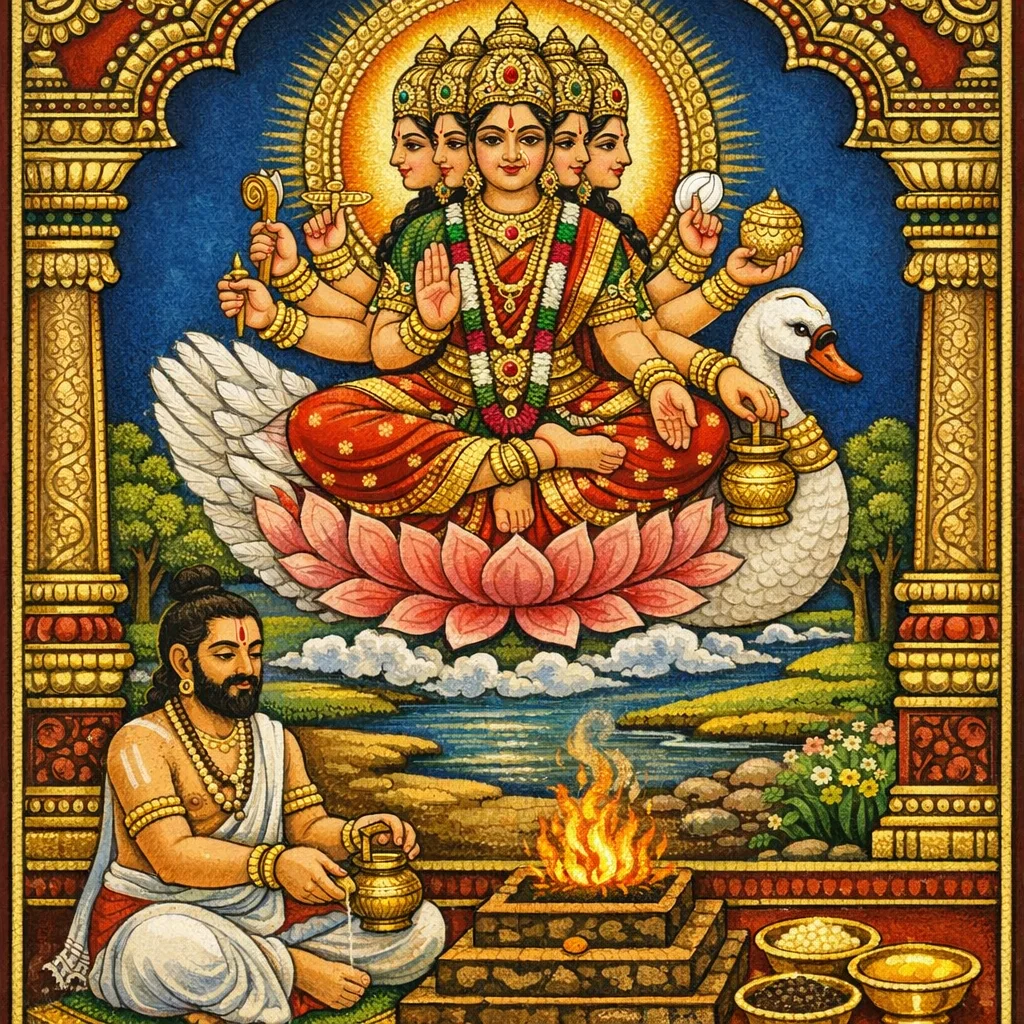
Adhyaya 215
सन्ध्याविधिः (Sandhyā-vidhi) — The Rite of Twilight Worship
Lord Agni explains sandhyā (twilight worship) in both procedure and metaphysics, establishing the praṇava Oṁ as the essence and completion-sign of all mantra rites. He exalts the triad—Oṁ, the mahāvyāhṛtis (bhūḥ, bhuvaḥ, svaḥ), and the Sāvitrī/Gāyatrī—as Brahman’s chief “mouth,” enjoining sustained study and disciplined japa as a direct means to purification and Brahman-attainment. Graded japa counts (7/10/20/108/1,000/100,000/10,000,000) are mapped to spiritual fruits and expiations, and japa is paired with homa (especially tila-homa) and fasting to remedy sins. The chapter adds technical ritual layers: ṛṣi–chandas–devatā declarations, viniyoga lists for deva-upanaya/japa/homa, nyāsa placements on body-points, dhyāna color-forms of Gāyatrī, and offering substances aligned to aims (śānti, āyus, śrī, vidyā, etc.). It closes by integrating prāṇāyāma, mārjana, aghamarṣaṇa, and Vedic verses (āpo hi ṣṭhā, drupadādīni, pavāmānī) into a coherent sandhyā purification workflow—an Agneya synthesis of mantra, breath, and rite.
Shlokas
No shlokas available for this adhyaya yet.
Frequently Asked Questions
It provides a full ritual-technical stack: praṇava primacy, Gāyatrī’s ṛṣi–chandas–devatā (Viśvāmitra–Gāyatrī–Savitṛ), vyāhṛti mappings (ṛṣis, deities, meters), explicit japa counts with results, nyāsa body placements, and homa substances keyed to specific aims.
By making daily sandhyā a disciplined bridge from karma to yoga: breath-restraint (prāṇāyāma), mantra (Oṁ/Gāyatrī), purification rites (mārjana/aghamarṣaṇa), and intention (saṅkalpa/viniyoga) are unified to remove pāpa, stabilize sattva, and orient the practitioner toward Brahman-realization.
Gāyatrī-japa (with graded counts up to lakṣa/koṭi), tila-homa, fasting with 1,000 recitations, water-based japa and drinking rites, and the aghamarṣaṇa sequence supported by Vedic purification verses.