Adhyaya 212
Meru-dānāni (Meru-Donations) — Kāmya-dāna, Month-wise Offerings, and the Twelvefold Meru Rite
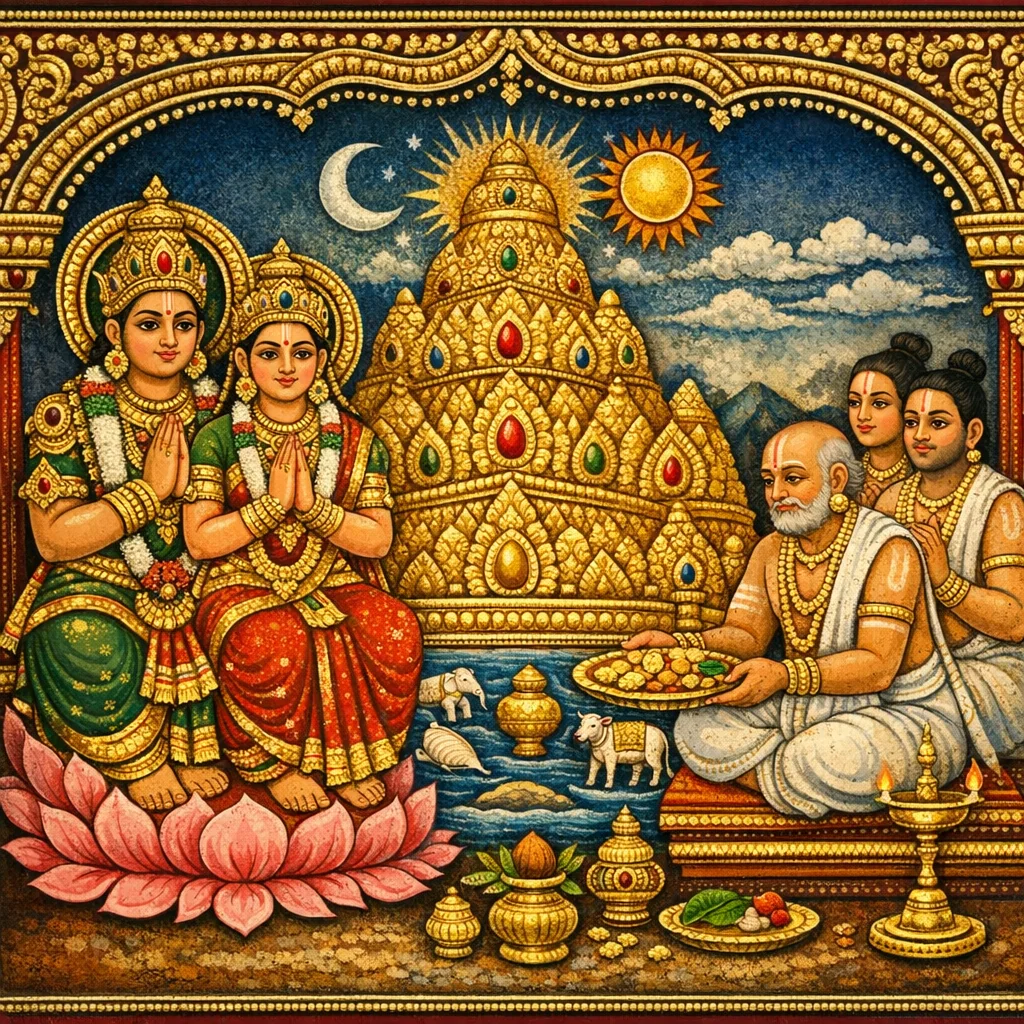
Lord Agni moves from the prior chapter’s list of gifts to a structured teaching on kāmya-dāna—votive giving for specific aims—rooted in steady month-by-month worship and culminating in a grand year-end rite. He details monthly offerings (some made as dough effigies) with their stated fruits, then presents the central Meru-vrata: a twelvefold Meru-dāna in Kārttika promising both bhukti and mukti. The chapter reads as a manual of ritual architecture: Meru is built in graded measures from precious substances, installed within a lotus-diagram with Brahmā–Viṣṇu–Īśa on the central axis, and encircled by named mountains in directional order. Agni prescribes donation protocols (mantras, gotra-addressed gifting, avoidance of financial deceit), auspicious times (saṅkrānti, ayana, eclipses), and many Meru-variants (gold, silver, horses, cows, cloth, ghee, grain, sesame, khaṇḍa-meru). The rite is sealed with hymns identifying Meru as Viṣṇu’s form and a devotional nivedana aimed at purity, uplift of lineage, heavenly worlds, and final approach to Hari.
Shlokas
No shlokas available for this adhyaya yet.
Frequently Asked Questions
Regular monthly worship → year-end grand worship → Kārttika Meru-vrata with bathing/fasting → worship of Viṣṇu (or Śiva) → mantra-guided gifting of a constructed Meru to a brāhmaṇa (often gotra-addressed) → dedication (nivedana) for bhukti and mukti.
Ratna-meru (jeweled), Hema/Svarṇa-meru (gold), Rāupya-meru (silver), Hasti-meru (elephant-form), Aśva-meru (horses), Go-meru (cows), Vastra-meru (cloth), Ājya-parvata (ghee mountain), Dhānya-meru (grain), Tila-meru (sesame), and Khaṇḍa-meru (symbolic/segmented Meru).
It frames giving as a mokṣa-supporting discipline: purity through non-deceit, devotion-centered worship, cosmological visualization (Meru as Viṣṇu-form), lineage uplift, and final orientation toward Hari/Viṣṇuloka—thus integrating merit, devotion, and liberation.
Graded measurement logic (highest/middle/lower), prescribed weights (palas, khāras, prastha), construction rules (three peaks with Brahmā–Viṣṇu–Maheśvara), directional mountain placement, and calendrical triggers (Kārttika, saṅkrānti, ayana, grahaṇa).