Adhyaya 114
Chapter 114 — Gayā-māhātmya (The Greatness of Gayā)
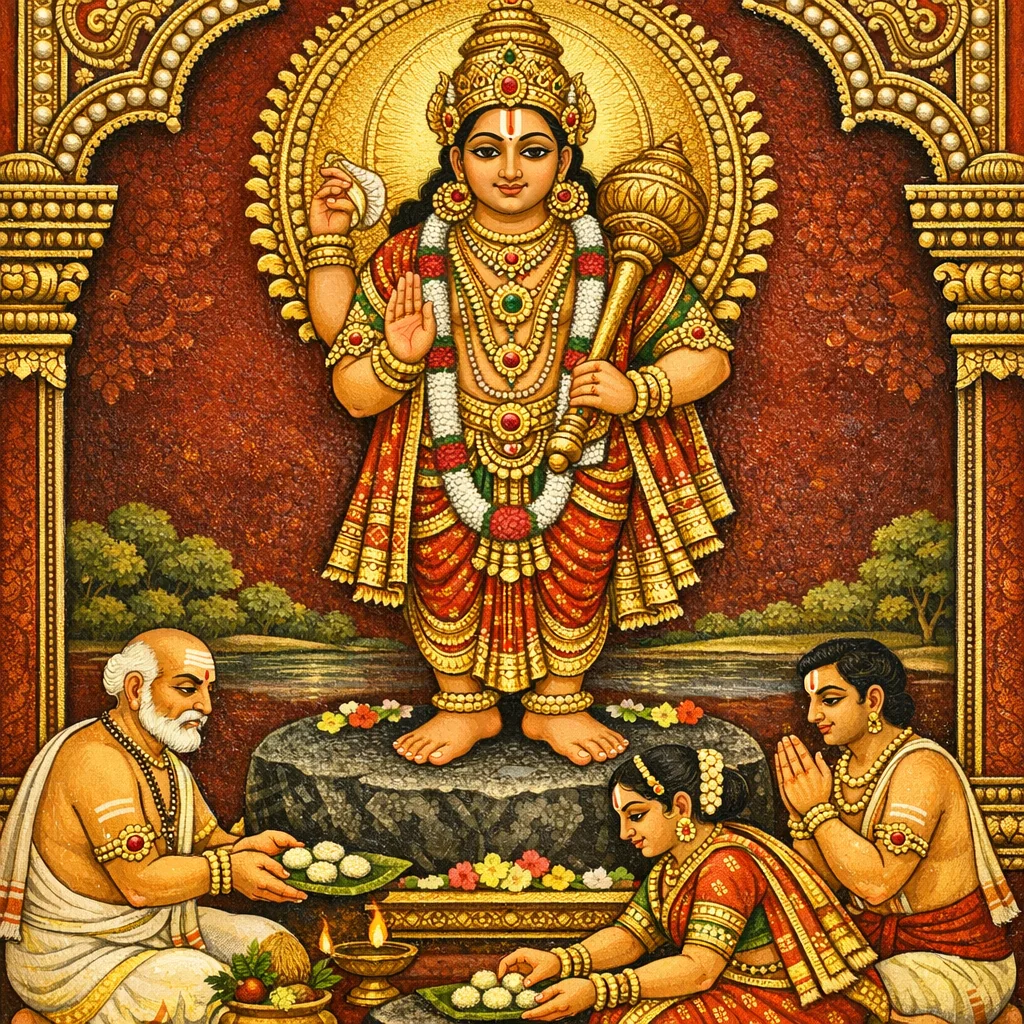
Agni tells Vasiṣṭha of Gayā’s supremacy as a highest tīrtha, recounting Gayāsura’s tapas that unsettles the gods. Viṣṇu grants a boon that makes the asura «sarva-tīrtha-maya» (embodying all tīrthas), and the gods seek a stabilizing remedy. At Viṣṇu’s direction Brahmā asks for Gayāsura’s body as the sacrificial ground; the asura consents and becomes the altar, yet shifts, so a devamayī śilā (divine stone), upheld by Dharma, is installed. A secondary legend explains the śilā’s sanctity through Dharmavratā/Devavrata, Marīci’s curse, and the gods’ boon that all deities dwell in the stone, marked by divine footprints. Viṣṇu manifests as Gadādhara, the “primeval mace-bearer,” to ensure immovability; Brahmā completes the pūrṇāhuti, and Gayāsura receives the boon that his body becomes a kṣetra jointly sanctified by Viṣṇu, Śiva, and Brahmā, famed for granting Brahmaloka to the pitṛs. The chapter ends with a warning against greed in dharma-rites and a charter legitimizing tīrtha-based priestly livelihood at Gayā, concluding with Gayā’s naming and its link to the Pāṇḍavas’ worship of Hari.
Shlokas
Verse 1
इत्य् आग्नेये महापुराणे नर्मदाश्रीपर्वतादिमाहात्म्यं नाम त्रयोदशाधिकशततमो ऽध्यायः अथ चतुर्दशाधिकशततमो ऽध्यायः गयामाहात्म्यम् अग्निर् उवाच गयामाहात्म्यमाख्यास्ये गयातीर्थोत्तमोत्तमं गयासुरस्तपस्तेपे तत्तपस्तापिभिः सुरैः
Thus, in the Agni Mahāpurāṇa, the one-hundred-and-thirteenth chapter, titled “The Greatness of Narmadā, Śrīparvata, and related sacred places,” concludes. Now begins the one-hundred-and-fourteenth chapter, “The Greatness of Gayā.” Agni said: “I shall narrate the greatness of Gayā—the most excellent among the supreme tīrthas. The asura Gayāsura performed austerities; by the heat of those austerities, the gods were afflicted.”
Verse 2
उक्तः क्षीराब्धिगो विष्णुः पालयास्मान् गयासुरात् तथेत्युक्त्वा हरिर्दैत्यं वरं ब्रूहीति चाब्रवीत्
Thus addressed, Viṣṇu—who abides in the Ocean of Milk—was entreated: “Protect us from Gayāsura.” Saying, “So be it,” Hari then spoke to the daitya: “Ask for a boon (vara).”
Verse 3
दैत्यो ऽब्रवीत्पवित्रो ऽहं भवेयं सर्वतीर्थतः तथेत्युक्त्वा गतो विष्णुर्दैत्यं दृष्ट्वा न वा हरिं
The Daitya said, “May I be purified through all the tīrthas, the sacred fords.” Saying, “So be it,” Viṣṇu departed; and when the Daitya looked about, he did not see Hari (Viṣṇu).
Verse 4
गताः शून्या मही स्वर्गे देवा ब्रह्मादयः सुराः सिद्धिमाप्नुयुरिति झ तत्तपस्तापितैर् इति ग , घ , झ च ब्रह्मादयः पुनः इति ख , ग , घ , ङ , छ , ज झ च गता ऊचुर्हरिं देवाः शून्या भूस्त्रिदिवं हरे
When the earth and heaven had become desolate, the gods—beginning with Brahmā—went to Hari and spoke: “O Hari, the earth and the threefold heaven (tridiva) are empty, bereft of their proper order.”
Verse 5
दैत्यस्य दर्शनादेव ब्रह्मणञ्चाब्रवीद्धरिः यागार्थं दैत्यदेहं त्वं प्रार्थय त्रिदशैः सह
On merely seeing the Daitya, Hari addressed Brahmā: “For the purpose of the yajña, request the Daitya’s body, together with the thirty-three gods.”
Verse 6
तच् छ्रुत्वा ससुरो ब्रह्मा गयासुरमथाब्रवीत् अतिथिः प्रार्थयामि त्वान्देहं यागाय पावनं
Hearing that, Brahmā—(as) the father-in-law—then spoke to Gayāsura: “As a guest, I request from you your body, purified, to serve as the altar-ground for a yajña.”
Verse 7
गयासुरस्तथेत्युक्त्वापतत्तस्य शिरस्यथ यागं चकार चलिते देहि पूर्णाहुतिं विभुः
Having said, “So be it,” Gayāsura then fell upon his head; and when it shifted, the Lord performed the sacrificial rite and said, “Offer the complete oblation (pūrṇāhuti).”
Verse 8
पुनर्ब्रह्माब्रवीद्विष्णुं पूर्णकाले ऽसुरो ऽचलत् शिष्णुर्धर्ममथाहूय प्राह देवमयीं शिलाम्
Then Brahmā again addressed Viṣṇu: “When the appointed time was fulfilled, the Asura moved forth. Thereupon Śiṣṇu, having summoned Dharma, spoke of a divine stone-slab (śilā), formed of godly essence.”
Verse 9
धारयध्वं सुराः सर्वे यस्यामुपरि सन्तु ते गदाधरो मदीयाथ मूर्तिः स्थास्यति सामरैः
“All you gods, uphold this seat and remain stationed upon it; for there my own form—as the mace-bearer—shall be established, together with the hosts of the gods.”
Verse 10
धर्मः शिलां देवमयीं तच् छ्रुत्वाधारयत् परां या धर्माद्धर्मवत्याञ्च जाता धर्मव्रता सुता
Hearing this, Dharma upheld the supreme, divine stone-slab; from Dharma and Dharmavatī was born a daughter, Dharmavratā, devoted to the vow of righteousness.
Verse 11
मरीचिर्ब्रह्मणः पुत्रस्तामुवाह तपोन्वितां यथा हरिः श्रिया रेमे गौर्या शम्भुस् तथा तया
Marīci, the son of Brahmā, married her, endowed with austerity; and just as Hari delighted with Śrī, and Śambhu delighted with Gaurī, so did he delight with her.
Verse 12
कुशपुष्पाद्यरण्याच्च आनीयातिश्रमान्वितः भुक्त्वा धर्मव्रतां प्राह पादसंवाहनं कुरु
Having brought kuśa grass, flowers, and the like from the forest—wearied by the exertion—after eating, he said to his virtuous, vow-observing wife: “Perform the rubbing and massage of my feet.”
Verse 13
विश्रान्तस्य मुनेः पादौ तथेत्युक्त्वा प्रियाकरोत् एतस्मिन्नन्तरे ब्रह्मा मुनौ सुप्ते तथागतः
Having said, “So be it,” he rendered a pleasing service at the feet of the sage who had rested. Meanwhile, Brahmā arrived there when the sage had fallen asleep.
Verse 14
धर्मव्रताचिन्तयञ्च किं ब्रह्माणं समर्चये पादसंवाहनं कुर्वे ब्रह्मा पूज्यो गुरोर्गुरुः
While contemplating the vow of dharma, why should I worship Brahmā with formal offerings? I instead perform the massaging of the feet—for Brahmā is to be revered as the guru of gurus.
Verse 15
आहुतिमिति ख , छ , ज च देहमयीमिति ग , छ , ज च तपश्चितामिति झ समानीय श्रमान्वित इति ज सुप्ते समागत इति घ , ङ , ज , झ च धर्मव्रतेत्यादिः, गुरोर्गुरुरित्यन्तः पाठः छ पुस्तके नास्ति विचिन्त्य पूजयामास ब्रह्माणं चार्हणादिभिः मरीचिस्तामपश्यत् स शशापोक्तिव्यतिक्रमात्
‘Āhuti’—so read the Kha, Cha, and Ja manuscripts; ‘dehamayī’—so read the Ga, Cha, and Ja; ‘tapaścitā’—so reads the Jha; ‘having gathered (her), exhausted by toil’—so reads the Ja; ‘having come while (he was) asleep’—so read the Gha, Ṅa, Ja, and Jha. From “dharmavrate …” up to “guror guruḥ” the reading is absent in the Cha manuscript. Then, having reflected, he worshipped Brahmā with offerings and other rites; Marīci saw her, and he cursed (him/her) for transgressing what had been spoken (i.e., the stated instruction/word).
Verse 16
शिला भविष्यसि क्रोधाद्धर्मव्रताब्रवीच्च तं पादाभ्यङ्गं परित्यज्य त्वद्गुरुः पूजितो मया
‘Because of (your) anger, you shall become a stone,’ said Dharmavratā; and, abandoning that foot-massage, (she added,) ‘your guru has been worshipped by me.’
Verse 17
अदोषाहं यतस्त्वं हि शापं प्राप्स्यसि शङ्करात् धर्मव्रता पृथक् शापं धारयित्वाग्रिमध्यगात्
“I am not at fault, for you indeed will incur a curse from Śaṅkara (Śiva).” Dharmavratā, having undertaken a righteous vow, bore the curse separately and then went into the midst of the fire.
Verse 18
तपश् चचार वर्षाणां सहस्राण्ययुतानि च ततो विष्ण्वादयो देवा वरं ब्रूहीति चाब्रुवन्
He performed austerities (tapas) for thousands and tens of thousands of years; then the gods—Viṣṇu and the others—said, “Speak forth and choose a boon.”
Verse 19
धर्मव्रताब्रवीद्देवान् शापन्निर्वर्तयन्तु मे देवा ऊचुः दत्तो मरीचिना शापो भविष्यति न चान्यथा
Dharmavratā said to the gods, “Let my curse be brought to fulfillment.” The gods replied, “The curse bestowed by Marīci shall surely come to pass—there can be no other outcome.”
Verse 20
शिला पवित्रा देवाङ्घ्रिलक्षिता त्वं भविष्यसि देवव्रता देवशिला सर्वदेवादिरूपिणी
O stone, you shall be made pure—marked with the footprints of the gods; O one of divine observance, O divine stone, embodying the primordial forms of all the gods.
Verse 21
सर्वदेवमयी पुण्या निश् चलायारसुस्य हि देवव्रतोवाच यदि तुष्टास्थ मे सर्वे मयि तिष्ठन्तु सर्वदा
“(She/it is) holy, full of merit, and constituted of all the gods—indeed unwavering.” Devavrata said, “If you are all pleased with me, then may you abide in me always.”
Verse 22
ब्रह्मा विष्णुश् च रुद्राद्या गौरीलक्ष्मीमुखाः सुराः अग्निर् उवाच देवव्रतावचः श्रुत्वा तथेत्युक्त्वा दिवङ्गताः
Agni said: Brahmā, Viṣṇu, and Rudra, and the other gods—together with the goddesses headed by Gaurī and Lakṣmī—having heard Devavrata’s words, replied, “So be it,” and then departed to heaven.
Verse 23
सा धर्मणासुरस्यास्य धृता देवमयी शिला सशिलश् चलितो दैत्यः स्थिता रुद्रादयस्ततः
That rock, formed of divine essence, was upheld for this asura by Dharma; and the daitya, together with the rock, was set in motion. Thereupon Rudra and the other gods stood present there.
Verse 24
सदेवश् चलितो दैत्यस्ततो देवैः प्रसादितः क्षीराब्धिगो हरिः प्रादात् स्वमूर्तिं श्रीगदाधरं
Then the daitya, together with his attendant gods, was set in motion; thereafter, being propitiated by the Devas, Hari—who abides in the Ocean of Milk—bestowed his own manifested form, the auspicious Gadādhara, the mace-bearing Lord.
Verse 25
गच्छन्तु भोः स्वयं यास्यं मूर्त्या वै देवगम्यया ज पवित्रा देवानां वन्दिता त्वमिति घ सर्वतीर्थमयी इति घ , झ च तदा देवैर् इति ज गच्छेत्युक्त्वा स्वयं गच्छेदिति झ गच्छन्तूक्त्वा स्वयं यास्ये इति ख , छ च मूर्त्या देवैकगम्यया इति घ , ङ च स्थितो गदाधरो देवो व्यक्ताव्यक्तोभयात्मकः
“Go forth, O all of you!”—having spoken thus, the Lord Himself proceeds in that form which is accessible to the gods. (He is praised:) “You are the purifier, revered by the Devas,” and “You are constituted of all tīrthas (sacred fords).” Then, having told them “go,” He Himself goes. There stands the Lord Gadādhara, bearer of the mace, whose nature is both manifest and unmanifest.
Verse 26
निश् चलार्थं स्वयं देवः स्थित आदिगदाधरः गदो नामासुरो दैत्यः स हतो विष्णुना पुरा
For the sake of stillness and steadiness, the Lord Himself stood forth as Ādi-Gadādhara, the primeval bearer of the mace. A daitya-asura named Gada was formerly slain by Vishnu.
Verse 27
तदस्थिनिर्मिता चाद्या गदा या विश्वकर्मणा आद्यया गदया हेतिप्रमुखा राक्षसा हताः
And that primeval mace, fashioned by Viśvakarman from his bones, was the first of its kind; by that original mace the Rākṣasas—chief among them Heti—were slain.
Verse 28
गदाधरेण विधिवत् तस्मादादिगधाधरः देवमय्यां शिलायां च स्थिते चादिगदाधरे
Therefore, when (the deity) Gadādhara has been installed in due accordance with ritual rule, that primeval Gadādhara is held to be present—abiding also within the sacred stone suffused with divinity; indeed, the primordial Gadādhara stands established there.
Verse 29
गयासुरे निश् चलेय ब्रह्मा पूर्णाहुतिं ददौ गयासुरो ऽब्रवीद्देवान् किमर्थं वञ्चितो ह्य् अहं
When Gaya-asura remained motionless, Brahmā offered the final oblation (pūrṇāhuti). Then Gaya-asura said to the gods: “For what reason, indeed, have I been deceived?”
Verse 30
विष्णोर्वचनमात्रेण किन्नस्यान्निश् चलोह्यहं आक्रान्तो यद्यहं देवा दातुमर्हत मे वरं
By the mere word of Viṣṇu, why should I not become utterly unmoving? If I have been overpowered, O gods, then you should grant me my boon (vara).
Verse 31
देवा ऊचुः तीर्थस्य करणे यत् त्वमस्माभिर् निश् चलीकृतः विष्णोः शम्भोर्ब्रह्मणश् च क्षेत्रं तव भविष्यति
The gods said: “Since, for the establishment of this tīrtha, you have been made to remain immovable by us, this place shall become your kṣetra—a holy domain associated with Viṣṇu, Śambhu (Śiva), and Brahmā as well.”
Verse 32
प्रसिद्धं सर्वतीर्थेभ्यः पित्रादेर्ब्रह्मलोकदं इत्युक्त्वा ते स्थिता देवा देव्यस्तीर्थादयः स्थिताः
Declaring, “This is renowned above all tīrthas; for the Pitṛs and the rest it bestows attainment of Brahmaloka,” those gods remained there; and the goddesses—together with the tīrthas and other sacred presences—also stayed established there.
Verse 33
यागं कृत्वा ददौ ब्रह्मा ऋत्विग्भ्यो दक्षिणां तदा पञ्चक्रोशं गयाक्षेत्रं पञ्चाशत् पञ्च चार्पयेत्
Having completed the sacrificial rite, Brahmā then gave the officiating priests the dakṣiṇā (sacrificial fee). One should offer as dakṣiṇā the sacred region of Gayā extending five krośas, and fifty-five (55) units/coins.
Verse 34
ग्रामान् स्वर्णगिरीन् कृत्वा नदीर्दुग्धमधुश्रवाः सरोवराणि दध्याज्यैर् बहूनन्नादिपर्वतान्
By pious intention or ritual imagination, (he) fashions villages and mountains of gold; rivers that flow with milk and honey; lakes filled with curd (dadhi) and ghee; and many mountains made of food and the like.
Verse 35
मादादिगदाधर इत्य् अन्तः पाठो ज पुस्तके नास्ति शिलायान्तु इति ज वाञ्छितो ह्य् अहमिति ख , छ च दातुमर्हथेति ङ तीर्थस्य कारणायेति घ , झ च ग्रामान् पुण्यगिरीनिति ङ दध्याद्यैर् बहूनन्नादिपर्वतानिति ज कामधेनुं कल्पतरुं स्वर्णरूप्यगृहाणि च न याचयन्तु विप्रेन्द्रा अल्पानुक्त्वा ददौ प्रभुः
([Textual notes:] In the Ja manuscript the internal reading “mādādi-gadādhara” is absent; Ja reads “śilāyāntu”; Kha and Cha read “vāñchito hy aham”; Ṅa reads “dātum arhathe”; Gha and Jha read “tīrthasya kāraṇāya”; Ṅa reads “grāmān puṇya-girīn”; Ja reads “dadhyādyaiḥ bahūn annādi-parvatān”.) Having said only a little, the Lord granted the wish-fulfilling cow Kāmadhenu, the wish-fulfilling tree Kalpataru, and houses of gold and silver; and the foremost Brahmins did not ask for anything.
Verse 36
धर्मयागे प्रलोभात्तु प्रतिगृह्य धनादिकं स्थिता यदा गयायान्ते शप्ताते ब्रह्मणा तदा
But if, out of greed, they accept money and the like during a rite performed for dharma, and remain in that state as they go to Gayā, then at that time they are cursed by Brahmā.
Verse 37
विद्याविवर्जिता यूयं तृष्णायुक्ता भविष्यथ दुग्धादिवर्जिता नद्यः शैलाः पाषाणरूपिणः
You will be bereft of learning and filled with tṛṣṇā (craving, thirst). The rivers will be devoid of milk and the like, and the mountains will take on the nature of stone.
Verse 38
ब्रह्माणं ब्राह्मणश्चोचुर् नष्टं शापेन शाखिलं जीवनाय प्रसादन्नः कुरु विप्रांश् च सो ऽब्रवीत्
The Brahmins addressed Brahmā: “All this has been destroyed by a curse. Out of grace, restore it to life for us.” And he spoke to the Brahmins.
Verse 39
तीर्थोपजीविका यूयं सचन्द्रार्कं भविष्यथ ये युष्मान् पूजयिष्यन्ति गयायामागता नराः
You who earn your livelihood by serving at sacred fords (tīrthas) shall endure as long as the moon and the sun; and the men who come to Gayā and honor you shall likewise obtain lasting merit.
Verse 40
हव्यकव्यैर् धनैः श्रद्धैस्तेषां कुलशतं व्रजेत् नरकात् स्वर्गलोकाय स्वर्गलोकात् पराङ्गतिं
By offerings of havya and kavya, by gifts of wealth, and by acts performed with faith, a hundred generations of that lineage are led onward—from hell to the heavenly world, and from heaven to the supreme, transcendent state.
Verse 41
गयोपि चाकरोद्यागं बह्वन्नं बहुदक्षिणं गया पुरी तेन नाम्ना पाण्डवा ईजिरे हरिं
Gaya too performed a sacrifice (yajña), abundant in food-offerings and rich in priestly gifts (dakṣiṇā); and that city came to be known by his name as Gayā. There the Pāṇḍavas worshipped Hari (Viṣṇu).
Frequently Asked Questions
Because Gayāsura is made immovable for the creation of a tīrtha-kṣetra where Viṣṇu, Śiva, and Brahmā are established together, and the site is declared renowned above other tīrthas for granting pitṛs attainment of Brahmaloka (and onward transcendence).
The divine stone is upheld by Dharma to stabilize the shifting sacrificial ground; through the Devavrata/Dharmavratā episode and divine assent, it becomes sarva-deva-mayī—an abiding locus of all deities—marked by divine footprints and linked to Viṣṇu’s Gadādhara presence.
It contrasts ideal generosity and non-asking with a warning that greedily accepting wealth in dharma-rites leads to Brahmā’s curse; yet it also grants a sustained charter that tīrtha-servants at Gayā endure ‘as long as sun and moon,’ and that honoring them with faith benefits lineages across generations.
Read Agni Purana in the Vedapath app
Scan the QR code to open this directly in the app, with audio, word-by-word meanings, and more.