Adhyaya 113
Narmadā-ādi-māhātmya (The Greatness of the Narmadā and Other Tīrthas)
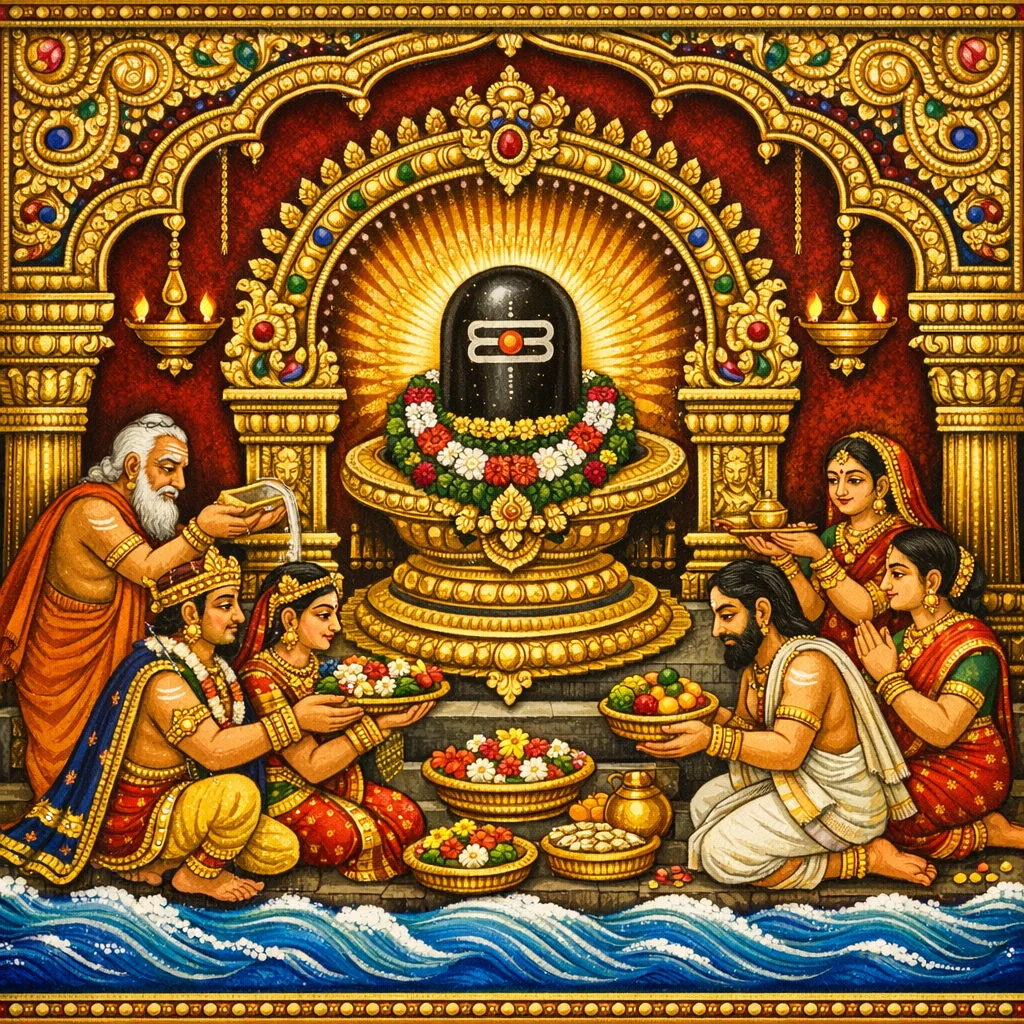
In this tīrtha-mahātmya section, Lord Agni begins a focused account of sacred geography by praising the Narmadā as a supreme purifier and by enumerating the vastness and abundance of its many tīrthas. The chapter frames a comparative pilgrimage theology: the Gaṅgā grants immediate purification through darśana (sight), whereas the Narmadā purifies through water-contact and immersion, marking distinct ways of gaining merit (puṇya). Agni then turns to the Amarakantaka region, locating numerous tīrthas around the mountain and introducing Śrīparvata and the auspicious confluence with the Kāverī. A mythic etiological thread explains Śrīparvata’s sanctity: Gaurī performs tapas, receives the boon of adhyātma (spiritual realization), and the place is named accordingly. The chapter concludes with ritual efficacy: dāna, tapas, japa, and śrāddha performed here become akṣaya (inexhaustible), and death at this tīrtha leads to Śivaloka, with Hara and Devī portrayed as present and sportive, grounding geography in lived soteriology.
Shlokas
Verse 1
ं गुह्यमिति ख महाबलमिति क भूमिचण्डेश्वरमिति ग तथान्यथेति झ द्वयोर्मध्ये इति ख यद्वत् स्याद्भुक्तिमुक्तिदमिति ङ अथ त्रयोदशाधिकशततमो ऽध्यायः नर्मदादिमाहात्म्यम् अग्निर् उवाच नर्मदादिकमाहात्म्यं वक्ष्येहं नर्मदां परां सद्यः पुनाति गाङ्गेयं दर्शनाद्वारि नार्मदं
[Textual variant notes:] “(it is read as) ‘guhyam’”; “(it is read as) ‘mahābala’”; “(it is read as) ‘bhūmi-caṇḍeśvara’”; “and elsewhere it is read differently”; “(it is read as) ‘in the middle of the two’”; “as it may be—(it is read as) ‘bestowing enjoyment and liberation’.” Now begins Chapter 113: “The Greatness of the Narmadā and other tīrthas.” Agni said: “Here I shall declare the greatness of the Narmadā and other sacred places—Narmadā, the supreme river. The Gaṅgā purifies immediately by mere sight; but the water of the Narmadā (purifies) by contact/immersion.”
Verse 2
विस्तराद्योजनशतं योजनद्वयमायता षष्टिस्तीर्थसहस्राणि षष्टिकोट्यस् तथापराः
Its breadth is a hundred yojanas and its length is two yojanas; there are sixty thousand tīrthas (sacred fords), and moreover sixty koṭis besides.
Verse 3
पर्वतस्य समन्तात्तु तिष्ठन्त्यमरकण्टके कावेरीसङ्गमं पुण्यं श्रीपर्वतमतः शृणु
All around the mountain, they are situated at Amarakantaka. Therefore, hear now of Śrīparvata and the sacred confluence (saṅgama) of the Kāverī.
Verse 4
गौरी श्रीरूपिणी तेपे तपस्तामब्रवीद्धरिः अवाप्स्यसि त्वमध्यात्म्यं नाम्ना श्रीपर्वतस्तव
Gaurī, embodying the form of Śrī (auspicious prosperity), performed austerities (tapas). Hari (Viṣṇu) spoke to her: “You shall attain adhyātma, spiritual realization; and your name shall be Śrīparvata.”
Verse 5
समन्ताद्योजनशतं महापुण्यं भविष्यति अत्र दानन्तपो जप्यं श्राद्धं सर्वमथाक्षयं
All around, within a hundred yojanas, great religious merit will arise. Here, charity (dāna), austerity, mantra-recitation (japa), and śrāddha rites—everything indeed becomes inexhaustible in its result.
Verse 6
नर्मदापरमिति झ निर्यान्त्यमरकण्टके इति झ तपस्तामब्रवीद्धर इति ग अत्र दानं तथा जप्यमिति झ सर्वमथाक्षरमिति ख , छ च मरणं शिवलोकाय सर्वदं तीर्थमुत्तमं हरो ऽत्र क्रीडते देव्या हिरण्यकशिपुस् तथा
It is read: “Narmadā is supreme”; and, “at Amarakantaka the blessed depart (from here).” Another reading says: “Hara spoke to her: ‘Practice austerity.’” Here, charity (dāna) and recitation (japa) are to be performed. This excellent tīrtha grants all desired results; death here leads to Śiva’s world. Here Hara sports with the Goddess; and so it is said also of Hiraṇyakaśipu.
Verse 7
तपस्तप्त्वा बली चाभून्मुनयः सिद्धिमाप्नुवन्
Having practiced austerities, they became endowed with power; the sages attained siddhi, spiritual perfection.
Frequently Asked Questions
The chapter contrasts purification modes: the Gaṅgā purifies immediately by darśana (sight), while the Narmadā’s water is emphasized as purifying through contact/immersion.
Śrīparvata’s sanctity is grounded in Gaurī’s tapas and the boon of adhyātma bestowed by Hari, and the text further claims that rites performed in its sphere yield akṣaya (inexhaustible) results.
Dāna (charity), tapas (austerity), japa (recitation), and śrāddha rites are stated to produce inexhaustible merit when performed there.
The chapter states that death at this excellent tīrtha leads to Śivaloka (Śiva’s world), framing sacred geography as directly linked to liberation-oriented destiny.