Adhyaya 7
Chapter 7 — रामायणवर्णनं (Description of the Rāmāyaṇa): Śūrpaṇakhā, Khara’s Defeat, and Sītā-haraṇa Prelude
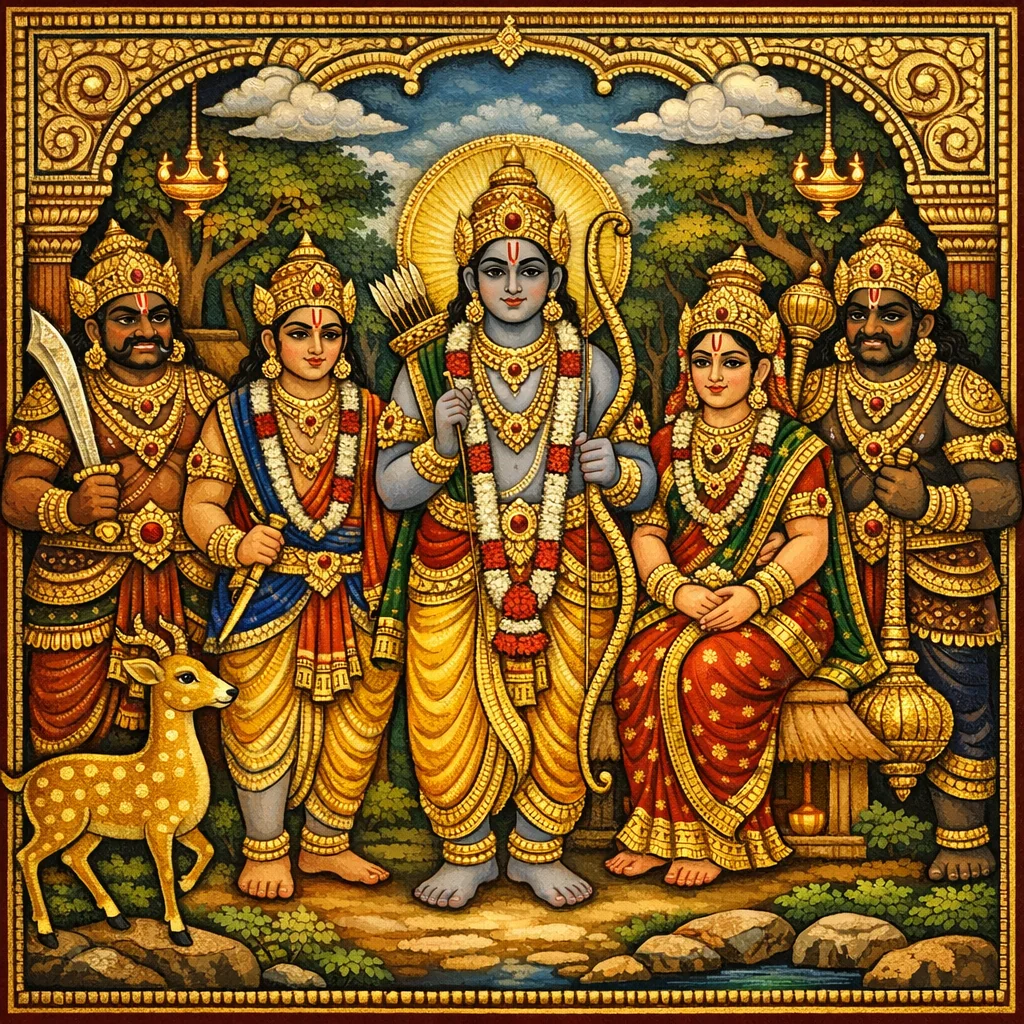
This chapter continues the Agni Purana’s avatāra-līlā synopsis, compressing key Araṇya-kāṇḍa events into a dharma-centered arc. Rāma honors the ṛṣis (Vasiṣṭha, Atri–Anasūyā, Śarabhaṅga, Sutīkṣṇa) and, by Agastya’s grace, receives weapons before entering Daṇḍakāraṇya, showing kṣatriya-dharma guided by tapas and counsel. At Pañcavaṭī, Śūrpaṇakhā’s desire and aggression lead to her mutilation by Lakṣmaṇa under Rāma’s command, provoking Khara’s retaliation; Rāma destroys Khara’s forces. Śūrpaṇakhā then incites Rāvaṇa to abduct Sītā: Mārīca appears as the golden deer to draw Rāma away, a dying cry deceives Sītā into sending Lakṣmaṇa, and Rāvaṇa kills Jaṭāyus and carries Sītā to Laṅkā’s Aśoka grove. Rāma’s grief becomes purposeful quest—cremating Jaṭāyus, slaying Kabandha, and being directed toward alliance with Sugrīva—linking moral trial, statecraft, and the avatāra’s mission.
Shlokas
Verse 1
इत्य् आदिमहापुराणे आग्नेये रामायणे ऽयोध्याकाण्डवर्णनं नाम षष्ठो ऽध्यायः अथ सप्तमो ऽध्यायः रामायणवर्णनं नारद उवाच रामो वशिष्ठं मातॄञ्च नत्वातिञ्च प्रणम्य सः अनसूयाञ्च तत्पत्नीं शरभङ्गं सुतीक्ष्णकम्
Thus, in the Agni Purana—within the Ramayana section—the sixth chapter is called “Description of the Ayodhya-kāṇḍa.” Now begins the seventh chapter, “Description of the Ramayana.” Nārada said: Rāma, having bowed to Vasiṣṭha and to the mothers, and having respectfully saluted Atri, also paid homage to Anasūyā, to Atri’s wife, and to Śarabhaṅga and Sutīkṣṇa.
Verse 2
यतो बली इति ख, ग, चिह्नितपुस्तकद्वयपाठः गतो बली इति ख, ङ, चिह्नितपुस्तकद्वयपाठः नाहं राज्यं प्रयास्यामि इति ख, चिह्नितपुस्तकपाठः राज्यं नाहं प्रयास्यामि इति ङ, चिह्नितपुस्तकपाठः अगस्त्यभ्रातरं नत्वा अगस्त्यन्तत्प्रसादतः धनुःखड्गञ्च सम्प्राप्य दण्डकारण्यमागतः
After bowing to Agastya’s brother, and by the favor of Agastya, he obtained a bow and a sword, and then entered the Daṇḍaka forest. (The preceding phrases record manuscript variant readings: “yato balī / gato balī” and “nāhaṃ rājyaṃ prayāsyāmi / rājyaṃ nāhaṃ prayāsyāmi.”)
Verse 3
जनस्थाने पञ्चवट्यां स्थितो गोदावरीतटे तत्र सूर्पणखायाता भक्षितुं तान् भयङ्करी
While he was staying at Pañcavaṭī in Janasthāna on the bank of the Godāvarī, the terrifying Śūrpaṇakhā came there, intending to devour them.
Verse 4
रामं सुरूपं दृष्ट्वा सा कामिनी वाक्यमब्रवीत् कस्त्वं कस्मात्समायातो भर्ता मे भव चार्थितः
Seeing handsome Rāma, that love-struck woman spoke these words: “Who are you? From where have you come? I beg you—be my husband.”
Verse 5
एतौ च भक्षयिष्यामि इत्य् उक्त्वा तं समुद्यता तस्या नासाञ्च कर्णौ च रामोक्तो लक्ष्मणो ऽच्छिनत्
Saying, “I will devour these two as well,” and rising up to attack, she advanced; then Lakṣmaṇa, at Rāma’s command, cut off her nose and ears.
Verse 6
रक्तं क्षरन्ती प्रययौ खरं भ्रातरमब्रवीत् मरिष्यामि विनासाहं खर जीवामि वै तदा
Bleeding, she went to her brother Khara and said: “Without me, O Khara, you will indeed live on; but I shall die.”
Verse 7
रामस्य भार्या सीतासौ तस्यासील्लक्ष्मणो ऽनुजः तेषाम् यद्रुधिरं सोष्णं पाययिष्यसि मां यदि
Rama’s wife is that Sītā, and his younger brother is Lakṣmaṇa. If you will make me drink their blood while it is still warm—
Verse 8
खरस्तथेति तामुक्त्वा चतुर्दशसहस्रकैः रक्षसां दूषणेनागाद् योद्धुं त्रिशिरसा सह
Khara, saying to her, “So be it,” set out to fight, accompanied by Dūṣaṇa, Triśiras, and fourteen thousand rākṣasas.
Verse 9
रामं रामो ऽपि युयुधे शरैर् विव्याध राक्षसान् हस्त्यश्वरथपादातं बलं निन्ये यमक्षयं
Rāma fought on, and with his arrows he pierced the rākṣasas, driving their army—of elephants, horses, chariots, and foot-soldiers—down to Yama’s abode, the realm of death.
Verse 10
त्रिशीर्षाणं खरं रौद्रं युध्यन्तञ्चैव दूषणम् ययौ सूर्पणखा लङ्कां रावणाग्रे ऽपतद् भुवि
Seeing the fierce Khara—together with Triśīrṣa—and Dūṣaṇa engaged in battle, Śūrpaṇakhā went to Laṅkā and fell to the ground before Rāvaṇa.
Verse 11
अब्रवीद्रावणं क्रुद्धा न त्वं राजा न रक्षकः खरादिहन्तू रामस्य सीतां भार्यां हरस्व च
Enraged, she said to Rāvaṇa: “You are neither king nor protector. You, slayer of Khara and the rest, go and abduct Sītā, the wife of Rāma.”
Verse 12
रामलक्ष्मणरक्तस्य पानाज्जीवामि नान्यथा तथेत्याह च तच् छ्रुत्वा मारीचं प्राह वै व्रज
“I live only by drinking the blood of Rāma and Lakṣmaṇa—by no other means.” Hearing this, he said, “So be it,” and then indeed addressed Mārīca: “Go.”
Verse 13
स्वर्णचित्रमृगो भूत्वा रामलक्ष्मणकर्षकः हृद्रुधिरमिति ख, ग, ङ, चिह्नितपुस्तकत्रयपाठः रक्षसां सहसा प्रायाद्योद्धुमिति ग, चिह्नितपुस्तकपाठः सीताग्रे तां हरिष्यामि अन्यथा मरणं तव
Becoming a golden, dappled deer that lures away Rāma and Lakṣmaṇa, (he resolved): “I shall swiftly go toward the rākṣasas to fight. In Sītā’s very presence I will carry her off; otherwise, death will be yours.”
Verse 14
मारीचो रावणं प्राह रामो मृत्युर्धनुर्धरः रावणादपि मर्तव्यं मर्तव्यं राघवादपि
Marīca said to Rāvaṇa: “Rāma, the bow-bearing warrior, is Death itself. One may die even at Rāvaṇa’s hands; but one may also certainly die at Rāghava’s hands.”
Verse 15
अवश्यं यदि मर्तव्यं वरं रामो न रावणः इति मत्वा मृगो भूत्वा सीताग्रे व्यचरन्मुहुः
‘If I must die, then better by Rāma than by Rāvaṇa.’ Thinking thus, he became a deer and repeatedly wandered about in front of Sītā.
Verse 16
सीतया प्रेरितो रामः शरेणाथावधीच्च तं म्रियमाणो मृगः प्राह हा सीते लक्ष्मणेति च
Urged by Sītā, Rāma struck him down with an arrow; and as the deer was dying, it cried, “Alas, Sītā! Alas, Lakṣmaṇa!”
Verse 17
सौमित्रिः सीतयोक्तो ऽथ विरुद्धं राममागतः रावणोप्यहरत् सीतां हत्वा गृध्रं जटायुषं
Then Saumitri (Lakṣmaṇa), spoken to by Sītā, returned to Rāma in reluctant opposition. Rāvaṇa too abducted Sītā, after killing the vulture Jaṭāyus.
Verse 18
जटायुषा स भिन्नाङ्गो अङ्केनादाय जानकीम् गतो लङ्कामशोकाख्ये धारयामास चाब्रवीत्
Though his limbs were torn by Jaṭāyu, he (Rāvaṇa) took Jānakī onto his lap, went to Laṅkā, kept her in the place called Aśoka (the Aśoka-grove), and spoke to her.
Verse 19
भव भार्या ममाग्र्या त्वं राक्षस्यो रक्ष्यतामियम् रामो हत्वा तु मारीचं दृष्ट्वा लक्ष्मणमब्रवीत्
“Become my foremost wife; this rākṣasī is to be guarded.” After killing Mārīca, Rāma, seeing what had occurred, spoke to Lakṣmaṇa.
Verse 20
मायामृगो ऽसौ सौमित्रे यथा त्वमिह चागतः तथा सीता हृता नूनं नापश्यत् स गतो ऽथ ताम्
“O Saumitrī (Lakṣmaṇa), that was a māyā-deer, an illusory creature. Just as you have come here, so surely Sītā has been abducted. He did not see her; then he went away from her.”
Verse 21
शुशोच विललापार्तो मान्त्यक्त्वा क्व गतासि वै लक्ष्मणाश्वासितो रामो मार्गयामास जानकीम्
Afflicted with grief, he wept and lamented: “Leaving me behind, where indeed have you gone?” Then Rāma—consoled by Lakṣmaṇa—set about searching for Janakī (Sītā).
Verse 22
दृष्ट्वा जटायुस्तं प्राह रावणो हृतवांश् च तां मृतो ऽथ संस्कृतस्तेन कबन्धञ्चावधीत्ततः शापमुक्तो ऽब्रवीद्रामं स त्वं सुग्रीवमाव्रज
On seeing him, Jaṭāyu declared that Rāvaṇa had carried her away; then, having died, he was duly cremated by Rāma according to rite. After that, (Rāma) slew Kabandha; and Kabandha, freed from his curse, said to Rāma: “Therefore go to Sugrīva.”
Frequently Asked Questions
It serves as the causal hinge that escalates from personal transgression to political retaliation, culminating in Rāvaṇa’s decision to abduct Sītā—thereby advancing the avatāra’s larger dharmic conflict.
It presents martial action (dhanurveda and battlefield leadership), funeral duty (antyeṣṭi for Jaṭāyus), and alliance strategy (turning toward Sugrīva) as expressions of dharma under spiritual restraint and divine purpose.