Adhyaya 32
Saṃskāra-kathana (Account of the Saṃskāras)
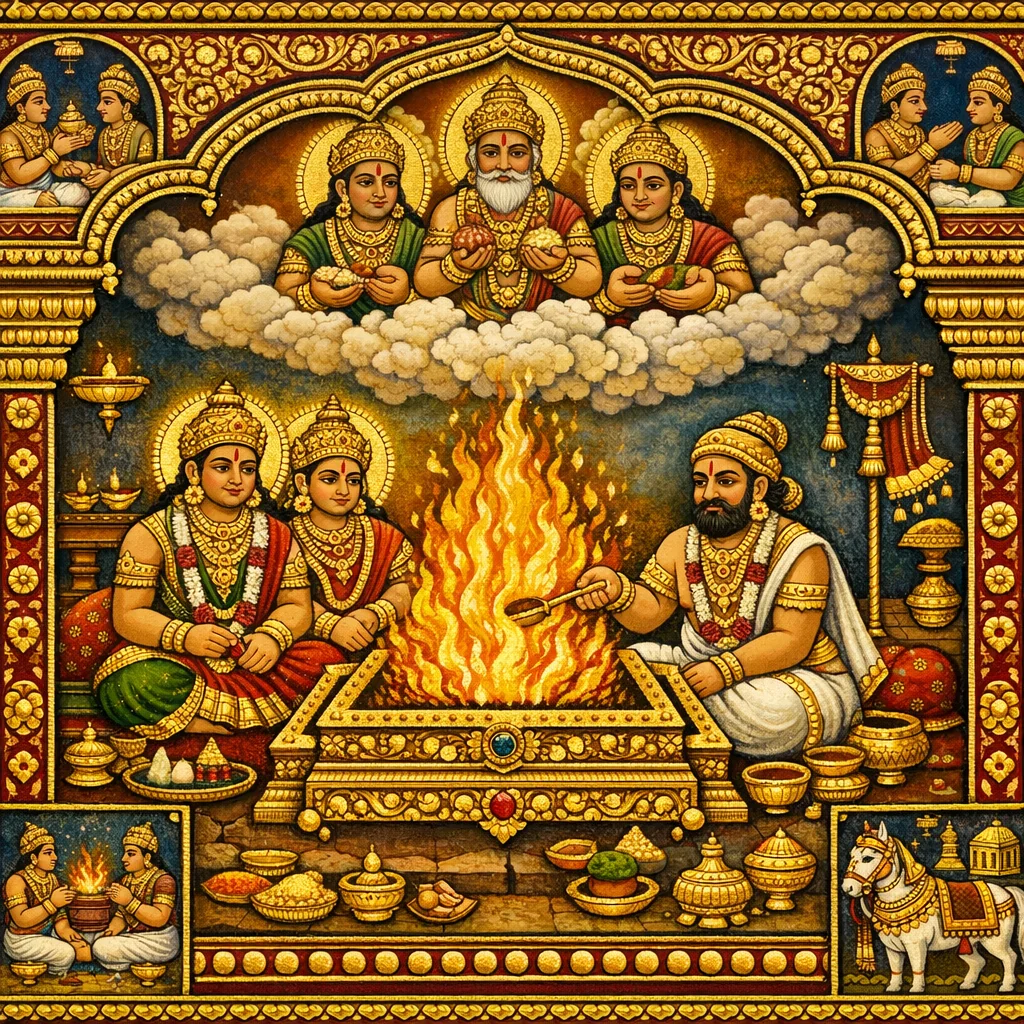
Continuing the instruction in Agneya-vidyā (ritual worship), Lord Agni opens by placing saṃskāras in initiatory settings such as Nirvāṇa-dīkṣā and prescribing a complete set of forty-eight consecratory rites that raise the practitioner toward a “divine” way of life. He lists the life-cycle saṃskāras—garbhādhāna, puṃsavana, sīmantonnayana, jātakarma, and nāmakaraṇa—then extends the scheme into domestic and śrauta spheres: the pākayajñas, periodic śrāddha observances, seasonal rites, and the haviryajñas (including ādhāna, agnihotra, darśa, and paurṇamāsa). The teaching culminates in the Soma-sacrificial systems, naming major forms (Agniṣṭoma and its expansions) and linking the Aśvamedha with “golden” epithets and eight ethical qualities (dayā, kṣānti, ārjava, śauca, etc.), thus joining ritual potency to moral refinement. The chapter closes by defining the practical sādhana that completes saṃskāra—japa, homa, pūjā, and dhyāna—through which one attains both bhukti and mukti and lives “like a god,” free from disease and inner deficiency.
Shlokas
Verse 1
इत्य् आदिमहापुराणे आग्नेये कुशापमार्जनं नाम एकत्रिंशो ऽध्यायः अथ द्वातिंशो ऽध्यायः संस्कारकथनं अग्निर् उवाच निर्वाणादिषु दीक्षासु चत्त्वारिंशत्तथाष्ट च संस्कारान् कारयेद्धीमान् शृणुतान्यैः सुरो भवेत्
Thus, in the Agni Purāṇa—the primordial Mahāpurāṇa—ends the thirty-first chapter called “Purification by Kuśa-grass.” Now begins the thirty-second chapter, “Account of the Saṃskāras.” Agni said: In initiations such as the Nirvāṇa-dīkṣā and the rest, the wise man should have forty-eight saṃskāras performed. Listen to them; by these one becomes divine.
Verse 2
गर्भाधानन्तु योन्यां वै ततः पुंसवनञ्चरेत् सीमन्तोन्नयनञ्चैव जातकर्म च नाम च
One should perform the garbhādhāna rite within the womb; thereafter one should carry out the puṃsavana rite, and also the sīmantonnayana rite, as well as the birth-rite (jātakarma) and the naming (nāma) ceremony.
Verse 3
अन्नाशनं ततश्चूडा ब्रह्मचर्यव्रतानि च चत्वारि वैष्णवी पार्थी भौतिकी श्रोत्रिकी तथा
Then (are prescribed) annāśana, the taking of consecrated food; the keeping of the śikhā/cūḍā (ritual tuft); and the vows of brahmacarya (celibate discipline). These are stated as four streams: the Vaiṣṇavī, the Pārthī, the Bhautikī, and likewise the Śrotrikī.
Verse 4
गोदानं सूतकत्वञ्च पाकयज्ञाश् च सप्त ते अष्टका पार्वणश्राद्धं श्रावण्यग्रायणीति च
Here are to be understood: the gift of a cow (godāna), the state of birth-impurity (sūtaka), and the seven pākayajñas (domestic sacrificial rites); as well as the Aṣṭakā rite, the Pārvaṇa-śrāddha (ancestral offering), and the Śrāvaṇī and Agrāyaṇī rites.
Verse 5
चैत्री चाश्वयुजी सप्त हविर्यज्ञांश् च तान् शृणु आधानञ्चाग्निहोत्रञ्च दर्शो वै पौर्णमासकः
Hear about those seven haviryajñas (oblatory sacrifices): the Caitrī and the Āśvayujī; also the establishing of the sacred fires (ādhāna), the daily Agnihotra, the Darśa (new-moon sacrifice), and the Paurṇamāsa (full-moon sacrifice).
Verse 6
चातुर्मास्यं पशुबन्धः सौत्रामणिरथापरः सोमसंस्थाः सप्त शृणु अग्निष्टोमः क्रतूत्तमः
Listen: the Soma-sacrificial systems are seven—(including) the Cāturmāsya rites, the Paśubandha (animal-offering), and the Sautrāmaṇī; among them, the Agniṣṭoma is the foremost of sacrifices.
Verse 7
अत्यग्निष्टोम उक्थश् च षोडशो वाजपेयकः अतिरात्राप्तोर्यामश् च सहस्रेशाः सवा इमे
These are the Soma-sacrifices: the Atyagniṣṭoma, the Ukthya, the Ṣoḍaśin, the Vājapeya, the Atirātra, the Āptoryāma, and the Sahasra—these indeed are the Soma rites.
Verse 8
हिरण्याङ्घ्रिर्हिरण्याक्षो हिरण्यमित्र इत्य् अतः सप्त च इति ग, ख, चिह्नितपुस्त्कद्वयपाठः हिरण्यपाणिर्हेमाक्षो हेमाङ्गो हेमसूत्रकः
“Golden-footed,” “golden-eyed,” and “friend of gold”—up to this point there are said to be seven (names): thus reads the marked two-manuscript (ga, kha) recension. (In another reading:) “golden-handed,” “golden-eyed,” “golden-limbed,” and “wearer of a golden thread/cord.”
Verse 9
हिरण्यास्यो हिरण्याङ्गो हेमजिह्वो हिरण्यवान् अश्वमेधो हि सर्वेशो गुणाश्चाष्टाथ तान् शृणु
The Aśvamedha is golden-faced, golden-limbed, with a tongue of gold, and endowed with gold (splendour and wealth). Indeed, the Aśvamedha is the lord of all; now hear its eight qualities.
Verse 10
दया च सर्वभूतेषु क्षान्तिश् चैव तथार्जवम् शौचं चैवमनायासो मङ्गलं चापरो गुणः
Compassion toward all beings, forbearance, and likewise straightforwardness; purity, and also freedom from undue strain—these, too, are auspicious virtues.
Verse 11
अकार्पण्यञ्चास्पृहा च मूलेन जुहुयाच्छतम् सौरशाक्तेयविष्ण्वीशदीक्षास्त्वेते समाः स्मृताः
Cultivating akārpaṇya (freedom from miserliness) and aspṛhā (freedom from craving), one should offer one hundred oblations with the root-mantra (mūla-mantra). These initiations (dīkṣā)—Saura, Śākta, Śākteya of the Kaumāra tradition, Vaiṣṇava, and Īśa—are traditionally remembered as equivalent in status.
Verse 12
संस्कारैः संस्कृतश् चैतैर् भुक्तिमुक्तिमवाप्नुयात् सर्वरोगाद्विनिर्मुक्तो देववद्वर्तते नरः जप्याद्धोमात्पूजनाच्च ध्यानाद्देवस्य चेष्टभाक्
Refined by these consecratory rites (saṁskāras), a person attains both worldly enjoyment and liberation (mokṣa). Freed from all diseases, he lives like a god. He should follow the deity’s prescribed discipline through mantra-recitation (japa), fire-offerings (homa), worship, and meditation.
Frequently Asked Questions
The chapter’s technical core is a structured taxonomy of ritual practice: it frames forty-eight saṃskāras across life-cycle rites, domestic pākayajñas, haviryajñas (ādhāna, agnihotra, darśa, paurṇamāsa), and Soma-sacrificial systems, and it specifies a mūla-mantra homa of one hundred oblations as a completing discipline.
It explicitly binds ritual performance to ethical cultivation and contemplative practice: saṃskāra is not only ceremonial purification but a ladder toward bhukti-mukti, completed through japa, homa, pūjā, and dhyāna, and safeguarded by virtues such as compassion, purity, non-craving, and non-miserliness.