Dashati 15
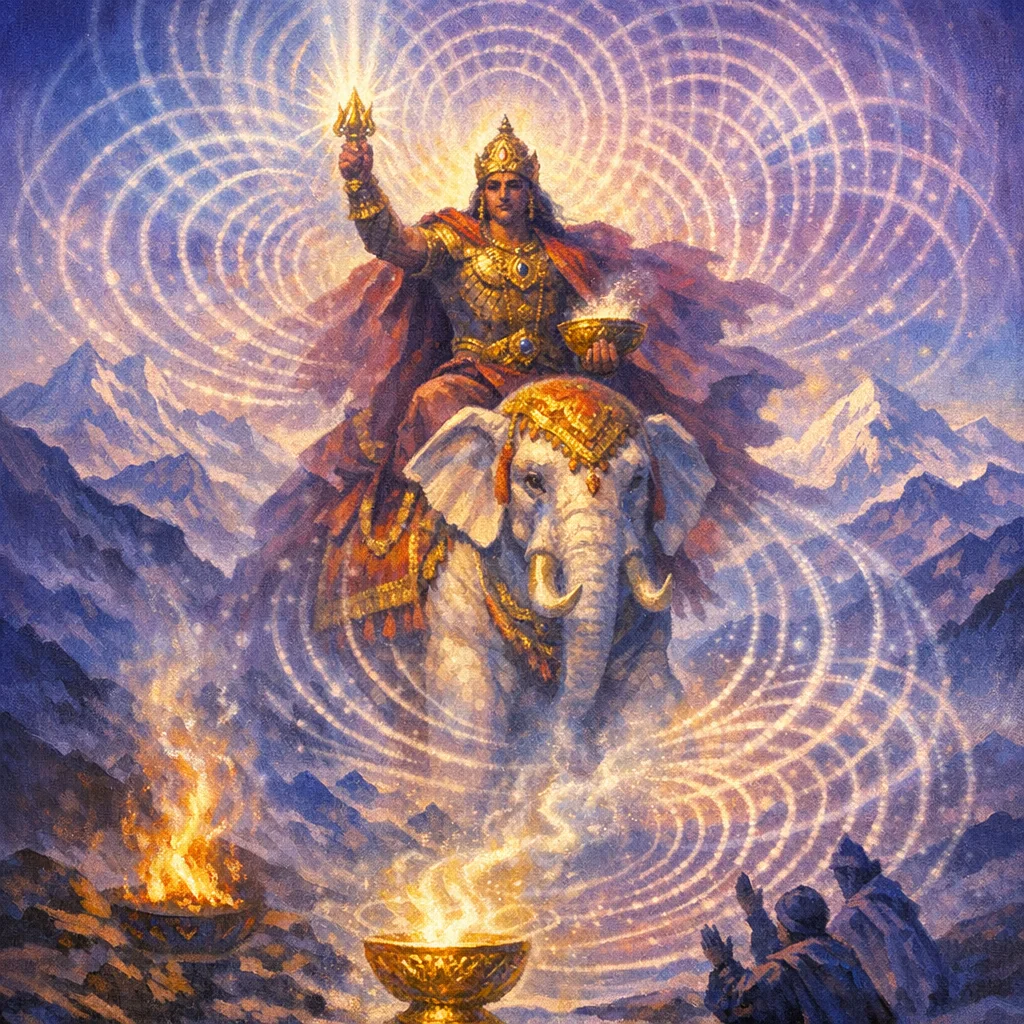
Indra’s reciprocity: faultless praise and song draw wealth, protection, and aid at the Soma
Indra
Invocatory and protective—bright forward-moving with a concluding supplicatory intensity
Kāṇva
Indras Gegenseitigkeit: makelloses Lob und Gesang rufen ihn zum gepressten Soma, und als Antwort gewährt er dem Opferer-Sänger Reichtum, Wohlergehen, Schutz und Beistand. Betont werden die wechselseitige Mehrung von Gott und Sänger (revān–revataḥ), rituelle Korrektheit—Freiheit von Schuld und Fehler (āgaḥ/doṣa) in stotra–śastra, Indras rasches Nahen zum Soma als harivaḥ, Schutz vor Bedrängnis (pīyatnava) und feindlichen Scharen (śardha) sowie seine śacī, die wirksamen Kräfte, als konkrete Hilfe und Unterweisung.
Mantras
Mantra 1
रेवां इद्रेवत स्तोता स्यात्त्वावतो मघोनः प्रेदु हरिवः सुतस्य
Wohlhabend, ja wohlhabend sei der Sänger des reichen Gottes — mit dir als Helfer, o Freigebiger; tritt hervor, du mit den falben Rossen, zum ausgepressten Soma.
Mantra 2
उक्थं च न शस्यमानं नागो रयिरा चिकेत न गायत्रं गीयमानम्
Kein Makel hafte an unserem Hymnus, wenn er vorgetragen wird; der Reichtum (rayí) nehme uns wahr; kein Makel hafte an unserer Gāyatra (gāyatra), wenn sie gesungen wird.
Mantra 3
मा न इन्द्र पीयत्नवे मा शर्धते परा दाः शिक्षा शचीवः शचीभिः
Gib uns nicht preis, Indra, der Not; gib uns nicht preis der anstürmenden Schar. Belehre uns, o Mächtiger (śacīvaḥ), und stütze uns mit deinen Kräften (śacībhiḥ).
Frequently Asked Questions
It calls Indra to the pressed Soma and teaches that when the hymn and Gāyatra chant are performed without ritual fault, Indra grants wealth, protection, and effective help (śacī).
Because a blemish in recitation or singing was believed to weaken the rite’s result; the verse asks that no such defect attach, so prosperity (rayi) will “take notice” and come to the sacrificer.
“Harivaḥ” marks Indra as the swift one with bay steeds who comes quickly to Soma, while “śacī” points to his effective powers—his ability to actively protect, instruct, and make the prayer succeed.