
Shloka 24
Vibhuti Yoga — Vibhuti Yoga
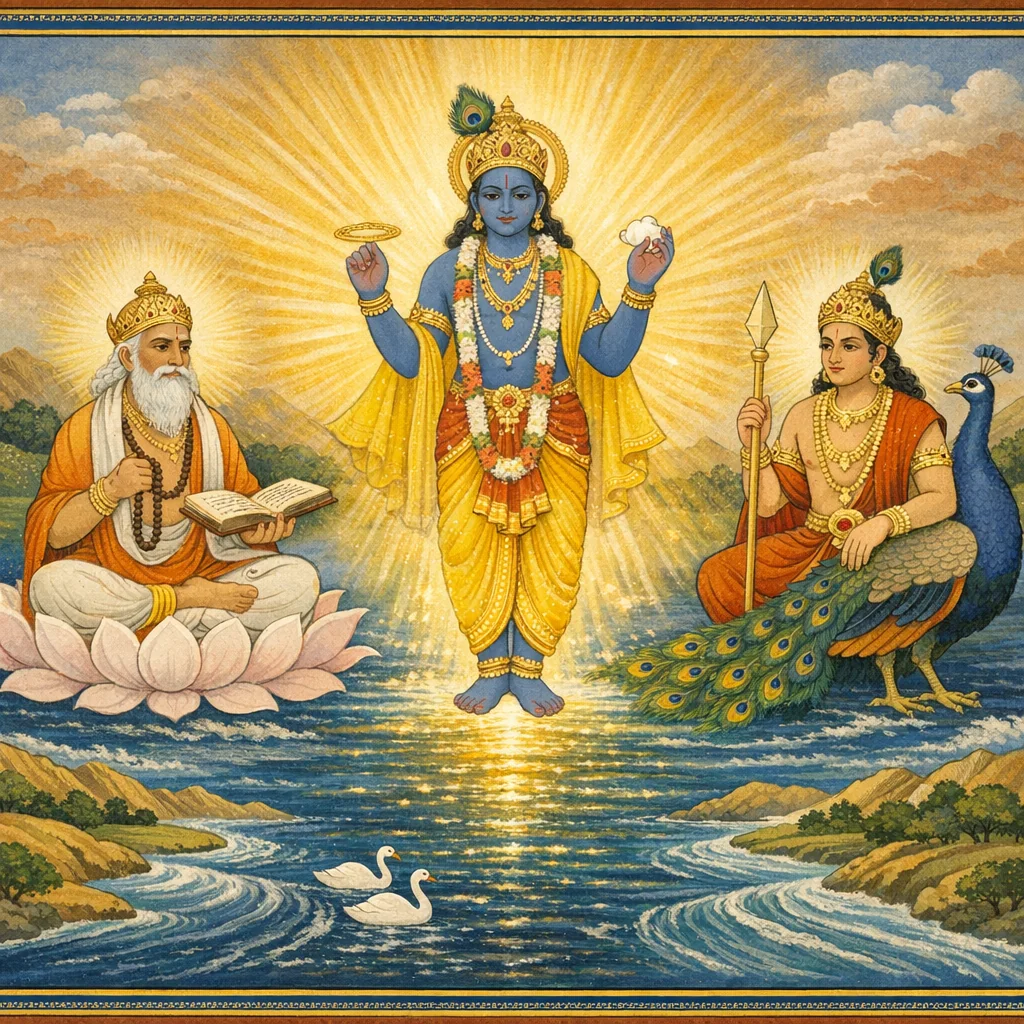
पुरोधसां च मुख्यं मां विद्धि पार्थ बृहस्पतिम् । सेनानीनामहं स्कन्दः सरसामस्मि सागरः ॥ १०.२४ ॥
purodhasāṃ ca mukhyaṃ māṃ viddhi pārtha bṛhaspatim | senānīnām ahaṃ skandaḥ sarasām asmi sāgaraḥ || 10.24 ||

O Pārtha, unter den Priestern wisse Mich als den Ersten — Bṛhaspati; unter den Heerführern bin Ich Skanda; unter den Gewässern bin Ich der Ozean.
Among priests know Me to be the chief, Brihaspati; among commanders I am Skanda; among bodies of water I am the ocean.
Of household/royal priests, know Me as the foremost—Bṛhaspati; of military leaders I am Skanda; of lakes and waters I am the sea.
‘purodhas’ denotes a chief priest/counselor role in Vedic polity. ‘senānī’ is ‘leader of an army’ but in this context functions as a title of excellence, not a call to violence; the focus is archetypal leadership.
FAQs
The verse links the sacred with guidance (Bṛhaspati), disciplined leadership (Skanda), and depth (ocean), offering symbolic supports for maturity and steadiness.
Divinity is indicated through the most authoritative principle in each sphere—counsel, leadership, and the vast container of waters.
It integrates social roles and natural features into the vibhūti framework, reinforcing that the sacred is present in both culture and nature.
Can inform ethical leadership and mentorship ideals, emphasizing responsibility and depth rather than domination.