
Shloka 19
Shraddhatraya Vibhaga Yoga — Shraddhatraya Vibhaga Yoga
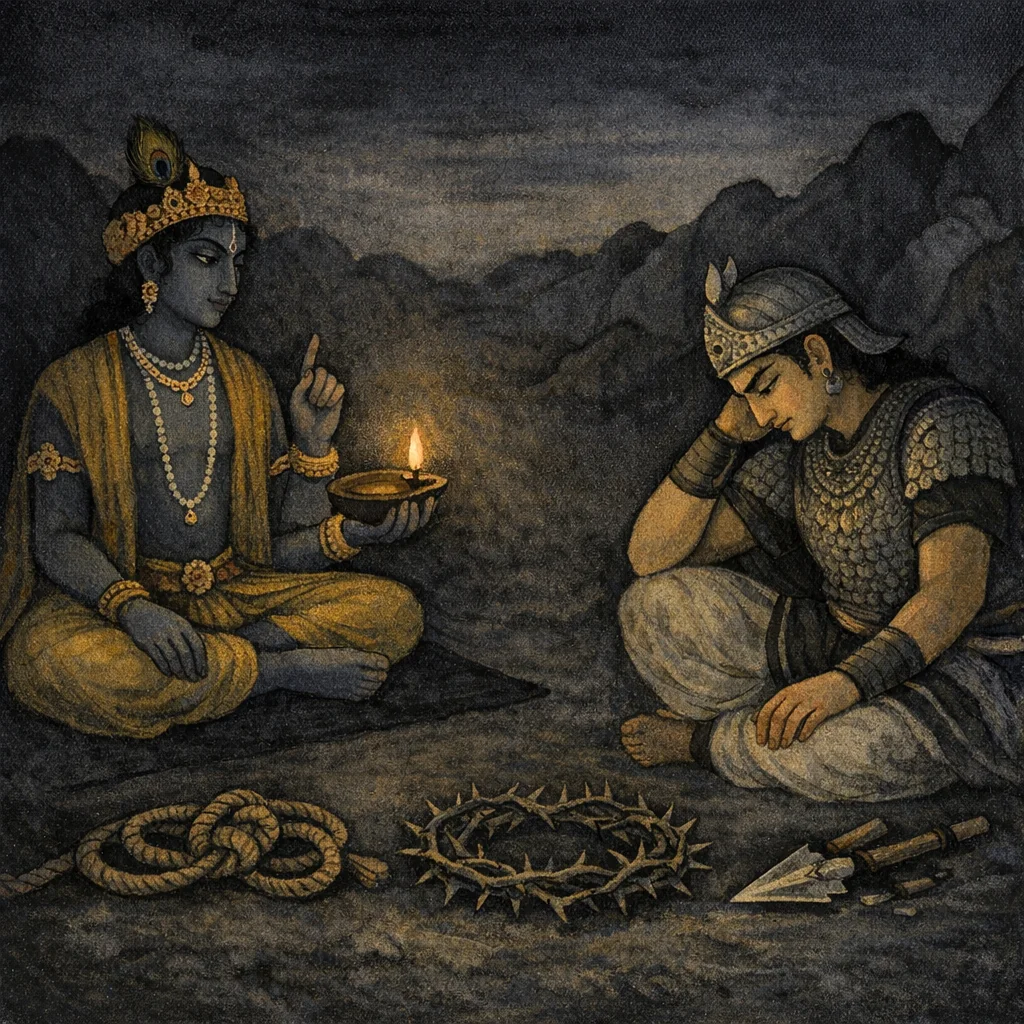
मूढग्राहेणात्मनो यत्पीडया क्रियते तपः । परस्योत्सादनार्थं वा तत्तामसमुदाहृतम् ॥ १७.१९ ॥
mūḍha-grāheṇātmano yat pīḍayā kriyate tapaḥ | parasyotsādanārthaṁ vā tat tāmasam udāhṛtam || 17.19 ||

Die Askese, die aus törichter Verbohrtheit durch Selbstquälerei vollzogen wird oder um einen anderen zu schädigen, wird als tāmasa (von Tamas) erklärt.
Austerity practiced with foolish obstinacy by tormenting oneself, or for the purpose of harming another, is declared tāmasa.
Tapas performed through deluded fixation, involving self-affliction, or undertaken with the aim of undermining others, is called tāmasa.
Interpretation turns on mūḍha-grāha (“deluded grasp/obstinate fixation”) and utsādana (often “ruin,” here rendered more neutrally as “undermining”). Academic translations tend to stress irrational compulsion and socially destructive intent rather than physical extremity.
FAQs
The verse can be read as warning against compulsive or punitive self-discipline and against practices motivated by resentment toward others.
Tāmasa tapas is portrayed as spiritually counterproductive because it intensifies ignorance (tamas) and egoic fixation rather than producing clarity or compassion.
It completes the guṇa-based typology of tapas by identifying the lowest mode as delusion-driven and ethically harmful in intent.
It supports distinguishing constructive discipline from coercive or harmful practices, emphasizing wellbeing, clarity, and non-malicious intent as criteria.