
Bhagavad Gita — Raja Vidya Raja Guhya Yoga, Shloka 27
Raja Vidya Raja Guhya Yoga
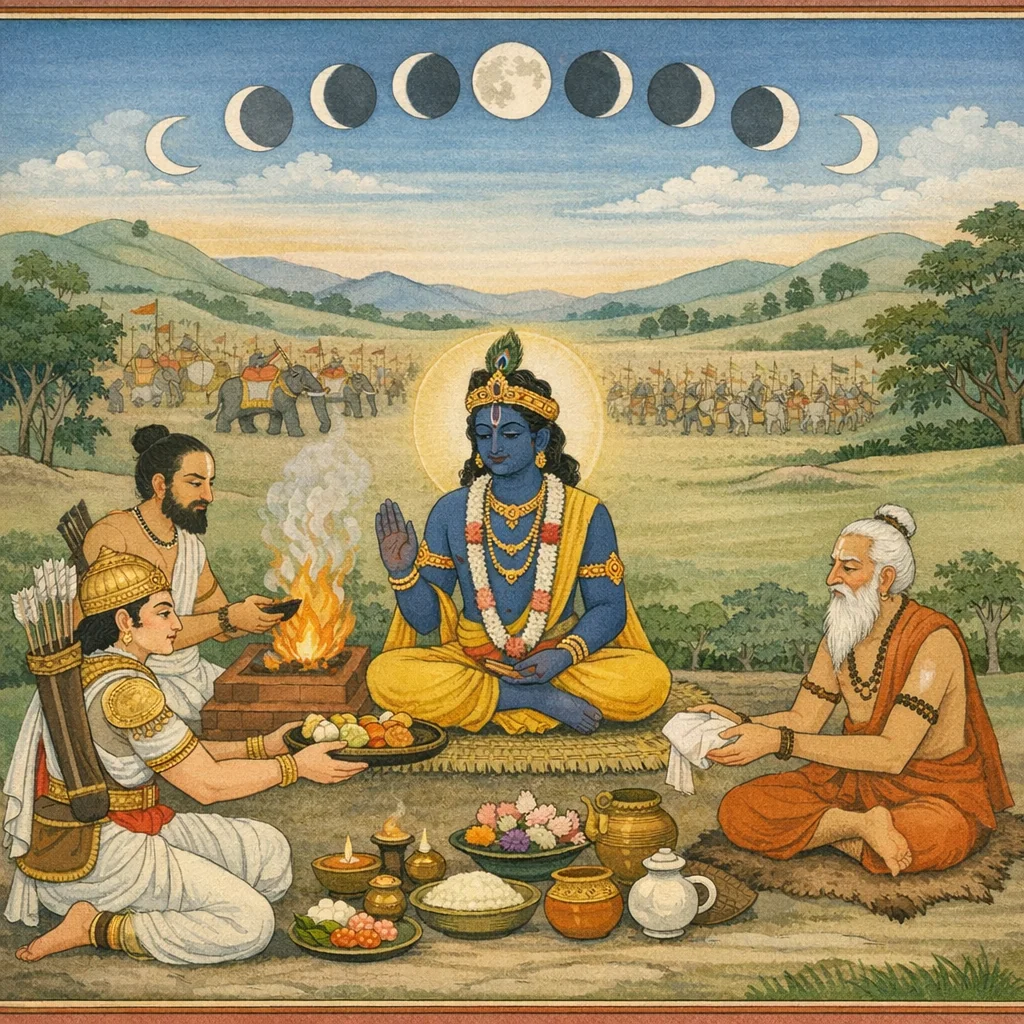
यत्करोषि यदश्नासि यज्जुहोषि ददासि यत् । यत्तपस्यसि कौन्तेय तत्कुरुष्व मदर्पणम् ॥ ९.२७ ॥
yat karoṣi yad aśnāsi yaj juhoṣi dadāsi yat | yat tapasyasi kaunteya tat kuruṣva mad-arpaṇam || 9.27 ||

Was immer du tust, was immer du isst, was immer du als Opfer darbringst, was immer du gibst und welche Askese du auch übst — o Sohn der Kuntī — tue dies als Darbringung an Mich.
Whatever you do, whatever you eat, whatever you offer in sacrifice, whatever you give, and whatever austerity you perform—do that, O son of Kuntī, as an offering to Me.
Whatever you do, whatever you eat, whatever you offer, whatever you give, whatever discipline you undertake—do that, O Kaunteya, as an offering to Me.
Translations differ mainly in rendering ‘juhoṣi’ (offer into fire/offer in ritual) and ‘tapas’ (austerity/discipline). The philosophical point is consistent: everyday acts are to be integrated into a devotional orientation.
FAQs
Reframing actions as dedication can reduce ego-centered rumination and performance anxiety, supporting steadiness and meaning in ordinary duties.
It aligns action with the divine as ultimate reference point, suggesting that intention can transform the karmic and spiritual quality of acts.
This verse bridges devotion and disciplined action, continuing the chapter’s emphasis that the supreme is accessible through sincere orientation.
One may practice it by dedicating work, meals, generosity, and self-discipline to a higher ideal—ethical integrity, service, or contemplation of the divine.