
Bhagavad Gita — Moksha Sannyasa Yoga, Shloka 35
Moksha Sannyasa Yoga
यया स्वप्नं भयं शोकं विषादं मदमेव च । न विमुञ्चति दुर्मेधा धृतिः सा पार्थ तामसी ॥ १८.३५ ॥
yayā svapnaṃ bhayaṃ śokaṃ viṣādaṃ madam eva ca | na vimuñcati durmedhā dhṛtiḥ sā pārtha tāmasī || 18.35 ||

হে পার্থ, যে ধৃতির দ্বারা দুর্মেধা ব্যক্তি স্বপ্ন, ভয়, শোক, বিষাদ ও মদ (মোহজনিত মত্ততা) ত্যাগ করে না—সে ধৃতি তামসিক।
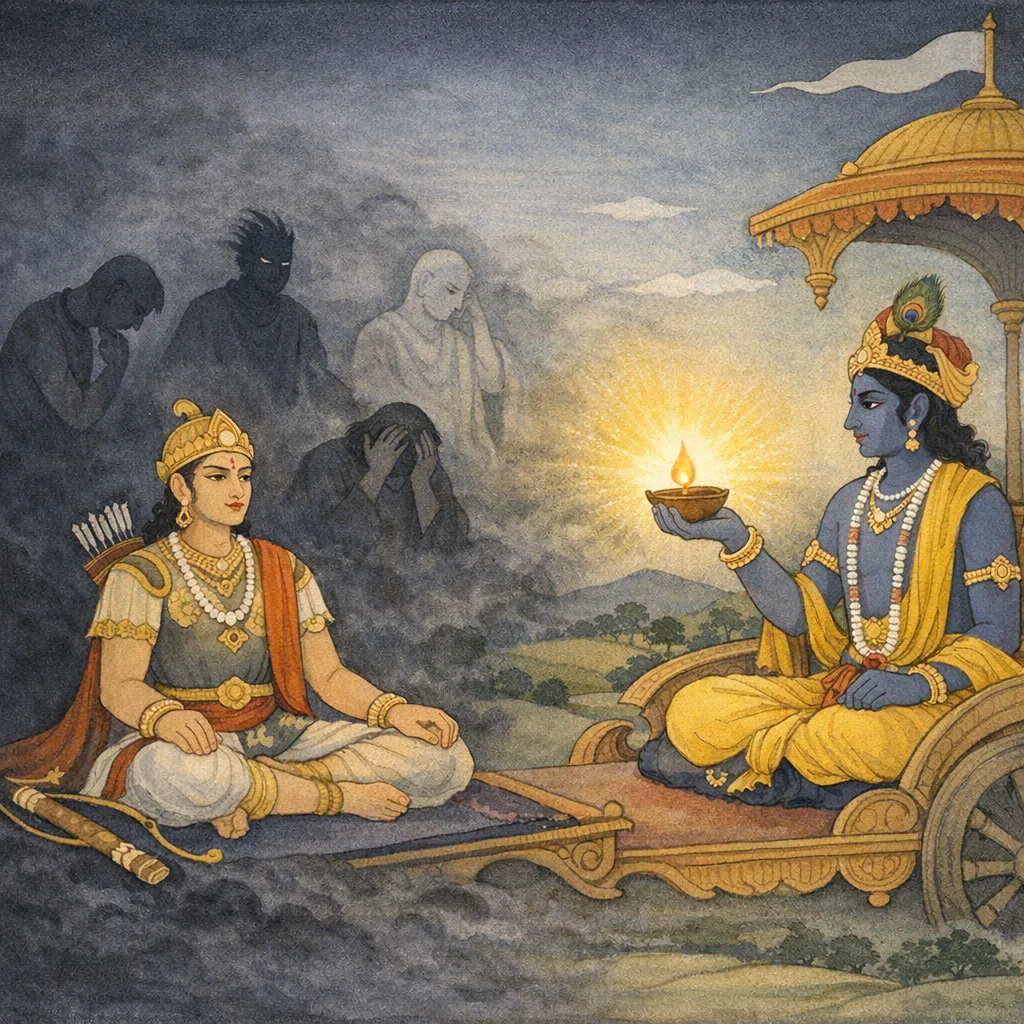
That firmness is tamasic, O Pārtha, by which a dull-witted person does not give up sleep, fear, grief, dejection, and intoxication (self-delusion).
Tamasic is that steadfastness by which one of poor understanding does not relinquish sleep, fear, sorrow, dejection, and also mada (intoxication/pride/delusive exhilaration).
mada is multivalent: it can denote literal intoxication, arrogance, or a deluded high. The verse treats tamasic “steadfastness” as stubborn persistence in debilitating states rather than constructive self-control.
FAQs
The verse describes a maladaptive “holding on” to avoidance and distress—remaining stuck in excessive sleep, fear, grief, or numbing behaviors—framed as tamas dominating perseverance.
As tamas veils discernment, dhṛti becomes misdirected: instead of supporting yogic steadiness, it sustains obscuration and reinforces binding patterns.
It completes the triad of dhṛti, contrasting sattvic regulation and rajasic outcome-driven persistence with tamasic stagnation.
It can be read as a caution against confusing passivity or numb endurance with resilience; helpful responses include seeking clarity, support, and structured practices that restore agency.
Ask anything about this verse
Curious about the meaning, context, or a word? Ask, and continue the conversation in the Vedapath app.
A free Google sign-in keeps your chat saved across web and the app.
Read Bhagavad Gita in the Vedapath app
Scan the QR code to open this directly in the app, with audio, word-by-word meanings, and more.