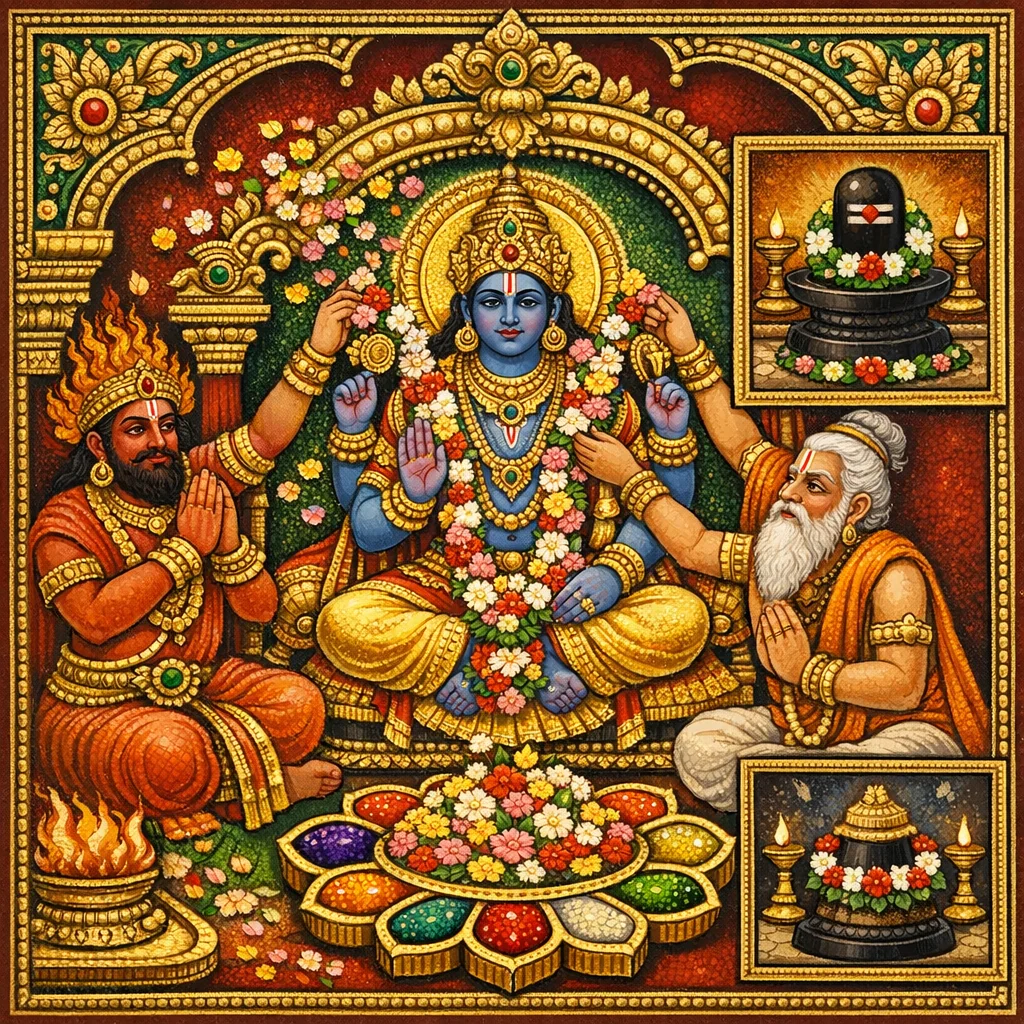
Adhyaya 202
Puṣpādhyāya-kathana (Account of Flowers in Worship)
ব্রতখণ্ডের ব্যবহারিক পূজা-নির্দেশে এই অধ্যায়ে ভগবান অগ্নি ঋষি বশিষ্ঠকে বলেন—পুষ্প, গন্ধ, চন্দন প্রভৃতি নিবেদন শৃঙ্খলিত ভক্তির মাধ্যম; এতে হরি (বিষ্ণু) প্রসন্ন হন এবং পাপক্ষয়, ভোগ, মুক্তি ও বিষ্ণুলোক-প্রাপ্তির মতো ক্রমবর্ধমান ফল লাভ হয়। প্রথমে ‘দেবযোগ্য’ পুষ্প-পত্রের তালিকা ও নানা উপহারের নির্দিষ্ট ফল বলা হয়েছে; পরে বিধি—শুকনো, ভাঙা, দোষযুক্ত বা অমঙ্গল দ্রব্য দিয়ে পূজা করা উচিত নয়। সম্প্রদায়ভেদে কিছু ফুল বিষ্ণুর উপযুক্ত, শিবের জন্য ভিন্ন, এবং কিছু শিবপূজায় নিষিদ্ধ—এ কথাও বলা হয়েছে। শেষে সর্বোচ্চ ‘পুষ্প’ হিসেবে অন্তর্গত গুণ—অহিংসা, ইন্দ্রিয়জয়, ক্ষমা, দয়া, শম, তপ, ধ্যান, সত্য (কিছু পাঠে শ্রদ্ধাও)—প্রতিষ্ঠা করে দেখানো হয়েছে যে বাহ্য আচার অন্তঃশুদ্ধিতে পূর্ণ হয়। উপসংহারে আসন, মূর্তি-পঞ্চাঙ্গ, অষ্টপুষ্পিকা এবং দেবনাম-ক্রম (বিষ্ণুর জন্য বাসুদেব-আদি, শিবের জন্য ঈশান-আদি) অনুযায়ী নিবেদনের বিন্যাস দেওয়া হয়েছে।
Shlokas
No shlokas available for this adhyaya yet.
Frequently Asked Questions
Flowers and fragrant substances (gandha, dhūpa, dīpa, naivedya) are emphasized, with extensive lists of specific blossoms, lotuses, aromatic leaves, and also bilva and śamī leaves; the text also highlights that devotion (bhakti) makes all admissible offerings effective.
They are inner virtues presented as worship-offerings—commonly ahiṃsā, indriya-nigraha/jaya, kṣānti, dayā, śama/śānti, tapaḥ, dhyāna, and satya (with manuscript variation also referencing śraddhā). They are central because they complete external pūjā with ethical and contemplative transformation, aligning ritual with mukti.
One should avoid withered/fallen items, broken or damaged materials, and offerings marked by defects (described as “extra limbs/defects”); additionally, certain flowers are disallowed for Śiva, and inauspicious, non-fragrant items (e.g., associated with kuṣmāṇḍa or nimba in the text’s phrasing) are rejected.
It combines (1) catalog-style taxonomies of flowers and offering-types, (2) ritual-legal admissibility rules, (3) deity-specific liturgical distinctions, and (4) a moral psychology of worship via the inner ‘flowers’—integrating technical detail with the spiritual goals of bhukti and mukti.