Adhyaya 201
Worship of the Nine Vyūhas (Nava-vyūha-arcana)
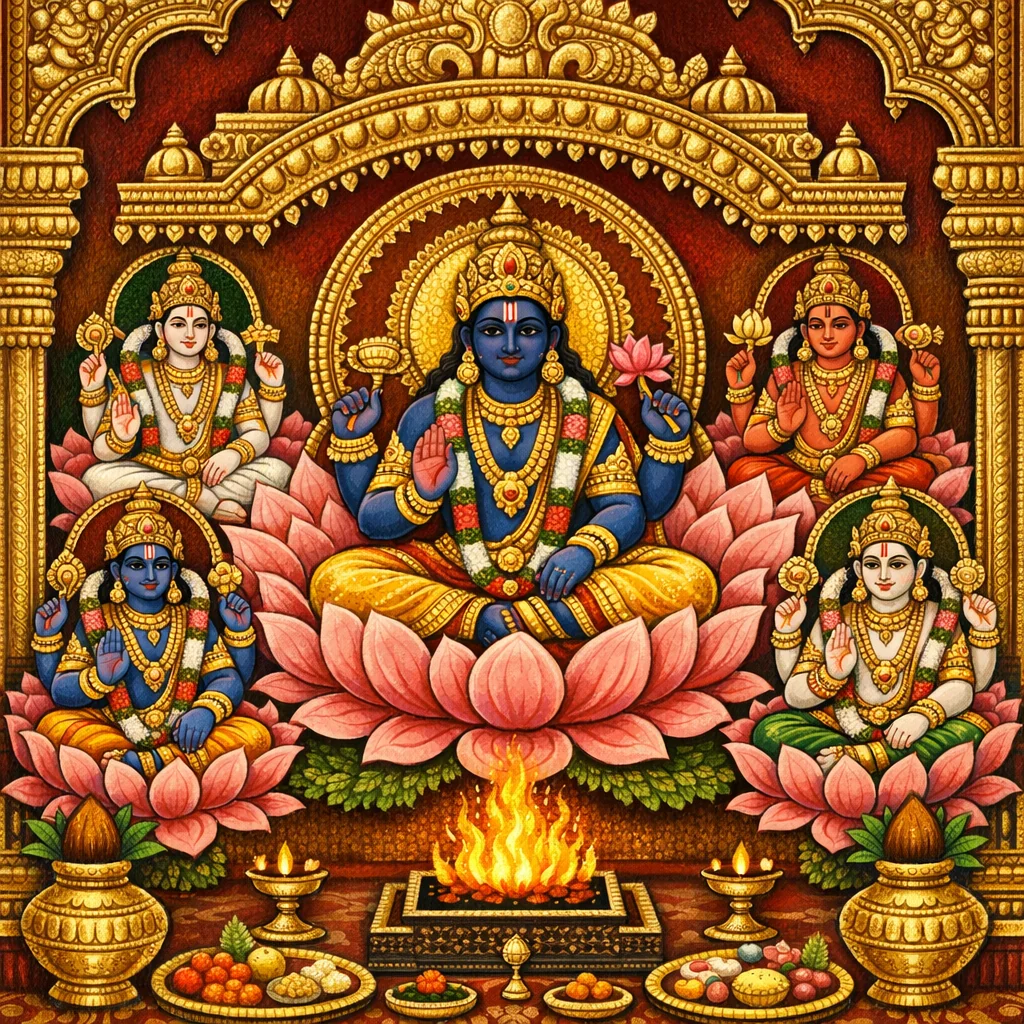
এই অধ্যায়ে পূর্ববর্তী দীপদান-ব্রতের সমাপ্তি উল্লেখ করে সঙ্গে সঙ্গে হরিপ্রদত্ত নবব্যূহ-অর্চনার প্রযুক্ত লিতুর্জিতে প্রবেশ করা হয়েছে। অগ্নি পদ্ম-মণ্ডল বিন্যাস শেখান—মধ্যস্থানে বাসুদেব, দিকসমূহে সংকর্ষণ, প্রদ্যুম্ন, অনিরুদ্ধ ও নারায়ণ; প্রত্যেকের জন্য নির্দিষ্ট বীজাক্ষর, তত্ত্ব/কর্মস্থান ও জল-স্থাপনসহ বিধান আছে। পরে সদ্ব্রহ্মা, বিষ্ণু, নৃসিংহ, ভূর্বরাহ প্রভৃতি রূপের মন্ত্র-বীজ মানচিত্র, দ্বারদেশ ও পশ্চিমদিকে সহায়ক ন্যাস, গরুড় ও গদা-মন্ত্রের বিশেষ প্রয়োগ বর্ণিত। এরপর বাহ্য মণ্ডল থেকে অন্তর্লীন সাধনা—দশাঙ্গ-ক্রম পূজা, দিকপালদের জন্য ঘট স্থাপন, তোরণ-ভিতান কল্পনা এবং চন্দ্রামৃত ধ্যান। শেষে দ্বাদশ বীজে ন্যাস করে ‘দিব্য দেহ’ নির্মাণ, পুষ্পক্ষেপে শিষ্য-পরিচয়, শুদ্ধির জন্য হোমসংখ্যা ও দীক্ষাদক্ষিণা নির্দিষ্ট—দীক্ষাকে আচারবিজ্ঞানের সামাজিক-আধ্যাত্মিক সিলমোহর বলা হয়েছে।
Shlokas
No shlokas available for this adhyaya yet.
Frequently Asked Questions
A lotus-maṇḍala Navavyūha worship beginning with Vāsudeva at the center, followed by directional deity placements with specific bīja-syllables, then internalization through visualization, daśāṅga-krama, and nyāsa culminating in dīkṣā.
After mandala and mantra placements, it shifts to subtle-body contemplation (lunar nectar), self-identification with Viṣṇu, and nyāsa that produces a “divine body,” explicitly valuing heart-worship of Hari (anirmālyā) as the inner completion of the rite.
Disciples are seated to the left, identify a chosen form by blind flower-casting, perform homa with 108 and then 1000 oblations for purification, and receive dīkṣā after payment of prescribed fees honoring the guru.