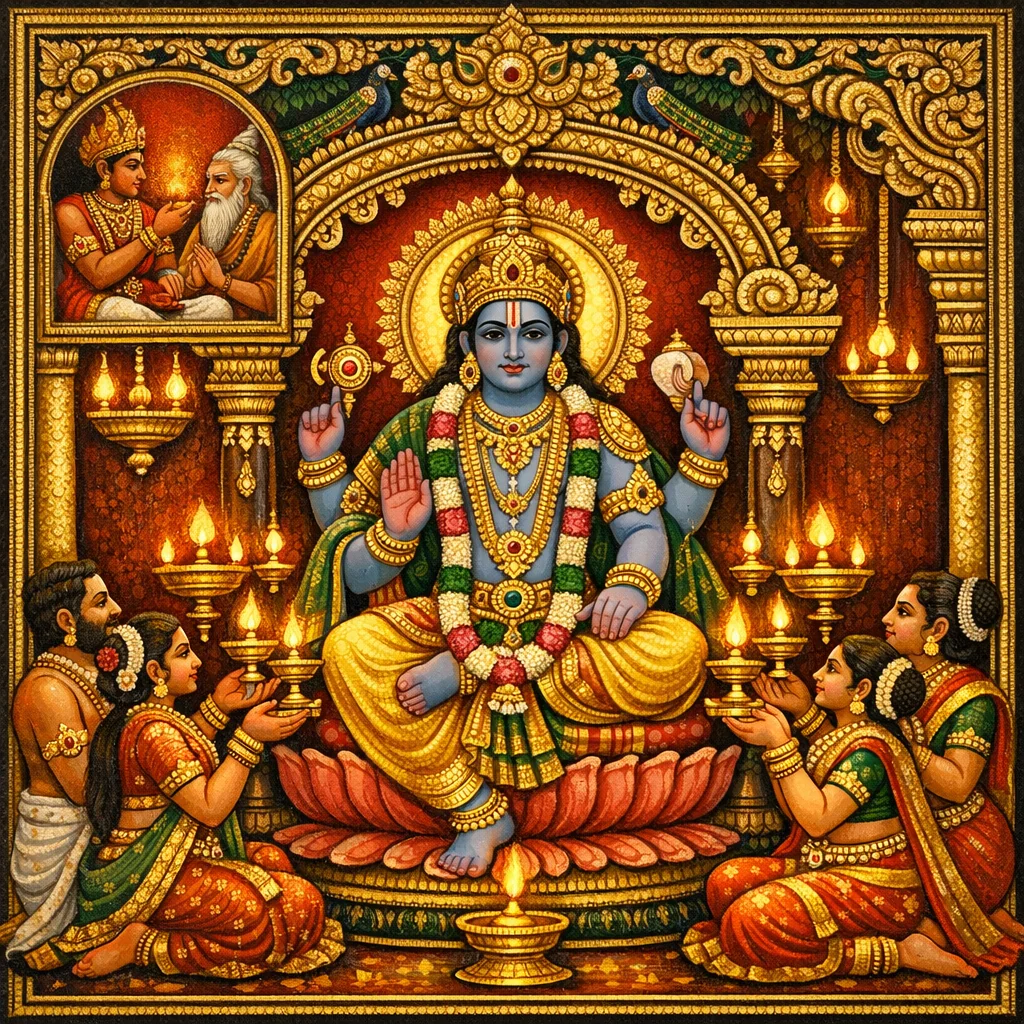
Adhyaya 200
Dīpadāna-vrata (The Vow of Offering Lamps)
ভগবান অগ্নি দীপদান-ব্রতকে ভুক্তি ও মুক্তিদায়ক বলে উপদেশ দেন। দেবালয়ে বা ব্রাহ্মণের গৃহে এক বছর প্রদীপ জ্বালালে সর্বসমৃদ্ধি লাভ হয়; বিশেষত চাতুর্মাস্য ও কার্ত্তিকে এর পুণ্য অতুল, বিষ্ণুলোকপ্রাপ্তি ও স্বর্গীয় ভোগ দেয়। পরে ললিতার কাহিনিতে বিষ্ণুমন্দিরের দীপ-সম্পর্কিত এক অনিচ্ছাকৃত কাজও মহাফলদায়ক হয়ে তাকে রাজকুলে পুনর্জন্ম ও দাম্পত্যসমৃদ্ধি দেয়। দীপচুরি কঠোরভাবে নিন্দিত—মূক/জড় জন্ম এবং অন্ধকার-নরকে পতনের ফল। ইন্দ্রিয়াসক্তি, দুষ্কাম ও পরস্ত্রীগমন ত্যাগ করে হরিনামজপ ও সহজ নিবেদন—বিশেষত দীপদান—গ্রহণের উপদেশ আছে। শেষে বলা হয়, দীপদান সকল ব্রতের ফল বৃদ্ধি করে; এই শিক্ষা শ্রবণ ও পালন করলে ঊর্ধ্বগতি হয়।
Shlokas
No shlokas available for this adhyaya yet.
Frequently Asked Questions
Offer a lamp—ideally sustained as a yearly practice—in a deity’s shrine (especially Viṣṇu’s) or a brāhmaṇa’s home; the act is taught as a high-merit vrata granting prosperity, longevity, clarity of sight, and higher worlds, ultimately supporting liberation.
Kārttika is presented as a peak season of ritual potency: lamp-giving then is said to yield exceptional heavenly results, surpassing ordinary times and amplifying vrata-fruit.
It demonstrates that even an unpremeditated or indirect contribution to a lamp-offering in a Viṣṇu temple can generate powerful puṇya, underscoring the vow’s efficacy and the sacredness of temple-based offerings.
The chapter condemns dīpa-theft with severe karmic outcomes and uses hell imagery to caution against negligence, sense-addiction, and sexual misconduct (adultery), redirecting the practitioner toward dharmic restraint and Hari-nāma.