Adhyaya 190
Chapter 190: Akhaṇḍa-dvādaśī-vrata (The Unbroken Dvādaśī Vow)
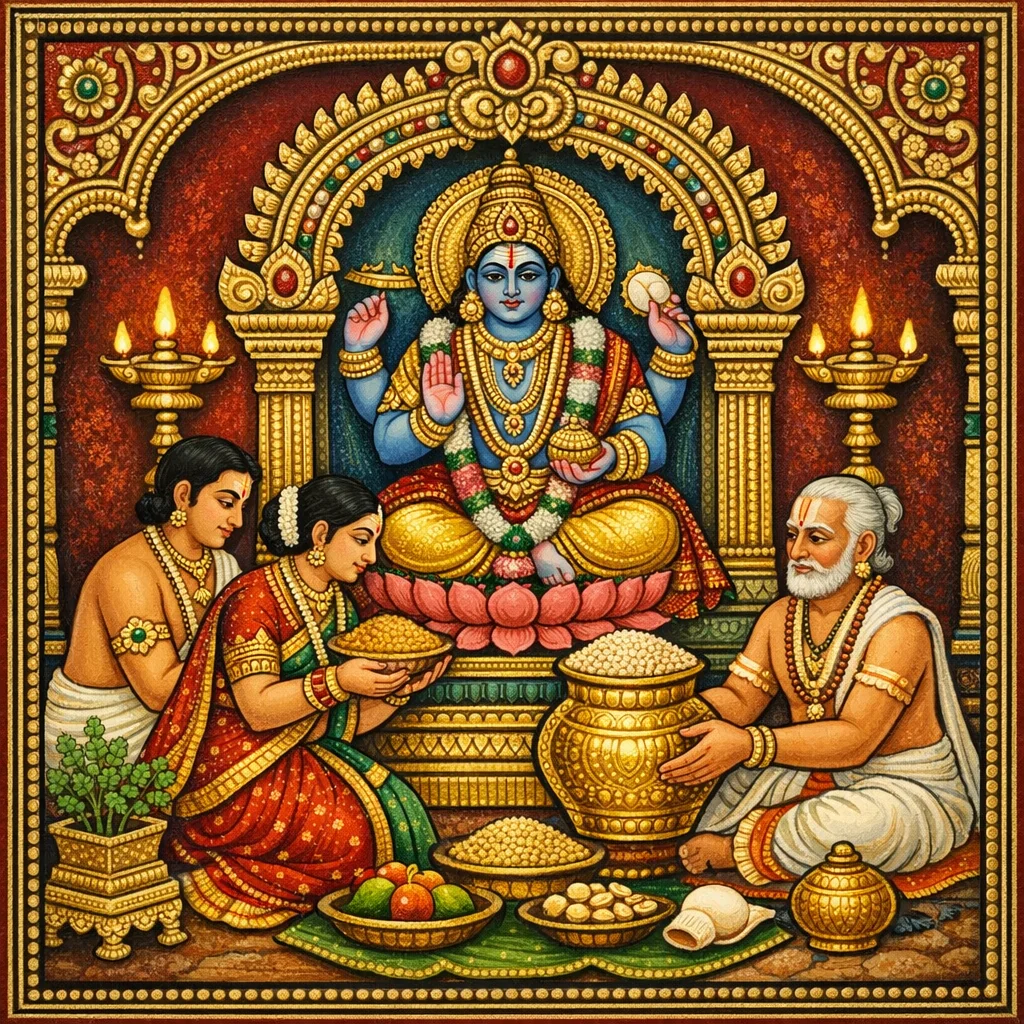
ভগবান অগ্নি ঋষি বশিষ্ঠকে অখণ্ড-দ্বাদশী-ব্রত শিক্ষা দেন—যা ব্রতসমূহকে ‘সম্পূর্ণ’ ও ভঙ্গহীন করে। মার্গশীর্ষের শুক্ল দ্বাদশীতে বিষ্ণুপূজা করে পঞ্চগব্য-জলে স্নান ও শুদ্ধিদ্রব্য বিধিমতে গ্রহণ করে উপবাস করতে হয়। দ্বাদশীতে দান প্রধান—যব ও চালভরা পাত্র ব্রাহ্মণকে দান করা হয়। ব্রতী বিষ্ণুর কাছে প্রার্থনা করে, সাত জন্মে সঞ্চিত ব্রতের অপূর্ণতা ও ত্রুটি যেন তিনি পূর্ণ করেন; পুরুষোত্তমে বিশ্ব অখণ্ডভাবে প্রতিষ্ঠিত—এই তত্ত্বে প্রার্থনা স্থাপিত। পরে মাসিক আচরণ ও চাতুর্মাস্য বিধান, এবং মাসভেদে শক্তু (ভাজা যবের গুঁড়ো) প্রভৃতি দানের কথা বলা হয়েছে। শ্রাবণ থেকে শুরু করে কার্ত্তিকান্তে পারণ পর্যন্ত সঠিক সময় মানতে বলা হয়; ত্রুটি সাত জন্ম পর্যন্ত প্রতিফলিত হতে পারে, আর সঠিক পালনে দীর্ঘায়ু, স্বাস্থ্য, ঐশ্বর্য, রাজ্য ও ভোগ লাভ হয়।
Shlokas
No shlokas available for this adhyaya yet.
Frequently Asked Questions
It is explicitly framed as a rite for vrata-sampūrṇatā—making vows complete and ‘unbroken,’ including repairing deficiencies believed to persist across seven births through Viṣṇu’s grace.
Fasting on bright Mārgaśīrṣa Dvādaśī for Viṣṇu, bathing in pañcagavya-water and partaking of it, and giving a brāhmaṇa a vessel containing barley and rice on Dvādaśī.
The votary’s prayer links personal vow-completion to the cosmic ‘unbroken wholeness’ of the universe identified with Puruṣottama (Viṣṇu), making ritual integrity a mirror of ontological unity.
The course is described as beginning in Śrāvaṇa and reaching pāraṇa at the end of Kārttika, aligning with the Cāturmāsya-related discipline and its closure.
Long life, freedom from disease, good fortune, sovereignty/kingship, and enjoyments (along with similar prosperities) are stated as outcomes.