Adhyaya 185
Chapter 185 — नवमीव्रतानि (The Observances for Navamī)
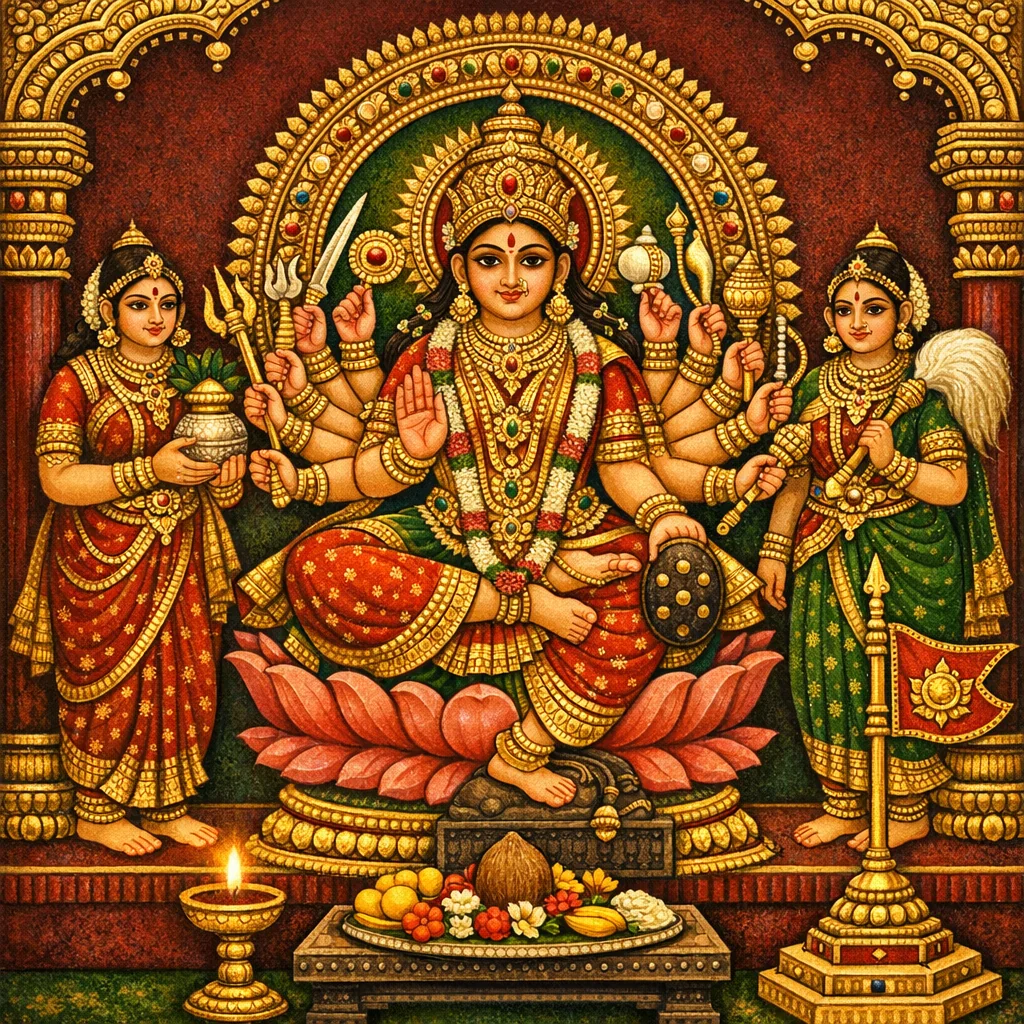
ভগবান অগ্নি বশিষ্ঠকে গৌরী/দুর্গাসংযুক্ত নবমী-ব্রত শিক্ষা দেন এবং ভুক্তি ও মুক্তি—উভয় সিদ্ধির প্রতিশ্রুতি দেন। নবমীকে ‘পিষ্টকা’ বলা হয়েছে; আশ্বিন শুক্ল নবমীর নির্দিষ্ট কাল, নক্ষত্র-শর্ত এবং দেবপূজার পর ময়দা/পিষ্টজাত ভক্ষণবিধি উল্লেখিত। পরে মহিষমর্দিনী দুর্গাকে কেন্দ্র করে রাজরক্ষা-লিতুর্জি—দেবীকে নয় স্থানে বা এক মন্দিরে অধিষ্ঠিতা জেনে বহু-ভুজ মূর্তির ধ্যান, নির্দিষ্ট অস্ত্র-উপকরণসহ। দশাক্ষরী দুর্গা-রক্ষা মন্ত্র, অন্যান্য সূত্র, অঙ্গুষ্ঠ থেকে কনিষ্ঠা পর্যন্ত ন্যাস, গোপনীয়তা ও অবিঘ্ন সাধনার কথা আছে। অস্ত্রপূজা, উগ্র দেবীনাম, দিক্বলিদান (কিছু পাঠে রক্ত-মাংস), পিষ্টের শত্রু-প্রতিমা নিস্তেজকরণ, রাত্রে মাতৃকা ও উগ্ররূপ পূজা, পঞ্চামৃত স্নান, বলি এবং ধ্বজা-স্থাপন ও রথযাত্রা—ভক্তি, প্রতিমাধ্যান ও রাজধর্মরক্ষাকে একত্র করে।
Shlokas
No shlokas available for this adhyaya yet.
Frequently Asked Questions
It is presented as siddhi-giving—supporting worldly accomplishment and protection (bhukti) while also generating merit conducive to liberation (mukti) through disciplined Durgā worship.
The chapter gives a ten-syllabled protective mantra: “Oṃ, O Durgā, O Durgā, protect (me)! Svāhā,” used as a rakṣā (protection) formula within the Navamī observance.
It includes a royal-protective procedure: in front of the invoked fire, the king bathes and ritually removes/neutralizes an enemy represented by a dough effigy, aligning goddess worship with victory and protection of the realm.
Durgā is visualized in multi-armed forms (notably eighteen-armed and sixteen-handed variants) and associated with a defined set of implements and weapons, which are themselves to be worshipped as part of the observance.