Dashati 11
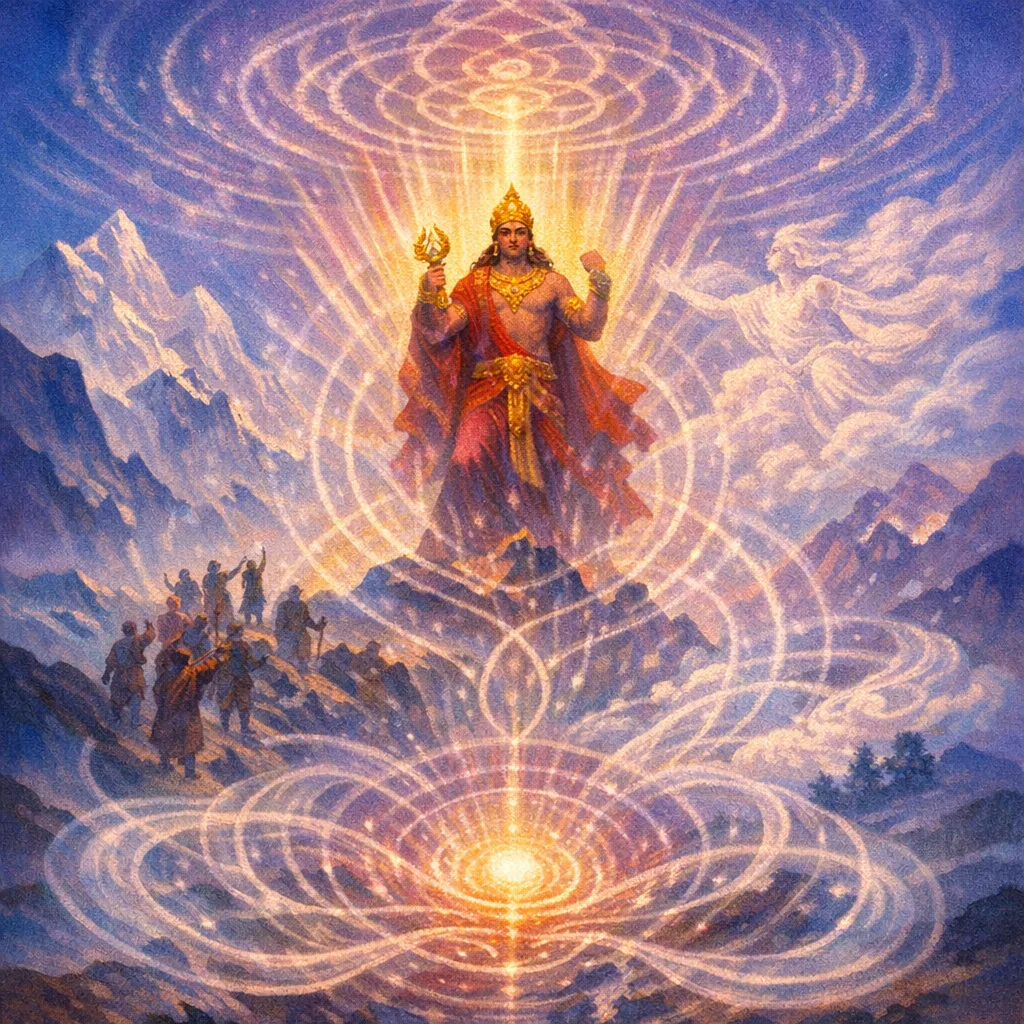
Aindra praise seeking Indra’s favor and communal advance, with allied Vāta petitions for healing and life-breath
Indra
Uplifting and expansive—heroic Aindra praise tempered by a soothing restorative breath-motif in the Vāta verses
R̥ṣi attributions are not specified in the input; identification requires Ṛgveda concordance and the arcikā cross-index for this prapāṭhaka/daśati unit.
ইন্দ্ৰক মহা-বৃদ্ধিদাতা আৰু ৰক্ষক বুলি স্তৱ কৰি যজ্ঞ-অৰ্ঘ্য গ্ৰহণ কৰিবলৈ আহ্বান কৰা হয়, যাতে তেওঁ লোকসমূহক সুমতি (শুভ মনোভাৱ) আৰু সমাজগত বল/ক্ষমতা দান কৰে আৰু বিপদ অতিক্ৰম কৰায়। তাৰ পাছত বাতাক চিকিৎসাকাৰী, প্ৰাণধাৰক শক্তি ৰূপে আহ্বান কৰা হয়—হৃদয়-শ্বাসৰ প্ৰতীকে প্ৰাণ ৰক্ষা কৰি, জীৱন ধৰি ৰাখিবলৈ প্ৰয়োজনীয় গোপন ‘অমৃত’/পোষক সাৰ দান কৰক; ই উপাসক জনসমষ্টি (বিশঃ)ৰ সামূহিক মঙ্গলৰ বাবে নিবেদন।
Mantras
Mantra 1
वात आ वातु बेषजं शम्भु मयोभु नो हृदे प्र न अयूंषि तारिषत्
বাতা আহি বোৱাঁক—ঔষধিস্বৰূপ, শম্ভু, ময়োভূ; আমাৰ হৃদয়ত আনন্দ জগাওক, আৰু আমাৰ আয়ুষ্যসমূহ সম্পূৰ্ণৰূপে দীঘলীয়া কৰক।
Mantra 2
उत वात पितासि न उत भ्रातोत नः सखा स नो जीवातवे कृधि
আৰু, হে বাতা, তুমি আমাৰ পিতা; আৰু আমাৰ ভ্ৰাতা; আৰু আমাৰ সখা—সেয়ে আমাৰ জীয়াই থাকিবলৈ অনুগ্ৰহ কৰা।
Mantra 3
यददो वात ते गृहे3 ऽमृतं निहितं गुहा तस्यो नो देहि जीवसे
যদি, হে বাতা, তোমাৰ গৃহত গুহাত গোপনে অমৃত-নিধি থোৱা থাকে, তেন্তে তাৰ পৰা আমাৰ জীৱনৰ পোষণৰ বাবে আমাক দান কৰা।
Frequently Asked Questions
It links ritual praise and offering with divine help: Indra is asked to grant favorable support and strength for the communities, while Vāta is asked to heal, protect the life-breath, and prolong life.
Even in Indra-centered groupings, allied petitions occur for practical welfare. Vāta represents prāṇa and healing; invoking him complements Indra’s protective power by securing health and longevity for the sacrificer.
It points to a concealed life-sustaining essence—often understood as sacrificial potency/ojas (and by extension Soma-like vitality). The singer asks Vāta to bestow that sustaining power ‘for living’ (jīvase).