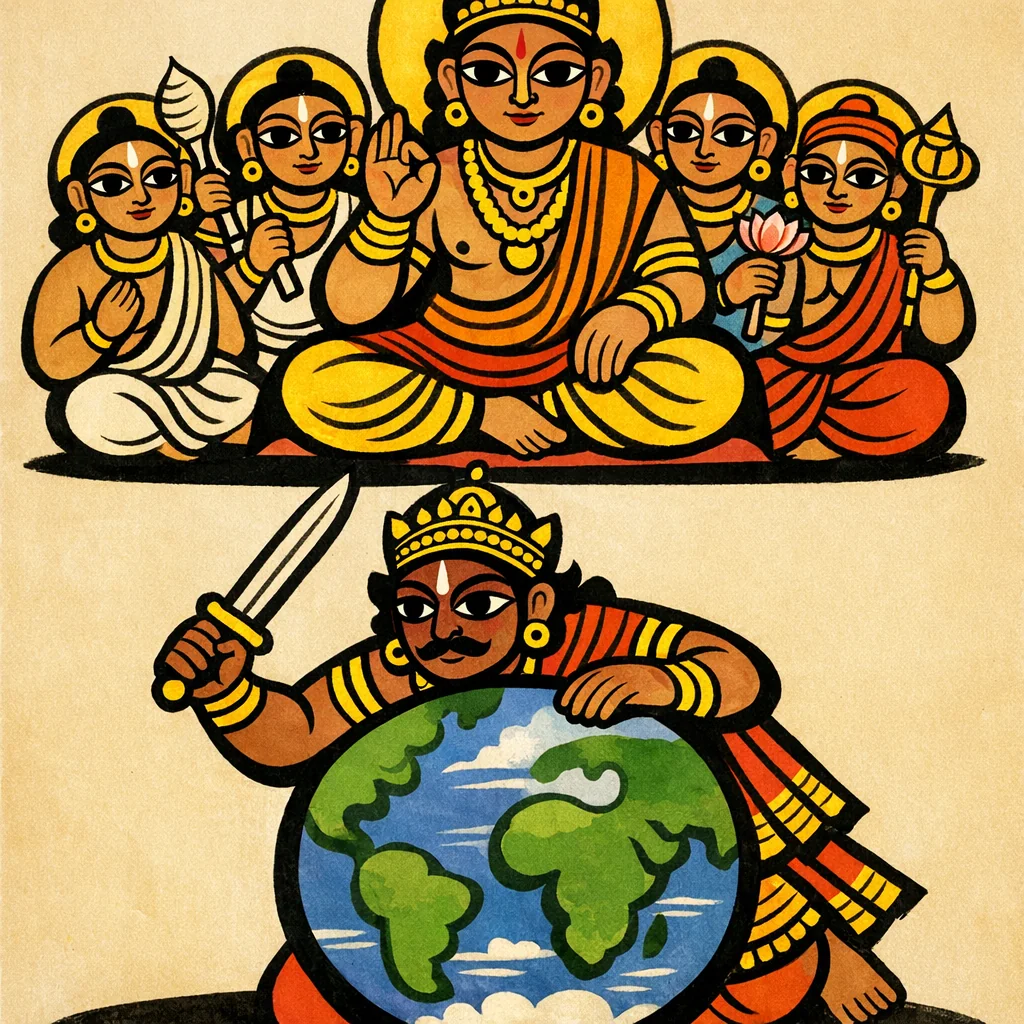
Adhyaya 73: The Uttama Manvantara: Classes of Devas, Indra Sushanti, and the Royal Lineage
औत्तममन्वन्तरवर्णनम् (Auttama-manvantara-varṇanam)
Birth of the Goddess
এই অধ্যায়ত ঔত্তম মন্বন্তৰৰ বৰ্ণনা দিয়া হৈছে। দেৱতাসকলৰ বিভিন্ন শ্ৰেণী, তেওঁলোকৰ কৰ্তব্য আৰু ব্যৱস্থা উল্লেখ কৰা হৈছে। এই মন্বন্তৰত ইন্দ্ৰ সুশান্তি, ঋষি আৰু প্ৰজাপতিসকলৰ নিৰ্ধাৰিত ভূমিকা তথা লোকৰক্ষাৰ বিধান বৰ্ণিত। লগতে ৰাজবংশৰ পৰম্পৰা, ধৰ্মপালন আৰু প্ৰজাহিতৰ সংক্ষিপ্ত আলোচনা আছে।
Divine Beings
Celestial Realms
Key Content Points
Focus Keywords
Shlokas in Adhyaya 73
Verse 1
इति श्रीमार्कण्डेयपुराणे औत्तममन्वन्तरे द्विसप्ततितमोऽध्यायः । त्रिसप्ततितमोऽध्यायः- ७३ । मार्कण्डेय उवाच । मन्वन्तरे तृतीयेऽस्मिन् औत्तमस्य प्रजापतेः । देवानिन्द्रमृषीन् भूपान् निबोध गदतो मम ॥
এইদৰে শ্ৰীমাৰ্কণ্ডেয় পুৰাণৰ ঔত্তম মন্বন্তৰত বাহাত্তৰতম অধ্যায় সমাপ্ত হ’ল। এতিয়া তিয়াত্তৰতম অধ্যায় আৰম্ভ। মাৰ্কণ্ডেয় ক’লে—প্ৰজাপতি ঔত্তমৰ এই তৃতীয় মন্বন্তৰত যি দেৱগণ, ইন্দ্ৰ, ঋষিগণ আৰু ৰজাসকল আছিল, মোৰ কথাৰ পৰা বুজি লোৱা।
Verse 2
स्वधामानस्तथा देवा यथानामानुकारिणः । सत्याख्यश्च द्वितीयोऽन्यस्त्रिदशानां तथा गणः ॥
দেৱগণৰ এটা দল তেওঁলোকৰ নাম আৰু স্বভাৱৰ অনুৰূপ ‘স্বধামান’ বুলি কোৱা হৈছিল। সেই ত্ৰিশ দেৱৰ মাজত দ্বিতীয় দল ‘সত্যাখ্য’ নামে প্ৰসিদ্ধ আছিল।
Verse 3
तृतीये तु गणॆ देवाः शिवाख्या मुनिसत्तम । शिवाः स्वरूपतस्ते तु श्रुताः पापप्रणाशनाः ॥
তৃতীয় দলত, হে মুনিশ্ৰেষ্ঠ, দেৱগণ ‘শিৱাখ্য’ বুলি কোৱা হয়। তেওঁলোক স্বভাৱতঃ মঙ্গলময় আৰু পাপনাশক বুলি শ্ৰুত।
Verse 4
प्रतर्दनाख्यश्च गणो देवानां मुनिसत्तम । चतुर्थस्तत्र कथित औत्तमस्यान्तरे मनोः ॥
আৰু হে মুনিশ্ৰেষ্ঠ, সেই ঔত্তম মন্বন্তৰৰ সময়ত চতুৰ্থ দল হিচাপে ‘প্ৰতর্দন’ নামে দেৱগণৰ উল্লেখ আছে।
Verse 5
वशवर्तिनः पञ्चमेऽपि देवास्तत्र गणॆ द्विज । यथाख्यातस्वरूपास्तु सर्व एव महामुने ॥
পঞ্চম দলতো, হে দ্বিজ, দেৱগণ ‘বশৱৰ্তিন’ আছিল। হে মহর্ষি, তেওঁলোক সকলেই নাম আৰু বৰ্ণনাৰ অনুৰূপ স্বভাৱসম্পন্ন আছিল।
Verse 6
एते देवगणाः पञ्च स्मृता यज्ञभुजस्तथा । मन्वन्तरे मनुश्रेष्ठे सर्वे द्वादशका गणाः ॥
দেৱতাসকলৰ এই পাঁচটা গণ আৰু যজ্ঞৰ ভাগভোগীসকলকো স্মৰণ কৰা হয়। সেই উৎকৃষ্ট মনুৰ মন্বন্তৰত এই সকলো গণ দ্বাদশ শ্ৰেণী ৰূপে বিন্যস্ত।
Verse 7
तेषामिन्द्रो महाभागस्त्रैलोक्ये स गुरुर्भवेत् । शतं क्रतूनामाहृत्य सुशान्तिर्नाम नामतः ॥
তেওঁলোকৰ মাজত ভাগ্যৱান ইন্দ্ৰ ত্ৰিলোকৰ আচার্য হয়। শত যজ্ঞ সম্পন্ন কৰি তেওঁ ‘সুশান্তি’ নামে প্ৰসিদ্ধ হয়।
Verse 8
यस्योपसर्गनाशाय नामाक्षरविभूषिता । अद्यापि मानवैर्गाथा गीयते तु महीतले ॥
তাঁৰ নামাক্ষৰে অলংকৃত, বিপদনাশিনী গাথা আজিও পৃথিৱীত মানুহে গায়।
Verse 9
शुशान्तिर्देवराट् कान्तः शुशान्तिं स प्रयच्छति । सहितः शिवसत्याद्यैस्तथैव वशवर्तिभिः ॥
দেৱপ্ৰিয় অধিপতি সুশান্তি নিশ্চয় ‘সুশান্তি’ (উত্তম শান্তি) দান কৰে—শিৱ, সত্য আদি গণৰ সৈতে, আৰু বসুসকলৰ অধীনস্থসকলৰ সৈতেো।
Verse 10
अजः परशुचिर्दिव्यो महाबलपराक्रमः । पुत्रस्तस्य मनोरासन् विख्यातास्त्रिदशोपमाः ॥
সেই মনুৰ পুত্ৰ আছিল অজ—পৰশুৰ দৰে নিৰ্মল, দিব্য, মহাবল আৰু পৰাক্ৰমশালী। তেওঁৰ পুত্ৰসকলও প্ৰসিদ্ধ হৈছিল, ত্ৰিংশৎ (তিৰিশ দেৱতা) সমান।
Verse 11
तत्सूतिसम्भवैर्भूमिः पालिताभून्नरेश्वरैः । यावन्मन्वन्तर तस्य मनोरुत्तमतेजसः ॥
তাঁৰ বংশজাত ৰজাসকলে পৃথিৱী ৰক্ষা কৰিছিল, যিমানদিন সেই মহাতেজস্বী মনুৰ মন্বন্তৰ চলি আছিল।
Verse 12
चतुर्युगानां संख्याता साधिका ह्येकसप्ततिः । कृतत्रेतादिसंज्ञानां यान्युक्तानि युगे मया ॥
চতুৰ্যুগৰ সংখ্যা একাত্তৰৰ অলপ অধিক বুলি কোৱা হৈছে—কৃত, ত্ৰেতা আদি নামধাৰী সেই যুগসমূহক মই যুগৰূপে বৰ্ণনা কৰিছোঁ।
Verse 13
स्वतेजसा हि तपसो वरिष्ठस्य महात्मनः । तनयाश्चान्तरे तस्मिन् सप्त सप्तर्षयोऽभवन् ॥
তপস্যাত শ্ৰেষ্ঠ সেই মহাত্মাৰ স্বতেজে সেই অন্তৰত সাত পুত্ৰ জন্মিল, আৰু তেওঁলোকেই সাত সপ્તঋষি হ’ল।
Verse 14
तृतीयमेतत्कथितं तव मन्वन्तरं मया । तामसस्य चतुर्थन्तु मनोरन्तरमुच्यते ॥
এই তৃতীয় মন্বন্তৰ মই তোমাক ক’লোঁ; কিন্তু চতুৰ্থ মন্বন্তৰ-অন্তৰ তামস মনুৰ বুলি কোৱা হয়।
Verse 15
वियोनिजन्मनो यस्य यशसा द्योतितं जगत् । जन्म तस्य मनोर् ब्रह्मन् ! श्रूयतां गदतो मम ॥
হে ব্ৰাহ্মণ, মই যেনেকৈ কওঁ তেনেকৈ মোৰ পৰা শুনা—অযোনিজ উৎসৰ সেই মনুৰ জন্ম, যাৰ কীৰ্তিত জগত আলোকিত হৈছিল।
Verse 16
अतीन्द्रियमशेषाणां मनूनाञ्चरितं तथा । तथा जन्मापि विज्ञेयं प्रभावश्च महात्मनाम् ॥
সকলো মনুৰ কীৰ্তি ইন্দ্ৰিয়গোচৰৰ অতীত। তদ্ৰূপ মহাত্মাসকলৰ জন্ম আৰু তেঁওলোকৰ অতিশয় প্ৰভাৱো বুজিব লাগে।
Frequently Asked Questions
The chapter’s inquiry is structural and cosmological rather than casuistic: it explains how dharmic order is maintained in a given Manvantara through clearly named divine classes (devagaṇas), a stabilizing Indra, and a parallel human kingship that protects the earth—linking ritual economy (yajña) to cosmic governance.
It completes the Auttama (third) Manvantara profile by listing its devagaṇas, naming its Indra (Śuśānti), indicating the Manu’s progeny (Aja) and the kingship that sustains the world, and then explicitly announces the shift to the next cycle: the Tāmasa (fourth) Manvantara and its Manu’s distinctive birth and potency.
The text emphasizes administrative taxonomy (five devagaṇas), the Manvantara’s Indra (Śuśānti) with a remembered protective name, the Manu’s lineage through Aja and earth-protecting kings, and a yuga-based duration marker; these provide a complete closure of Auttama’s order so the narration can pivot cleanly to the Tāmasa Manvantara’s origin-story and extraordinary Manu-birth.