
Shloka 12
Purushottama Yoga — Purushottama Yoga
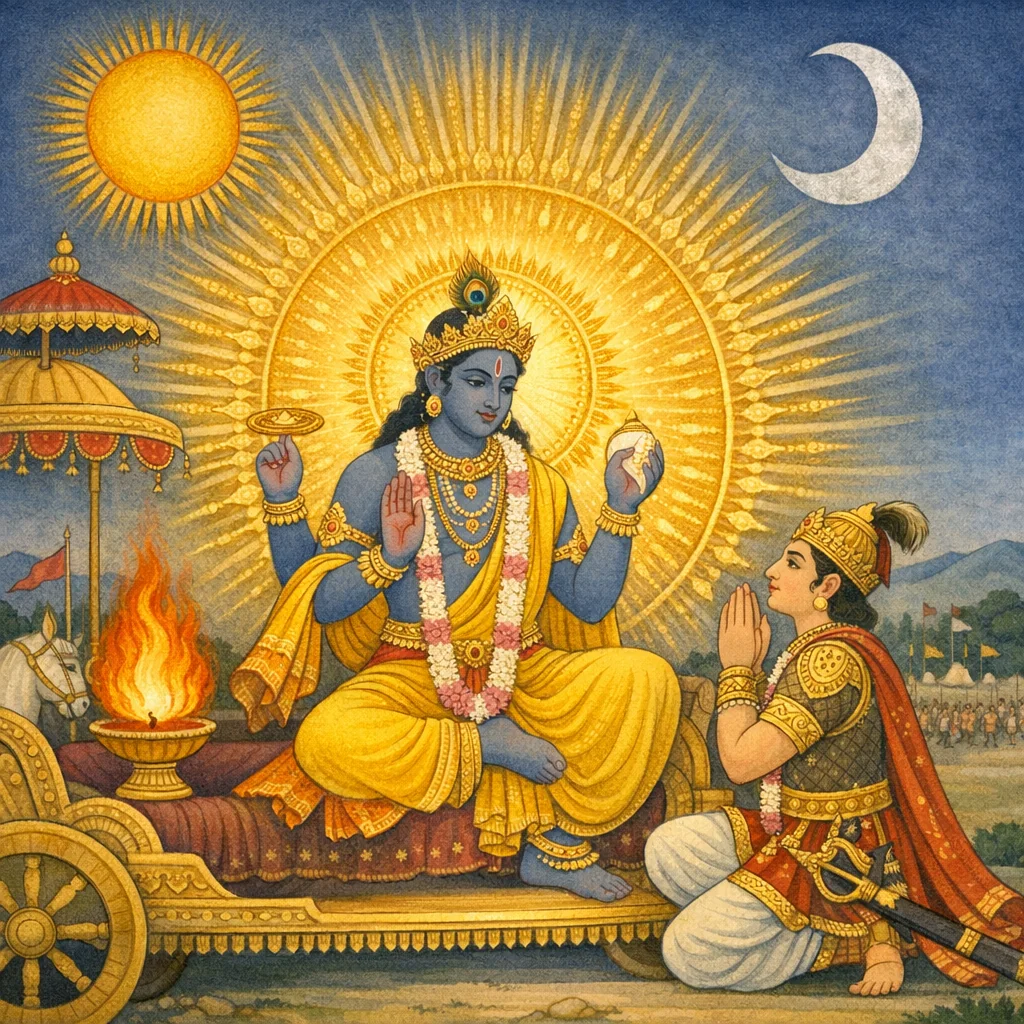
यदादित्यगतं तेजो जगद्भासयतेऽखिलम् ।
यच्चन्द्रमसि यच्चाग्नौ तत्तेजो विद्धि मामकम् ॥ १५.१२ ॥
yad ādityagataṃ tejo jagad bhāsayate 'khilam |
yac candramasi yac cāgnau tat tejo viddhi māmakam || 15.12 ||

যি তেজ সূৰ্যত অৱস্থিত হৈ সমগ্ৰ জগতক আলোকিত কৰে, আৰু যি তেজ চন্দ্ৰত তথা অগ্নিত আছে—সেই তেজক মোৰেই বুলি জানিবা।
जो तेज सूर्य में स्थित होकर सम्पूर्ण जगत् को प्रकाशित करता है और जो तेज चन्द्रमा तथा अग्नि में है, उस तेज को मेरा ही समझ।
That radiance which, abiding in the sun, illuminates the entire world, and that which is in the moon and in fire—know that radiance to be mine.
The verse is typically read theologically (divine immanence). Philosophically it can also be taken as a claim that cosmic intelligibility and energy are grounded in the supreme principle.
FAQs
It encourages a contemplative shift: perceiving everyday sources of light and warmth as occasions for recognizing a deeper, unifying ground of experience.
The verse asserts that the illuminating principle in cosmic lights is not autonomous but participates in, or is dependent upon, the supreme reality identified with Krishna.
In the Puruṣottama teaching, it supports the doctrine of divine pervasion: the supreme is present as the enabling power within the cosmos.
It can be read as a prompt for ecological and ethical reverence: natural forces sustaining life are not merely resources but invite responsible appreciation.