
Bhagavad Gita — Moksha Sannyasa Yoga, Shloka 70
Moksha Sannyasa Yoga
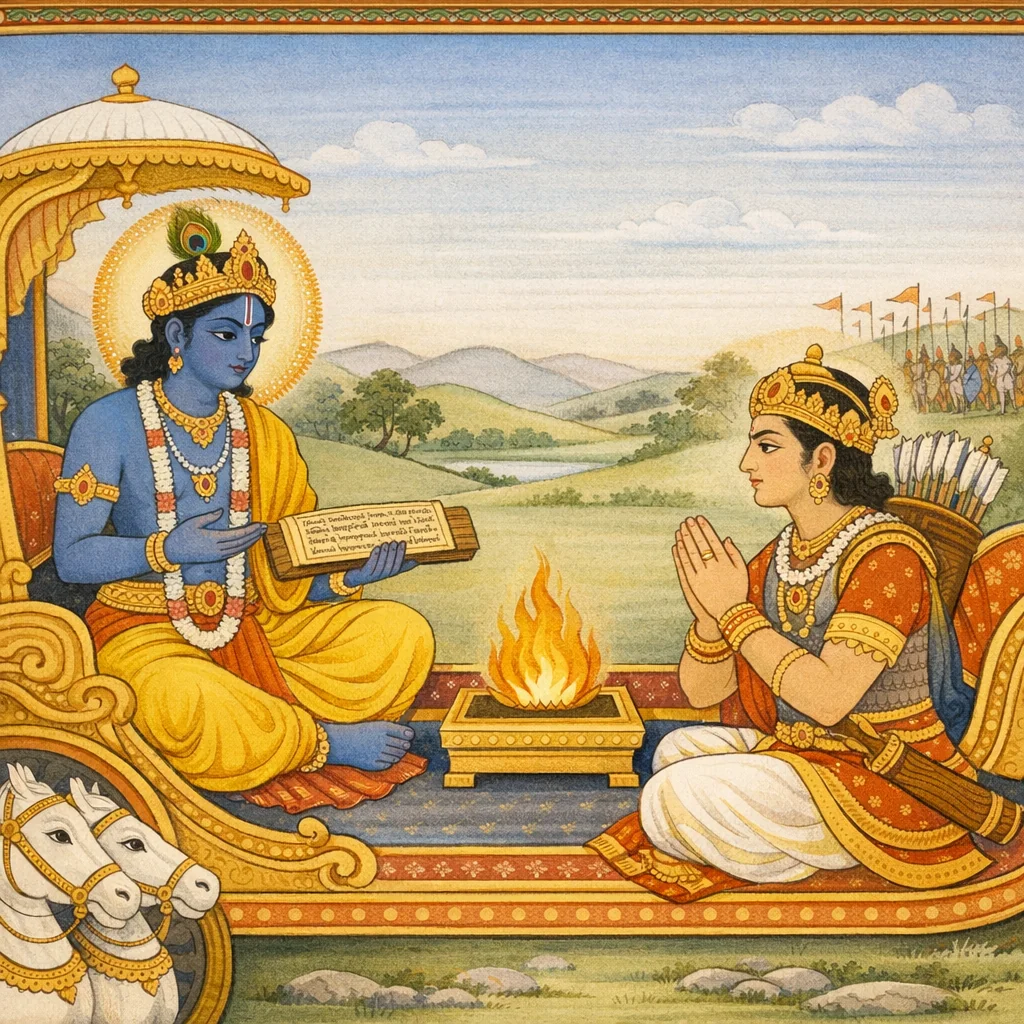
अध्येष्यते च य इमं धर्म्यं संवादमावयोः । ज्ञानयज्ञेन तेनाहमिष्टः स्यामिति मे मतिः ॥ १८.७० ॥
adhyeṣyate ca ya imaṁ dharmyaṁ saṁvādam āvayoḥ | jñāna-yajñena tenāham iṣṭaḥ syām iti me matiḥ || 18.70 ||

আৰু যি আমাৰ দুয়োৰ এই ধৰ্মময় সংলাপ অধ্যয়ন কৰিব, সি জ্ঞান-যজ্ঞৰ দ্বাৰা মোৰ পূজা কৰিব—এইদৰে মোৰ মত।
जो इस हम दोनों के धर्ममय संवाद का अध्ययन करेगा, वह ज्ञान-यज्ञ द्वारा मेरी पूजा करेगा—ऐसा मेरा मत है।
And whoever will study this righteous dialogue of ours—by him I will have been worshiped through a sacrifice of knowledge; such is my view.
‘Jñāna-yajña’ is rendered as ‘sacrifice in the form of knowledge’ (literal) versus ‘worship through knowledge’ (interpretive). The verse broadens merit from teaching to study.
FAQs
It validates reflective study as a disciplined practice: repeated engagement with a coherent dialogue can reorganize values and reduce inner conflict through clarity.
The verse interprets worship through an interiorized ritual model—knowledge functions as ‘offering,’ suggesting that understanding and insight can be spiritually efficacious.
As the text closes, it sets out multiple modes of participation—teaching, studying, and listening—each framed as meaningful engagement with dharma.
Treat serious study (reading, discussion, contemplation) as a practice with ethical and transformative aims, not merely information-gathering.
Ask anything about this verse
Curious about the meaning, context, or a word? Ask, and continue the conversation in the Vedapath app.
A free Google sign-in keeps your chat saved across web and the app.
Read Bhagavad Gita in the Vedapath app
Scan the QR code to open this directly in the app, with audio, word-by-word meanings, and more.