
Bhagavad Gita — Moksha Sannyasa Yoga, Shloka 30
Moksha Sannyasa Yoga
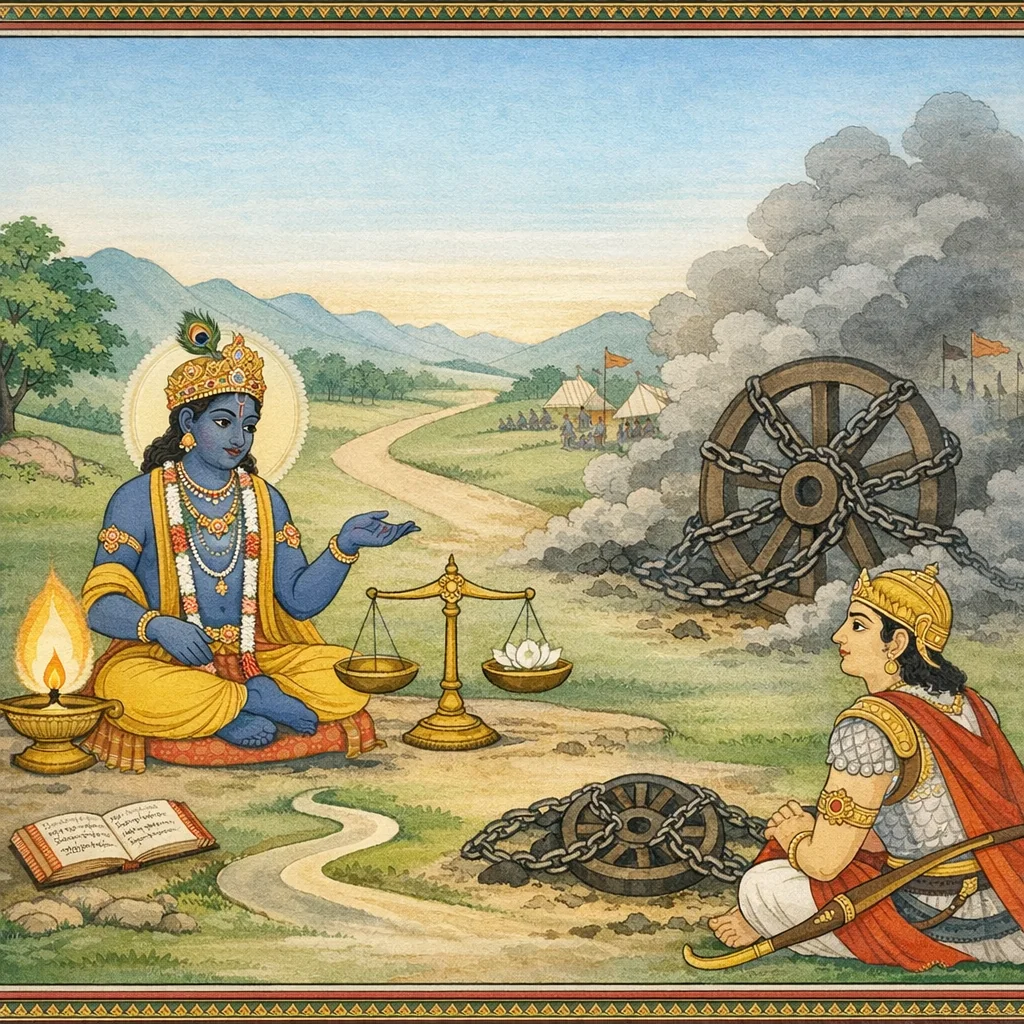
प्रवृत्तिं च निवृत्तिं च कार्याकार्ये भयाभये । बन्धं मोक्षं च या वेत्ति बुद्धिः सा पार्थ सात्त्विकी ॥ १८.३० ॥
pravṛttiṃ ca nivṛttiṃ ca kāryākārye bhayābhaye | bandhaṃ mokṣaṃ ca yā vetti buddhiḥ sā pārtha sāttvikī || 18.30 ||

হে পাৰ্থ, যি বুদ্ধিয়ে প্ৰবৃত্তি আৰু নিবৃত্তি, কাৰ্য আৰু অকাৰ্য, ভয় আৰু অভয়, বন্ধন আৰু মোক্ষ জানে—সেই বুদ্ধি সাত্ত্বিক।
That intellect is sattvic, O Pārtha, which knows activity and withdrawal, what ought to be done and what ought not, fear and fearlessness, bondage and liberation.
Sattvic is that intellect, O Pārtha, which discerns engagement and disengagement, the to-be-done and the not-to-be-done, the fearful and the non-fearful, and bondage and release.
pravṛtti/nivṛtti can be read as (1) worldly engagement vs renunciant withdrawal, or (2) initiating vs restraining impulses. “Fear/fearlessness” is often interpreted ethically (appropriate caution vs clarity) rather than as mere emotion.
FAQs
Sattvic cognition is portrayed as integrative discernment: it distinguishes healthy engagement from restraint, recognizes appropriate vs inappropriate tasks, and differentiates paralyzing fear from clear-sighted caution.
The verse links clarity of intellect to liberation: understanding what binds (bandha) versus what frees (mokṣa) is a cognitive prerequisite for spiritual release in the Gītā’s framework.
In the chapter’s three-guṇa analysis, this defines the “best” form of buddhi as one aligned with dharma and oriented toward mokṣa, setting up contrasts with rajasic and tamasic intellect.
It supports decision-making practices that separate impulse from considered action: clarifying goals, assessing consequences, and identifying which choices reinforce compulsive patterns versus foster autonomy.
Read Bhagavad Gita in the Vedapath app
Scan the QR code to open this directly in the app, with audio, word-by-word meanings, and more.