
Bhagavad Gita — Moksha Sannyasa Yoga, Shloka 14
Moksha Sannyasa Yoga
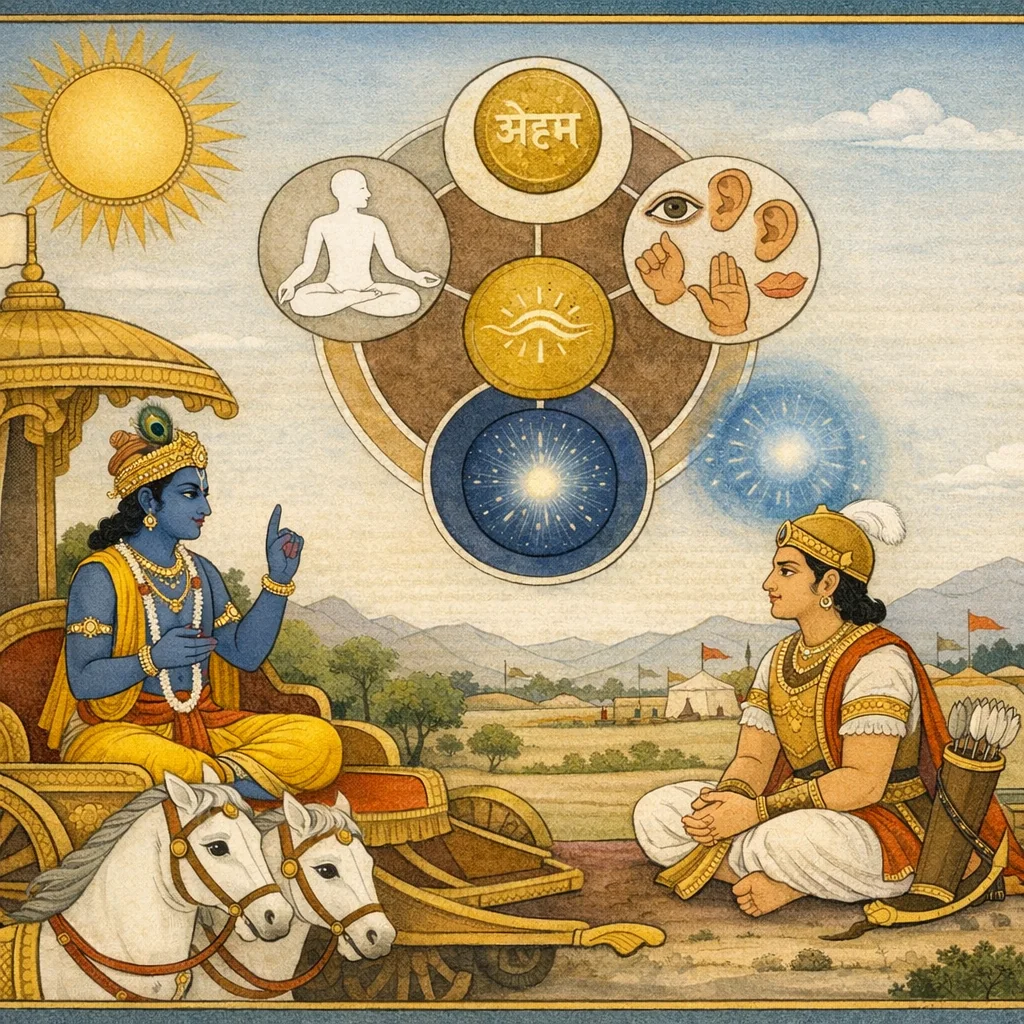
अधिष्ठानं तथा कर्ता करणं च पृथग्विधम् । विविधाश्च पृथक्चेष्टा दैवं चैवात्र पञ्चमम् ॥ १८.१४ ॥
adhiṣṭhānaṃ tathā kartā karaṇaṃ ca pṛthag-vidham | vividhāś ca pṛthak ceṣṭā daivaṃ caivātra pañcamam || 18.14 ||

অধিষ্ঠান (শৰীৰ), কৰ্তা, পৃথক্পৃথক্ প্ৰকাৰৰ কৰণ (ইন্দ্ৰিয়সমূহ), নানাবিধ আৰু পৃথক্ চেষ্টাসমূহ, আৰু দেৱ (ভাগ্য/ঈশ্বৰীয় বিধান)—ইয়াত এই পাঁচটাই কৰ্মৰ কাৰণ।
अधिष्ठान (शरीर), कर्ता, भिन्न-भिन्न प्रकार के करण (इन्द्रियाँ), विविध और पृथक् चेष्टाएँ तथा दैव—ये पाँचवाँ कारण भी यहाँ है।
The basis (locus), the agent, the instruments of various kinds, the many distinct activities, and—fifth—daiva (the ‘given’/providential factor): these are (the five causes).
Traditional commentaries often identify adhiṣṭhāna with the body and ‘daiva’ with divine ordinance or unseen fate; academic renderings may gloss ‘daiva’ more neutrally as contingency or the non-human factor in causation.
FAQs
Recognizing multiple contributing factors helps reduce inflated ego and catastrophic guilt, supporting steadier motivation and resilience.
Action is presented as emergent from a nexus of locus, agent, instruments, efforts, and an additional ‘given’ factor—undercutting the idea of an isolated, independent doer.
This enumerates the five causes announced in 18.13 and prepares the critique of those who attribute action to the self alone (18.16).
In planning projects, distinguish controllables (effort, tools) from uncontrollables (external events), and design with both in mind.
Ask anything about this verse
Curious about the meaning, context, or a word? Ask, and continue the conversation in the Vedapath app.
A free Google sign-in keeps your chat saved across web and the app.
Read Bhagavad Gita in the Vedapath app
Scan the QR code to open this directly in the app, with audio, word-by-word meanings, and more.