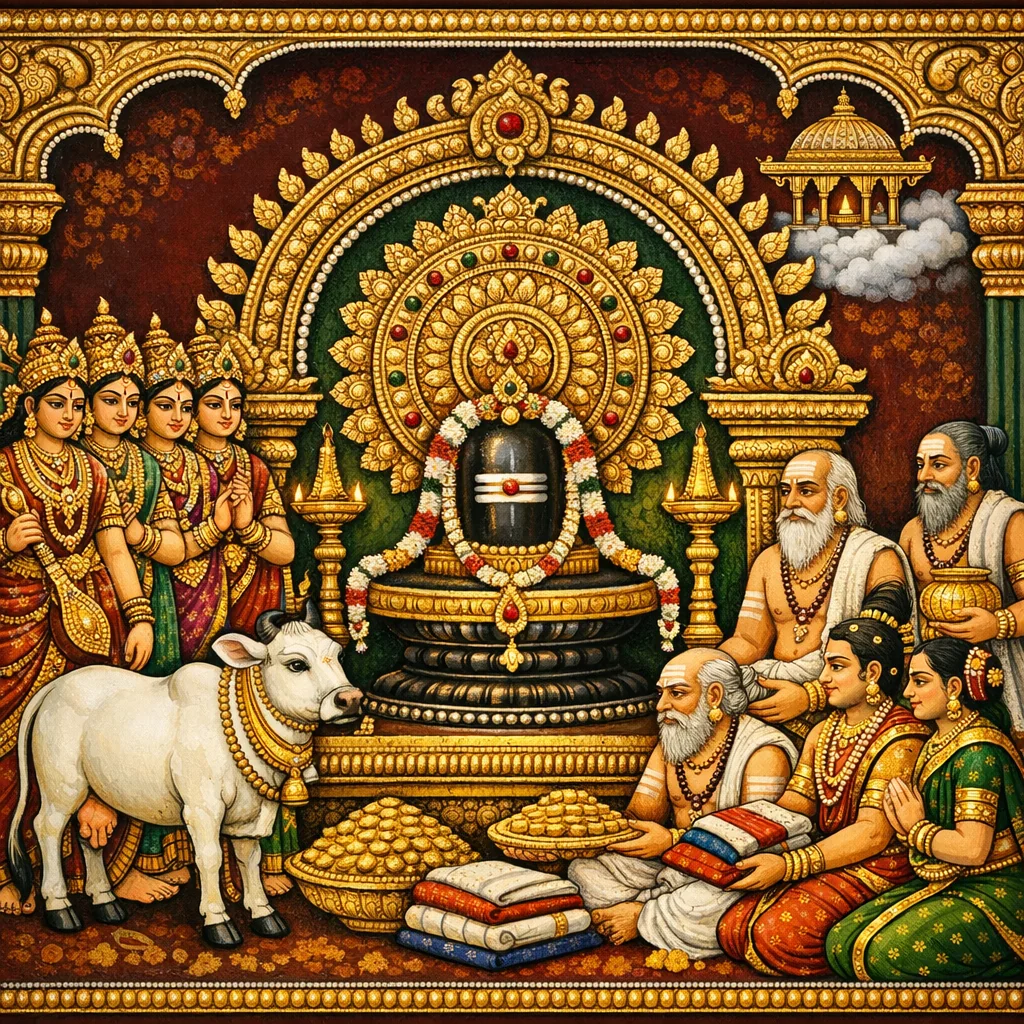
Adhyaya 184
Chapter 184 — अष्टमीव्रतानि (Aṣṭamī Observances: Kṛṣṇāṣṭamī, Budhāṣṭamī/Svargati-vrata, and Mātṛgaṇa-Aṣṭamī)
অগ্নিয়ে বসিষ্ঠক অষ্টমী-কেন্দ্ৰিত ব্ৰতসমূহ উপদেশ দিয়ে কয়; ইয়াত তিথি-নিয়ম, দেহ-সংযম, শৈৱভক্তি আৰু সামাজিক যজ্ঞ-দান কৰ্তব্য একেলগে আছে। অধ্যায়ৰ আৰম্ভণি চৈত্র কৃষ্ণাষ্টমীৰ মাতৃগণ-অষ্টমীৰে—ব্ৰাহ্মাণী আদি মাতৃকাসকলৰ পূজাই সমৃদ্ধি আৰু কৃষ্ণলোক-প্ৰাপ্তি দিয়ে বুলি কোৱা হৈছে। তাৰ পিছত মাৰ্গশীৰ্ষৰ পৰা এক বছৰজোৰা কৃষ্ণাষ্টমী ব্ৰত: নক্ত উপবাস, শুচিতা, ভূমিশয়ন, আৰু মাহে মাহে শিৱপূজাৰ ক্ৰম (শংকৰ, শম্ভু, মহেশ্বৰ, মহাদেৱ, স্থাণু, পশুপতি, ত্ৰ্যম্বক, ঈশ) লগতে কঠোৰ আহাৰ-নিয়ম (গোমূত্ৰ, ঘী, দুধ, তিল, যৱ, বিল্বপত্ৰ, চাউল আদি)। শেষত হোম, মণ্ডলপূজা, ব্ৰাহ্মণভোজন আৰু গৰু/বস্ত্ৰ/সোণ দান—ভুক্তি আৰু মুক্তি দুয়ো ফল দিয়ে। বুধবাৰে পৰা অষ্টমী ‘স্বৰ্গতি-ব্ৰত’ বুলি, ইন্দ্ৰপদ দানকাৰী বুলি কোৱা হৈছে; আমপাতৰ পাত্ৰত কুশাসহ নিৰ্দিষ্ট মাপৰ চাউল নৈবেদ্য, সাত্ত্বিক পূজা, কথাশ্ৰৱণ আৰু দক্ষিণাৰ বিধান আছে। ধীৰৰ পৰিয়াল, বৃষ নামৰ ষাঁড়, ক্ষতি-প্ৰাপ্তি, যমলোকৰ বৃত্তান্ত, আৰু বুধাষ্টমী দুবাৰ পালন কৰিলে পিতৃসকল নৰকৰ পৰা স্বৰ্গলৈ উঠা—এই দৃষ্টান্তে ব্ৰতৰ উদ্ধাৰশক্তি দেখুৱায়। শেষত পুনৰ্বসু নক্ষত্ৰত অশোক কুঁড়ি-পান, অষ্টমীৰ শোকনাশ প্ৰাৰ্থনা, আৰু চৈত্রৰ পৰা মাতৃপূজাই শত্রুজয় দিয়ে বুলি পুনৰ প্ৰতিপাদন কৰা হৈছে।
Shlokas
No shlokas available for this adhyaya yet.
Frequently Asked Questions
A year-linked discipline starting in Mārgaśīrṣa with nakta-fasting and purification, followed by month-specific Śiva-worship names and corresponding dietary austerities, concluding with homa, maṇḍala worship, feeding brāhmaṇas, and dāna (cow, garments, gold).
When Aṣṭamī coincides with Wednesday in either fortnight it is termed Svargati-vrata; the text assigns it a specific offering protocol (measured rice preparation, mango-leaf vessel with kuśa, sāttvika pūjā, kathā-śravaṇa, and dakṣiṇā) and promises attainment of Indra’s station.
By combining austerity (niyama), purity (śauca), devotion (Śiva/Mātṛ worship), narrative-hearing, and charity (dāna) into a complete sādhanā, it explicitly states the attainment of both bhukti and mukti and illustrates salvific efficacy through the liberation of ancestors from naraka.
Prosperity, victory over enemies through Mātṛ-pūjā on Aṣṭamī, sorrow-removal via the Aśoka rite, and restoration of fortune/standing through proper rule-keeping and sanctioned dāna.