Adhyaya 133
Chapter 133 — Various Strengths (Nānā-balāni) in Jyotiṣa and Battle-Protection Rites
অগ্নিদেৱে যুদ্ধজয়াৰ্ণৱ ধাৰাত জ্যোতিষ-নিদানক ৰণসাফল্যৰ সৈতে সংযোগ কৰে। প্ৰথমে ‘ক্ষেত্ৰাধিপ’ (যুদ্ধ-নেতা)ৰ সমতুল দেহগঠন আৰু প্ৰকৃতি-সাম্যৰ লক্ষণ বৰ্ণনা কৰি, তাৰপিছত সূৰ্য, চন্দ্ৰ, মঙ্গল, বুধ, বৃহস্পতি, শুক্ৰ, শনি—গ্ৰহস্থিতি অনুসাৰে স্বভাৱ আৰু ভাগ্যফল ব্যাখ্যা কৰে। পাছত দশাফল হিচাপে ধন, ভূমি, ৰাজসমৃদ্ধি আদি উল্লেখ কৰি, নাড়ীপ্ৰবাহ (বাওঁ/সোঁ শ্বাস) আৰু নামৰ অক্ষৰ সম/বিষমতাৰ দ্বাৰা শকুন-বিচাৰ, লগতে বাণিজ্য আৰু যুদ্ধফল নিৰ্ণয়ত ইয়াৰ প্ৰয়োগ বিস্তাৰ কৰে। তাৰপিছত অগ্নেয়বিদ্যাত ভৈৰৱ-কেন্দ্ৰিত অস্ত্ৰমন্ত্ৰৰ ন্যাস-জপে শত্রুসেনা পৰাভৱ কৰি পলায়ন কৰোৱা, শ্মশানদ্ৰব্যে সেনাভঙ্গ কৰ্ম আৰু আঁকা প্ৰতিমাত নামলিখনৰ বিধি দিয়া হৈছে। গৰুড়/তাৰ্ক্ষ্যচক্ৰ বিজয়, বিষনাশ আৰু ভূত-গ্ৰহপীড়া শমনলৈ ধ্যান আৰু বৰ্ণবিন্যাসসহ উপদেশিত। শেষত পিচ্ছিকা বিধি (গ্ৰহণজপ), দূৰপ্ৰতিষেধ/ভঙ্গ প্ৰক্ৰিয়া, পাতত লিখা মাতৃকা বিদ্যা, বীজগৰ্ভিত পদ্মদল ৰক্ষাযন্ত্ৰ, মৃত্যুঞ্জয় ব্যূহ আৰু ‘ভেলখী’ বিদ্যাৰে শত্রুৰ মায়িক মৃত্যুপ্ৰয়োগ নিবারণ—আৰু তৰোৱালযুদ্ধত অজেয়তাৰ দাবী—উপসংহাৰ।
Shlokas
No shlokas available for this adhyaya yet.
Frequently Asked Questions
A combined technical stack: (1) Jyotiṣa correlations of graha placements with bodily/psychological traits; (2) daśā-phala enumerations; (3) omen-reading via nāḍī-flow and name-syllable parity; and (4) operational mantra/yantra protocols (nyāsa counts such as 108 japa; ninefold name-inscription; lotus-petal phoneme placements; birch-bark inscription with gorocanā and kuṅkuma).
It frames protection, victory, and harm-aversion as dharmic disciplines: mantra, yantra, visualization, and ritual offerings are treated as revealed means that must be applied with restraint and right orientation, integrating worldly efficacy (bhukti) into a sacral order that supports steadiness, protection of life, and the broader pursuit of Dharma and ultimately mukti.
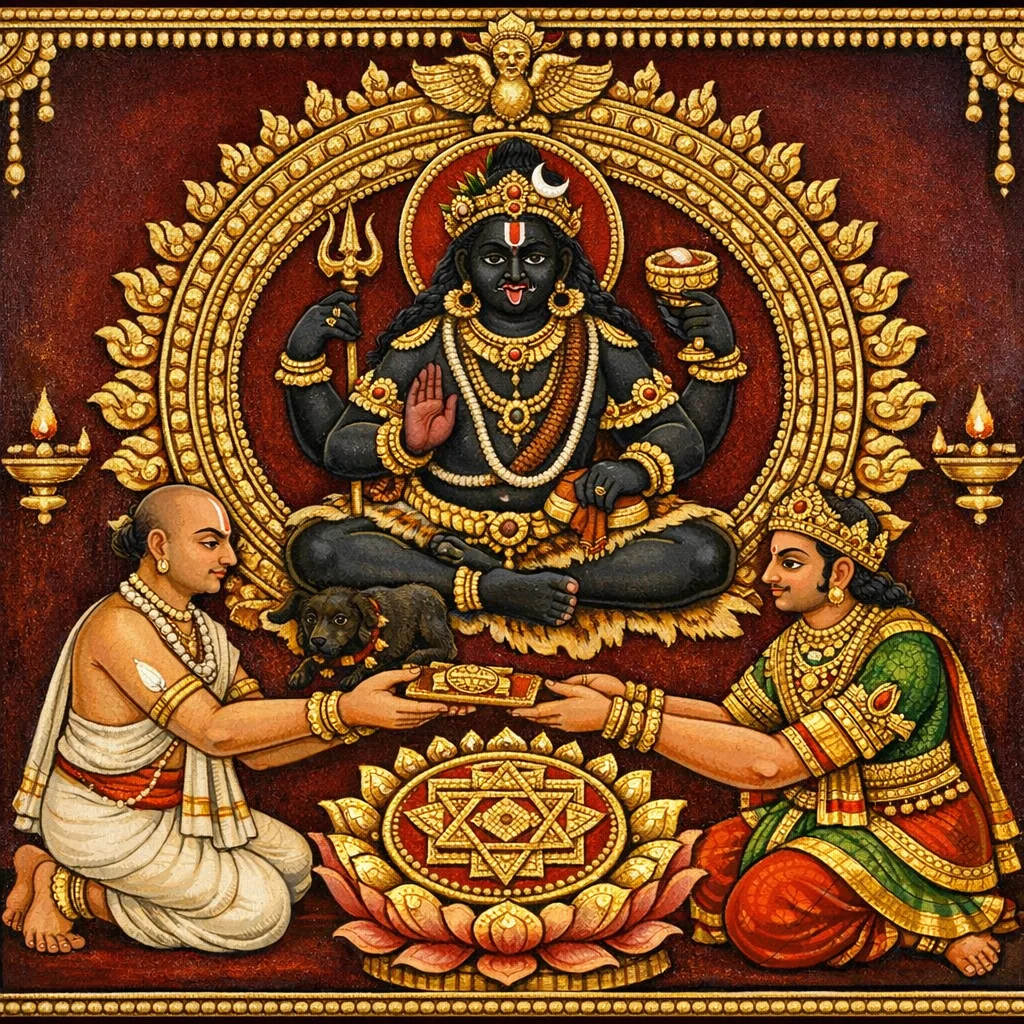
Bhairava (as the meditational self-form for astramantra practice), Tārkṣya/Garuḍa (as the victory and poison-destroying power), the Mātṛkās with emphasis on Kālarātrī (via caru offerings), and protective forms such as Narasiṁhī, Bhairavī-Śakti, and Gaurī.